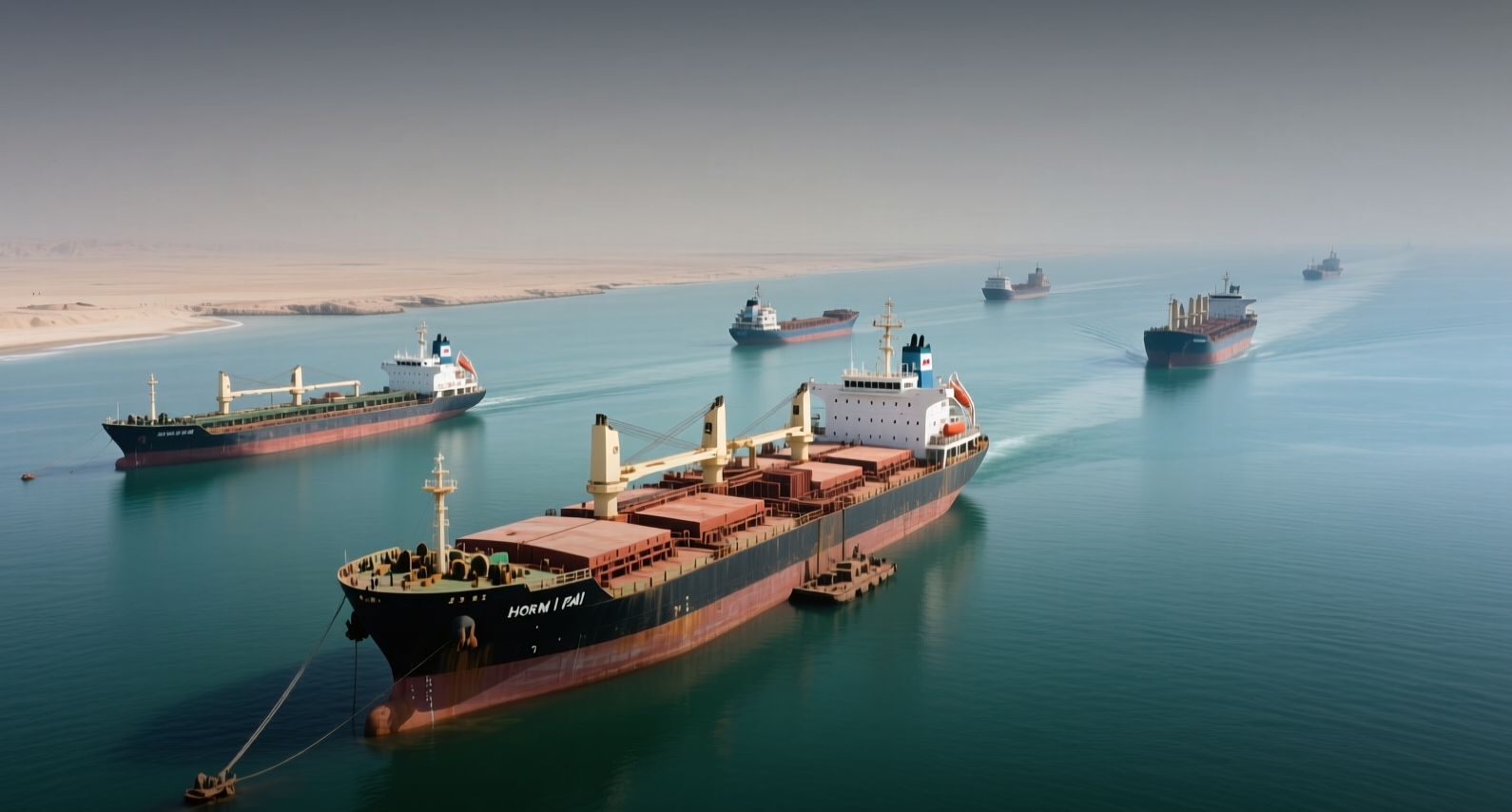
Iran's ballistic-missile attack on two US air bases in Jordan, retaliation for an American strike on Revolutionary Guard launchers in the Strait of Hormuz, reopened the six-month war and pushed crude's geopolitical risk premium higher as Washington vowed to "hit them hard."
Iran's Revolutionary Guards said Monday it fired ballistic missiles at the King Hussein and Al-Azraq bases in Jordan, claiming "heavy damage" to technical infrastructure and fighter-jet positions, after the US struck two IRGC rocket launchers on Larak Island in the Strait of Hormuz on Sunday. Jordan's armed forces said it intercepted eight missiles that entered its airspace, while a US official said nearly all incoming projectiles were shot down.
"The escalation path is now the single biggest variable for crude," said Elena Fischer, a geopolitical risk analyst in London. "Every tit-for-tat exchange raises the probability of a direct hit on oil infrastructure, and the market is pricing that tail risk into the barrel."
The Strait of Hormuz handles about 21 percent of global oil trade, and Iran's primary export terminal at Kharg Island — which processes roughly 90 percent of the country's crude exports — sits in the northern Persian Gulf. President Donald Trump posted an AI-generated video on Truth Social depicting Kharg Island "being blown to smithereens," a threat the National Iranian Oil Company dismissed, saying operations there had not stopped. US Central Command has kept more than 50,000 troops on alert in the region for months.
The escalation chain
The renewed fighting broke a roughly one-month lull in direct US-Iran strikes, after the Trump administration last week shifted strategy to "economic warfare," unveiling sanctions on 60 individuals, entities and vessels under the US-led Operation Economic Outcast. Treasury Secretary Scott Bessent, hosting G20 finance ministers in North Carolina this week, said Tehran was resorting to kinetic responses "only because it is losing economically," and that Washington would maintain pressure.
Iran's foreign ministry said it would "respond decisively" to any military aggression, while the IRGC separately claimed a supertanker was struck by two sea mines in the strait — a claim US Central Command called false. The UAE condemned an intercepted Iranian drone over its territorial waters as a "dangerous escalation," though it denied Tehran's claim that the al-Minhad airbase was targeted.
What's at stake for markets
For investors, the transmission runs through three channels: crude supply risk, safe-haven demand, and equity risk-off. A sustained closure or disruption of Hormuz shipping would remove a meaningful share of global supply at a time when OPEC spare capacity is already thin, while gold and defensive assets typically absorb the flight-to-safety bid. The last time Iran directly struck US forces in Jordan, in the opening weeks of the war in February, Brent spiked and equities sold off before stabilizing as interception rates proved high.
The forward path hinges on whether Washington's response stays calibrated to launchers and air defenses or escalates toward Kharg Island and Iran's export capacity. Iranian President Masoud Pezeshkian, attending the Shanghai Cooperation Organisation summit in Kyrgyzstan, said Tehran still seeks a negotiated end to the war even as hardline factions push for confrontation. With Bessent pressing G7 partners to expand sanctions and the EU signaling support for continued economic pressure, the diplomatic track and the military track are running in parallel — and the next 48 hours of US retaliation will determine which one dominates market pricing.
This article is for informational purposes only and does not constitute investment advice.