
Six months into the US-Iran war, conflict-affected countries now produce more than 43 percent of the world's oil.
Six months into the US-Iran war, conflict-affected countries now produce more than 43 percent of the world's oil.
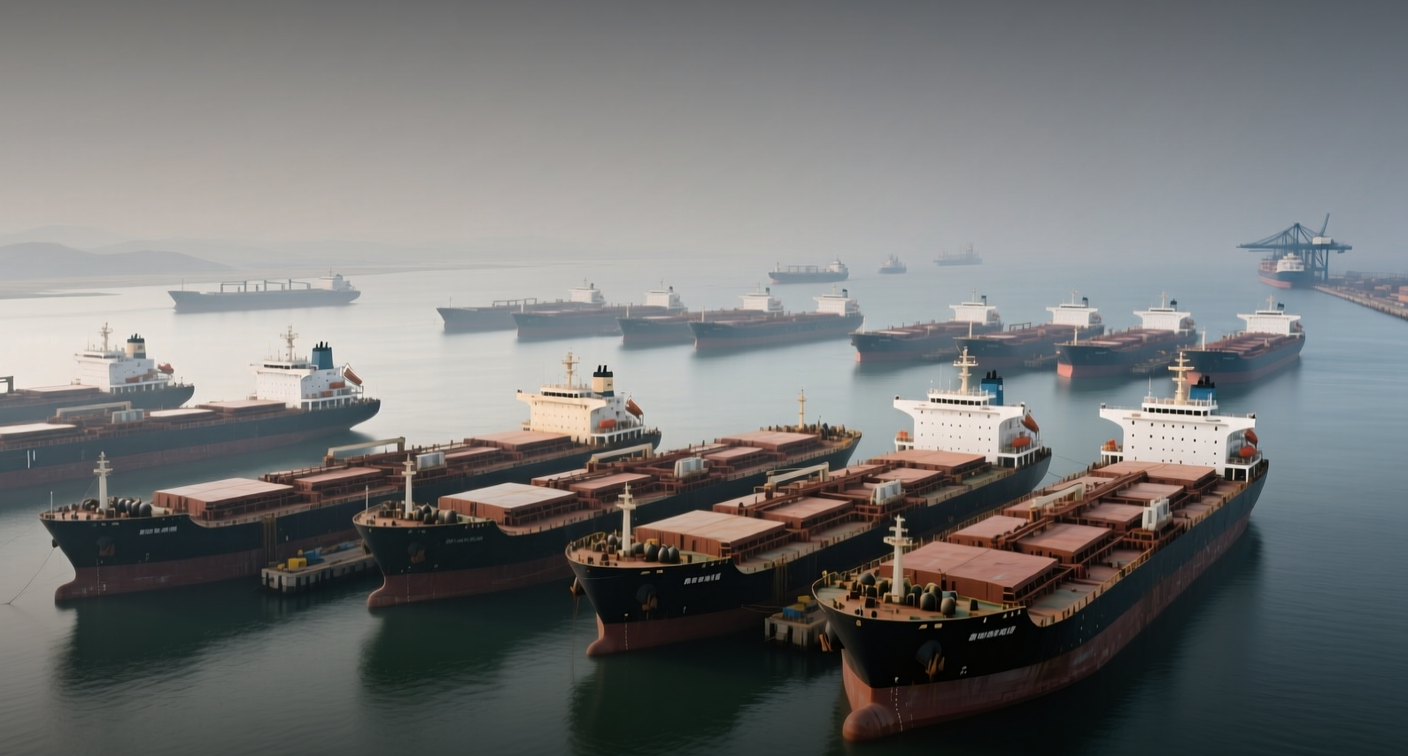
Six months into the US-Iran war, conflict-affected countries produce about 45 million barrels a day, more than 43 percent of global supply, as Gulf disruptions of 5 million to 7 million barrels persist.
"Thousands of seafarers in the region continue to live and work under conditions of heightened risk and uncertainty," said Arsenio Dominguez, secretary-general of the UN's International Maritime Organization, which counts about 6,000 sailors on 400 ships still unable to leave the Strait of Hormuz.
Traffic through the strait, which averaged around 130 vessels a day before the war, has collapsed to about 15 daily in August, according to ship trackers. Brent crude has hovered above $80 a barrel and topped $91 after a projectile struck a vessel, while US gasoline averages near $4 a gallon, up from $2.98 before the Feb. 28 strike that killed Iran's supreme leader. Sailing a supertanker from the Persian Gulf to China now costs more than $500,000 a day, more than double the pre-war rate, Clarksons Research data show.
The shock has reversed a two-year decline in inflation, with the IMF now expecting global price growth of 4.7 percent this year, up from 4.1 percent in 2025, giving central banks reason to move cautiously on rates. Higher fuel prices have helped push US debt to a record $40 trillion, and the war has cost an estimated $37.5 billion, Defense Secretary Pete Hegseth said in July.
The disruption is the largest oil supply crisis on record, eclipsing previous energy shocks. The Russia-Ukraine war has forced production and refining cuts, including in Kazakhstan this year, while conflict in Libya and US restrictions on Venezuelan exports added strain. Together, countries affected by those conflicts produced about 45 million barrels a day based on 2025 output, Reuters calculations using International Energy Agency data show.
The conflicts in the Gulf and Ukraine have also cut global refining capacity by about a tenth. Ukraine has struck Russian plants as far away as Omsk, about 2,700 kilometers from Ukrainian-held territory, leaving Moscow to ban gasoline and diesel exports and tighten global fuel markets.
Iran's decision to attack shipping in the Strait of Hormuz gave Tehran a chokehold on global energy flows and turned the waterway into the war's central battleground. Both sides have tried to impose new routes: Iran close to its shoreline and the US through a channel hugging the Omani coast, where most attacks have taken place. The US military says it has cleared all mines and assisted nearly 1,500 commercial vessels, moving 750 million barrels of crude out of the Gulf, while Iran has exported zero barrels since the naval blockade resumed in mid-July.
Iran's shipments of crude and condensate fell to roughly 280,000 barrels a day in May, from more than 2.2 million in February, before recovering under a short-lived deal to reopen the strait and dipping again after the agreement collapsed. The memorandum of understanding signed in Versailles in June fell apart in July, and talks remain stalled. President Trump said Thursday that Iran is "begging to make a deal," while Treasury Secretary Scott Bessent has laid out plans for the "economic asphyxiation" of the country.
The war has redrawn the map of who benefits. Russia earned $12.7 billion a month at the height of the conflict thanks to higher oil prices and a temporary waiver on US oil sanctions, according to European Union officials, helping fund its war in Ukraine. Gulf producers such as the UAE, Kuwait and Iraq are pouring billions into new pipelines as trade shifts toward trucking, rail and new ports.
The last comparable shock came in 1973, when the Arab oil embargo sent prices quadrupling and triggered stagflation across the West. This time, forecasts of $150 oil never materialized because alternative routes emerged and China curtailed imports, but the world has rapidly burned through reserves — US crude inventories in the Strategic Petroleum Reserve have fallen to their lowest level since the 1980s.
For energy-importing economies in Europe and Asia, the damage is mounting. Higher oil, gas, fertilizer and transport prices have weighed on growth, and the IMF expects the Iranian economy to shrink 5.4 percent this year while consumer prices there are up more than 80 percent. The war has killed more than 3,600 people in Iran and 18 US service members, and support among US voters has slipped to 43 percent from 50 percent at the conflict's start.
What happens next hinges on the Strait of Hormuz. If the US can keep the waterway open and sanctions bite, oil prices could ease toward pre-war levels; if Iran sustains its attacks, the 5 million to 7 million barrels a day of disrupted Gulf flows could widen further. Trump has said the war will take "as long as necessary," and with no talks scheduled, the world's energy map is likely to stay redrawn for months to come.
This article is for informational purposes only and does not constitute investment advice.
