
Six months into the US-Israeli war on Iran, American retailers and manufacturers are paying record fuel surcharges to move goods — while some carriers are turning the crisis into profit.
Six months into the US-Israeli war on Iran, American retailers and manufacturers are paying record fuel surcharges to move goods — while some carriers are turning the crisis into profit.
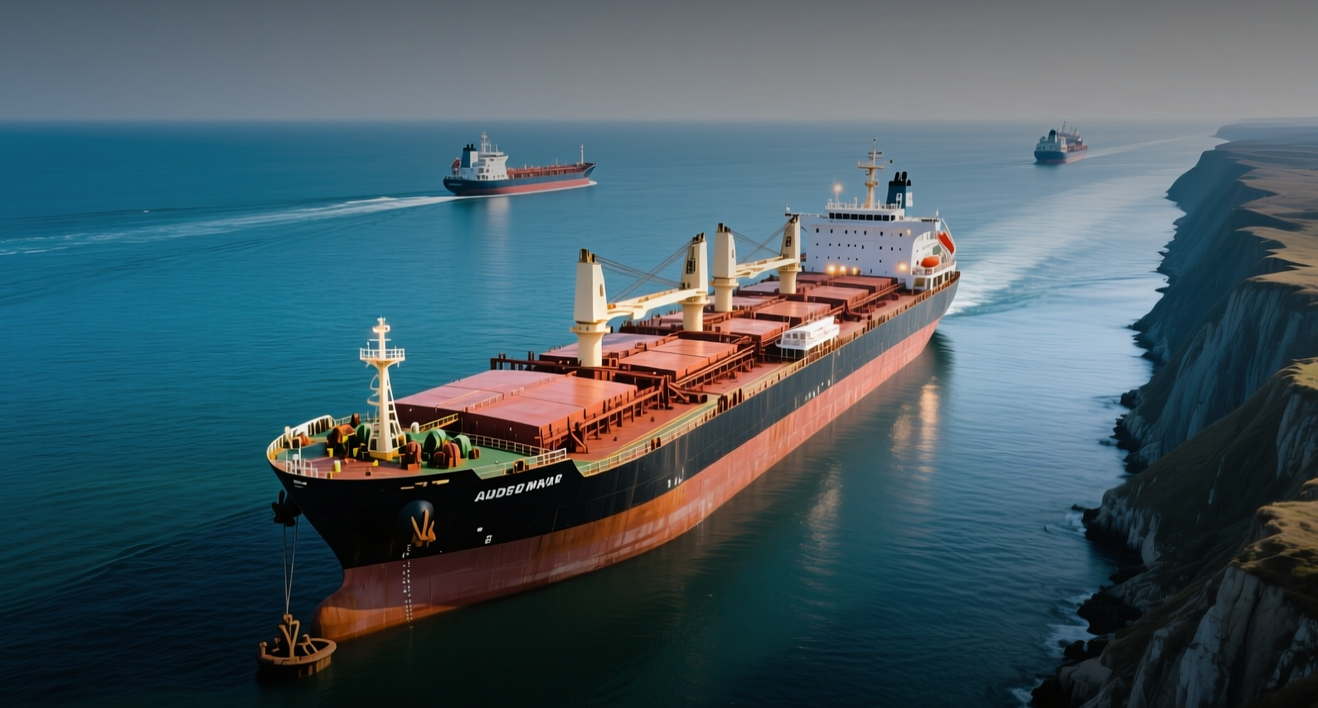
Six months into the US-Israeli war on Iran, average US gas prices have climbed to $4.10 a gallon, pushing fuel surcharges on freight to record levels while some carriers convert the crisis into profit.
"Even though gasoline demand is down, which is typical for this time of year, crude oil is pushing up the national average," AAA said on Aug. 20, when the average gallon of gas cost more than ever before at that point in the year.
The Strait of Hormuz, a chokepoint for about 20 percent of the world's oil shipments and roughly 20 million barrels a day, has been the flashpoint. The International Energy Agency calls the disruption the "largest supply disruption in the history of the global oil market," with more than two billion barrels of shipments already disrupted this year. Brent crude traded at $86.28 a barrel Wednesday, down $2.30, while West Texas Intermediate fell $2.08 to $80.29 as Iran-Oman talks revived hopes of reopening the waterway.
The cost pressure is bifurcated. Retailers, manufacturers and small businesses face margin compression as fuel surcharges compound already-elevated logistics costs. But carriers are benefiting: ZIM Integrated Shipping Services posted second-quarter net income of $64 million, up from $24 million a year earlier, while ADNOC Logistics & Services is spending $1.3 billion to acquire 11 tankers to expand capacity.
The war, launched Feb. 28 in coordination with Israel, has stretched far beyond President Donald Trump's initial four-to-five-week prediction. Eighteen US service members have died, and a memorandum of understanding to end the conflict collapsed in July. Iran has since resumed attacks on ships in the strait, and the US reinstated its naval blockade of Iranian ports.
The supply-side cushions that prevented a full-blown oil shock are well documented. The IEA coordinated the largest-ever release of strategic petroleum stocks — 273 million barrels — while Saudi Arabia and the UAE diverted millions of barrels per day through underutilized pipelines bypassing the strait. US shale production has also helped lubricate global markets.
But the demand side has been the surprise. China cut seaborne crude imports by more than five million barrels per day through June — over 40 percent below prewar levels — without triggering an economic calamity, drawing down strategic reserves built when oil was cheaper and leaning on domestic coal and renewables. "Demand, sometimes called the forgotten fuel, can play a far greater role in energy management than imagined by policymakers who reflexively reach for supply-side solutions," said Vijay V. Vaitheeswaran, director of the Energy Security and Climate Change Program at the Council on Foreign Relations. Chinese EV exports surged to $9.2 billion in May, nearly 50 percent higher year-on-year.
The transmission to US consumers is direct. The average gallon of regular gas cost $4.10 as of Aug. 26, compared with $3.19 a year earlier. Trucking and logistics companies pass these costs through as fuel surcharges, which are typically calculated as a percentage of the base freight rate and adjust weekly with diesel prices. For small businesses operating on thin margins, the surcharges are becoming a structural cost rather than a temporary spike.
The International Monetary Fund has trimmed its global growth outlook only modestly, now predicting 3 percent growth this year. But the pain is unevenly distributed. In Nigeria, fuel prices have spiked nearly 50 percent, intensifying inflation as political campaigning for the 2027 general election begins. Bangladesh's external balance has deteriorated as the war compounds longstanding economic fragilities.
Shipping companies are not waiting for resolution. ADNOC Logistics & Services agreed to acquire 11 tankers for approximately $1.3 billion, expanding crude oil and LPG shipping capacity. ZIM's second-quarter results showed the benefit of higher freight rates, with revenue up 9 percent year-on-year to $1.78 billion.
The last time the Strait of Hormuz faced sustained disruption was during the Iran-Iraq War in the 1980s, when the "Tanker War" led to US naval escorts and a spike in insurance premiums. Today's conflict has already triggered a similar dynamic: Iran has blacklisted 45 ships it says violated its transit rules, and the Persian Gulf Strait Authority has warned of fines, detention or confiscation for non-compliant vessels.
Vice President JD Vance said on Aug. 20 the US would move into a new phase of the war, ramping up economic pressure. Trump told Al Jazeera on Aug. 26 he is "not in a hurry" for negotiations to resume. If the conflict persists, fuel surcharges will remain elevated, and the divergence between carriers profiting from the crisis and goods producers absorbing the costs will widen.
This article is for informational purposes only and does not constitute investment advice.
