
Iran's president said the country has not left the negotiating table even as its military halted operations against Israel, keeping the door open to diplomacy after the first exchange of fire since the April truce.
Iran's president said the country has not left the negotiating table even as its military halted operations against Israel, keeping the door open to diplomacy after the first exchange of fire since the April truce.
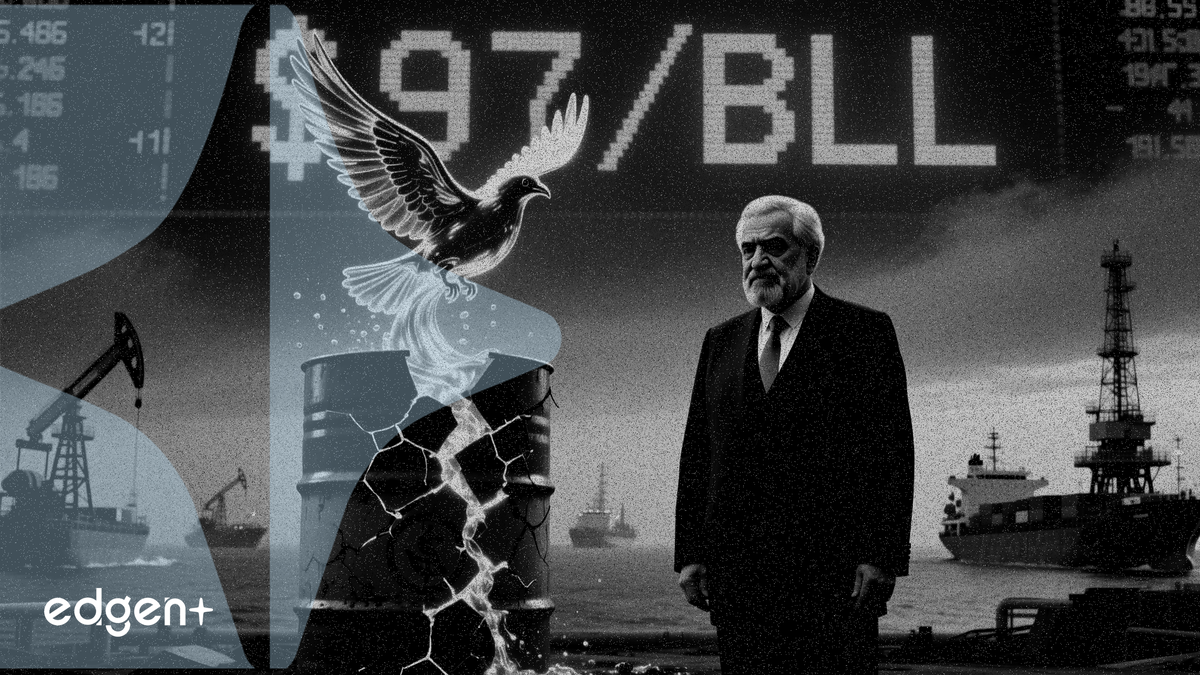
Iranian President Masoud Pezeshkian said the country remains open to diplomacy even as its military halted offensive operations against Israel, following the first direct exchange of fire between the two countries since a US-brokered truce took effect in April.
"Diplomacy and defense are the two wings of national power; we have neither left the battlefield nor the negotiating table," Pezeshkian said Monday in a post on X. He added that Iran "will not retreat in the face of any threat" and called for national unity in responding to the crisis.
The Iranian military's joint command announced it was ceasing offensive operations after launching nearly 30 ballistic missiles toward Israel since Sunday night, according to an Israeli military official. Israel responded with airstrikes on military targets across western and central Iran, including the Mahshahr petrochemical complex — the country's largest such facility — where the Karun plant was damaged. No casualties were reported at the site, a local official told the semiofficial Fars news agency.
Brent crude futures jumped as much as 4.3% to $97.11 a barrel before paring gains to trade near $94, while West Texas Intermediate crude rose as high as $94.44. The national average gasoline price in the US stood at $4.16 a gallon, up nearly 40% since the war began in February. The price action reflects the market's acute sensitivity to any disruption in the region, given that Iran's earlier blockade of the Strait of Hormuz — which handles about 21% of global oil trade — already sent energy prices surging this year.
The stakes for global markets
The escalation marks the most serious breach of the April 8 cease-fire that paused the US-Israeli war with Iran. That truce had already been fraying as talks between Washington and Tehran failed to produce a final deal, despite President Donald Trump's repeated predictions that an agreement was imminent. Trump on Monday called on both sides to "immediately stop" the fighting and said they were "looking to do an immediate ceasefire."
The last time Iran and Israel traded direct fire was in April 2024, when Iran launched drones and missiles at Israel in response to an Israeli strike on its Damascus consulate. That exchange was largely intercepted and did not escalate further. This time, the confrontation carries higher stakes: Iran has demonstrated its willingness to disrupt global energy markets through its control of the Strait of Hormuz, and its regional proxies — including Hezbollah in Lebanon and the Houthis in Yemen — remain active.
The Houthis fired a ballistic missile at central Israel on Monday and announced a naval blockade against Israel in the Red Sea, though it was unclear what that threat would mean in practice. Earlier Houthi attacks in the Red Sea had already snarled global shipping and prompted a US-led bombing campaign.
Diplomatic channels remain open
Pezeshkian's comments suggest Tehran is seeking to avoid a full return to war even as it projects military strength. Iran's top diplomat, Abbas Araghchi, discussed the situation with counterparts in Britain, France and Turkey, as well as with Qatar's leader and Pakistani mediators, according to Iranian state media. Pakistan has been acting as a mediator between Iran and the US.
The European Union on Monday imposed sanctions on Iranian individuals and entities for threatening freedom of maritime traffic, EU foreign policy chief Kaja Kallas said, without providing further details.
For investors, the key question is whether the ceasefire can be restored or whether the region is sliding back into the all-out conflict that began in February. The war has already reshaped global energy flows, pushed up inflation in importing nations and tested the resilience of supply chains. Trump's ability to deliver on his promise of a final deal — which he has said is "subject to ignorance or stupidity getting in its way" — remains the single biggest variable for oil markets and broader risk sentiment.
This article is for informational purposes only and does not constitute investment advice.
