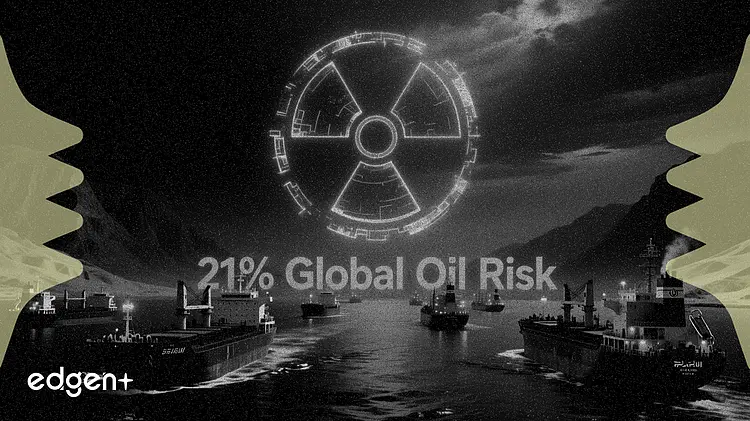
Iran’s new directive to halt all shipments of near-weapons-grade uranium out of the country represents a significant hardening of its position, directly challenging American negotiators and raising the geopolitical risk premium for global energy markets. The order, reportedly reflecting a consensus within the Iranian leadership, effectively removes a key bargaining chip from the table and signals a victory for hard-liners in Tehran.
"This language signals maximum leverage diplomacy, combining deterrence with conditional engagement,” said Hamud Al-Mansouri, a regional security analyst, cautioning that miscalculation risks remain high. The move is seen as a direct response to U.S. demands that Iran surrender its stockpile of highly enriched uranium as a precondition for any deal.
The directive lands during a period of intense, albeit fragile, diplomacy. U.S. President Donald Trump recently stated Washington would give Iran a "last chance for negotiations," while simultaneously preparing for potential escalation. This high-stakes posturing is mirrored in Tehran, where figures like Brig. Gen. Ahmad Vahidi, head of the powerful Revolutionary Guard, are now seen as central to formulating Iran’s tough negotiating stance, sidelining more moderate voices.
At stake is not only the future of Iran's nuclear program but also the stability of global energy supplies. The standoff increases the likelihood of a confrontation in the Strait of Hormuz, a critical chokepoint through which 21 percent of the world's oil supply transits. Any disruption could cause a severe spike in crude prices, impacting the global economy.
Hard-Liners Ascendant in Tehran
The supreme leader's order does not exist in a vacuum. It is the culmination of a power shift within Iran's fragmented theocracy, where hard-line figures are increasingly shaping policy. Brig. Gen. Ahmad Vahidi, a veteran commander linked to past militant attacks and recent domestic crackdowns, has emerged as a pivotal player. Elevated to Guard commander this year, he leads Iran's most powerful military and economic force, and his confrontational "unending resistance" mindset now appears to be the country's official policy.
This shift is visible on the streets of Tehran, where the Revolutionary Guard now conducts public weapons training for civilians, including young boys, in a campaign called "Janfada," or "ones who sacrifice their lives." Parades feature military hardware, and even mass weddings are adorned with ballistic missiles. This display of defiance serves to both rally the domestic base and send an unambiguous message to the U.S. that Iran is preparing for conflict, not capitulation. The last time Iran adopted such a publicly defiant military posture was during the height of the Iran-Iraq war in the 1980s, a conflict that lasted eight years and saw major disruptions to Gulf shipping.
A High-Stakes Diplomatic Gambit
The uranium directive complicates an already fraught diplomatic landscape. Talks in April, hosted by Pakistan and led by then-parliament Speaker Mohammad Bagher Qalibaf, ended without a deal and resulted in criticism back home that the Iranian delegation was too willing to make concessions. Since then, Vahidi has reportedly become the main point of contact for mediators, indicating a consolidation of control away from traditional diplomatic channels.
The U.S. administration, under President Trump, has pursued a strategy of "maximum leverage," combining crippling sanctions with offers of dialogue. President Trump's recent comment that he would give negotiations a "last chance" underscores the administration's desire for a deal but also its impatience. However, Iran's leadership appears to be betting that it can outlast the American president, believing he is reluctant to engage in a full-scale war that could devastate America's Gulf allies and the global economy. The current directive is a calculated gamble that forces the U.S. to either accept Iran's new red line or walk away from the table entirely.
This article is for informational purposes only and does not constitute investment advice.