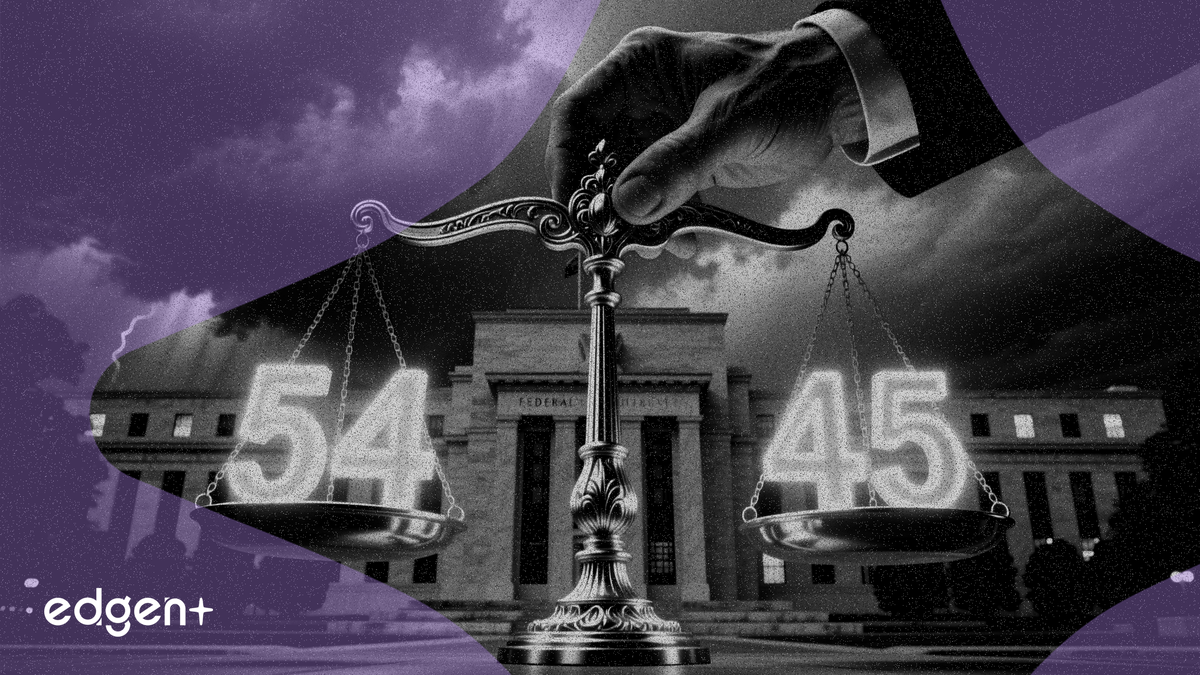
The Senate narrowly confirmed Kevin Warsh as the next chair of the Federal Reserve on Wednesday, installing a Donald Trump nominee at the head of the US central bank after a deeply polarized 54-45 vote. The confirmation marks the slimmest margin for a Fed chair in decades and sets the stage for a potential overhaul of monetary policy amid persistent inflation and intense political pressure from the White House.
"The main question looming over the incoming chair is whether he will maintain the Fed’s tradition of making interest-rate decisions free from political pressure," a Bloomberg report noted, reflecting concerns over Warsh's proximity to President Trump. Warsh succeeds Jerome Powell, whose term formally ends Friday.
The vote came just hours after a government report showed the producer price index climbed 6% in April from a year earlier, exceeding all economist estimates and heightening concerns that inflation is accelerating. Warsh will immediately face the challenge of navigating an economy strained by rising energy costs from the Iran war and a fractious political environment where the central bank's independence is under scrutiny.
Warsh, a former Fed governor and private financier, has signaled his intent to bring "regime change" to the central bank. During his confirmation hearing, he advocated for shrinking the Fed's $6.7 trillion balance sheet and criticized the central bank's performance on inflation during the Biden administration. His confirmation follows a rocky period for the Fed, which saw the Trump administration launch a criminal inquiry into outgoing chair Powell and attempt to fire Governor Lisa Cook. Powell, who has denounced these moves as intimidation, will remain on the Fed's board to help ensure a smooth transition.
A Shift in Policy and Personnel
The transition from Powell to Warsh represents a significant shift in both the leadership's background and potential policy direction. Warsh's personal net worth, estimated by Senate filings to be between $170 million and $226 million, makes him the wealthiest individual ever to lead the institution. His fortune, built through private equity, corporate board seats, and advisory work for billionaires like Stanley Druckenmiller, stands in contrast to Powell's own considerable, but smaller, $75 million net worth.
This extensive private sector background has fueled both support and criticism. Supporters argue it gives him real-world financial acumen, while opponents fear his deep ties to Wall Street could compromise his policy judgment. Trump has made his expectations clear, having lambasted Powell for not cutting rates aggressively enough and now looking to Warsh to lower borrowing costs immediately. Warsh, however, has vowed to maintain the Fed's independence.
The First Test
The first meeting of the Federal Open Market Committee under Warsh's leadership is scheduled for June 16-17. The decision at that meeting—whether to cut rates to support the job market, hold steady to assess the impact of the Iran war, or signal future hikes to combat inflation—will be the first major test of his tenure. He will have to contend with a growing faction of Fed officials who have been vocal about the need to keep rates higher for longer, setting up a potential early conflict with the White House's desire for rate cuts.
This article is for informational purposes only and does not constitute investment advice.