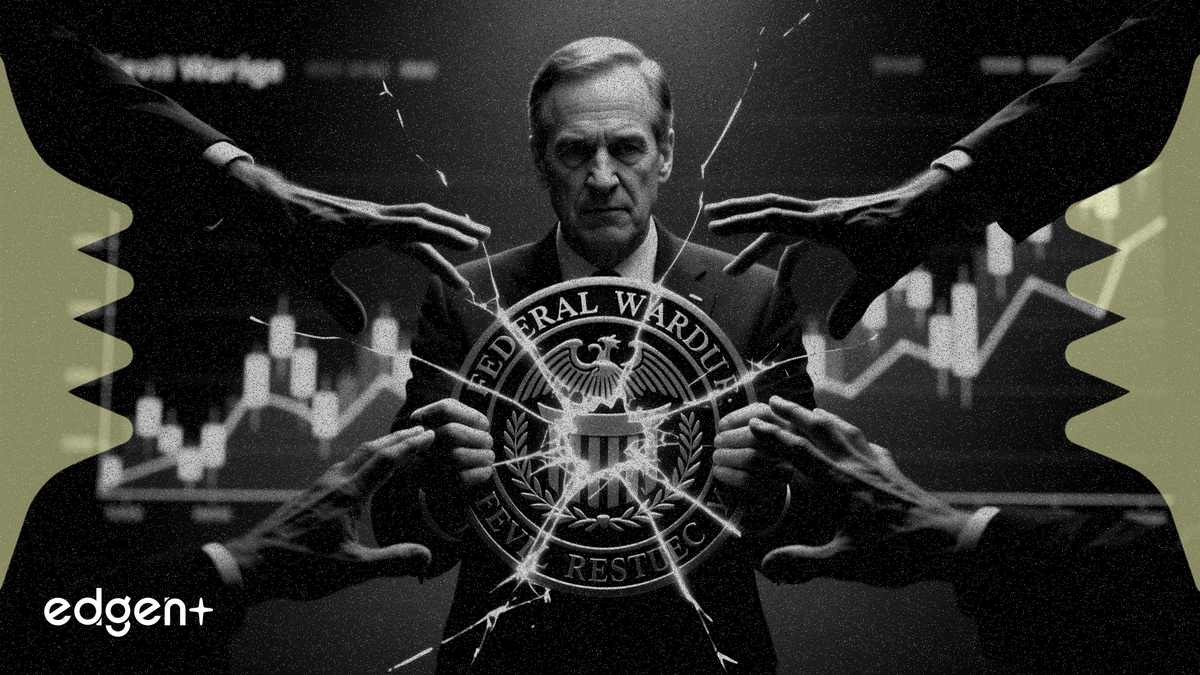
The U.S. Senate confirmed Kevin Warsh as Federal Reserve Chair in a 54-45 vote, installing a new leader who has welcomed public debate just as the central bank revealed its deepest divisions in over 30 years.
"I tend to favor messier meetings than some, where people don't show up with rehearsed scripts," Warsh said at his April confirmation hearing. "We can have a good family fight."
The confirmation comes after a recent policy meeting where four officials dissented—the most since 1992. One of those was from departing Governor Stephen Miran, who submitted his resignation effective upon Warsh's swearing-in. Miran had voted for a rate cut at every meeting since he joined the board in September. In contrast, three other officials dissented because they felt the committee's statement was too dovish, suggesting the next rate move would be a cut from the current 3.5% to 3.75% range.
Warsh inherits a Federal Open Market Committee (FOMC) grappling with consumer price inflation that has surged to a near three-year high of 3.8% and a market that has priced out any interest rate cuts for 2026. The challenge for the new chair will be to forge a path forward on monetary policy with a committee that is openly fractured and under pressure from the White House to lower borrowing costs.
A New Era of Dissent
Under Jerome Powell, who Warsh replaces as chair but who will remain a governor, the Fed prioritized consensus. Public dissents were rare, a practice established under Alan Greenspan to project a unified message and manage market expectations. However, Warsh has signaled a clear break from this tradition, arguing that more open disagreement leads to better and more quickly corrected decisions.
The backdrop for this shift is a period of heightened political pressure and economic uncertainty. Governor Stephen Miran, an appointee of President Trump, consistently used his platform to advocate for the administration's economic policies and demand rate cuts, even as inflation remained well above the Fed's 2% target. His departure, timed with Warsh's arrival, removes a dovish voice but underscores the contentious environment the new chair is stepping into.
The Policy Conundrum
The new chair faces an immediate challenge. Inflationary pressures, exacerbated by the conflict in Iran, have pushed the consumer price index to its highest level in nearly three years. April's data showed prices rising 3.8% annually. This makes the prospect of rate cuts, which President Trump has called for, difficult to justify for a central bank tasked with maintaining price stability.
Futures markets reflect this reality, with traders now betting that the Fed will not cut rates at all in 2026 or 2027. In fact, market pricing suggests a higher probability of a rate hike than a cut by the end of 2027. While Warsh is respected on Wall Street and understands the economic data, he will have to navigate the competing demands of a divided committee, a president demanding lower rates, and an economy with persistent inflation. His ability to manage these "family fights" will be tested from day one.
This article is for informational purposes only and does not constitute investment advice.