
Seoul's benchmark index dropped into the 6,600 range on Wednesday, dragged down by an oil-price spike and a climb in global yields that outweighed record semiconductor exports and ongoing chip buybacks.
Seoul's benchmark index dropped into the 6,600 range on Wednesday, dragged down by an oil-price spike and a climb in global yields that outweighed record semiconductor exports and ongoing chip buybacks.
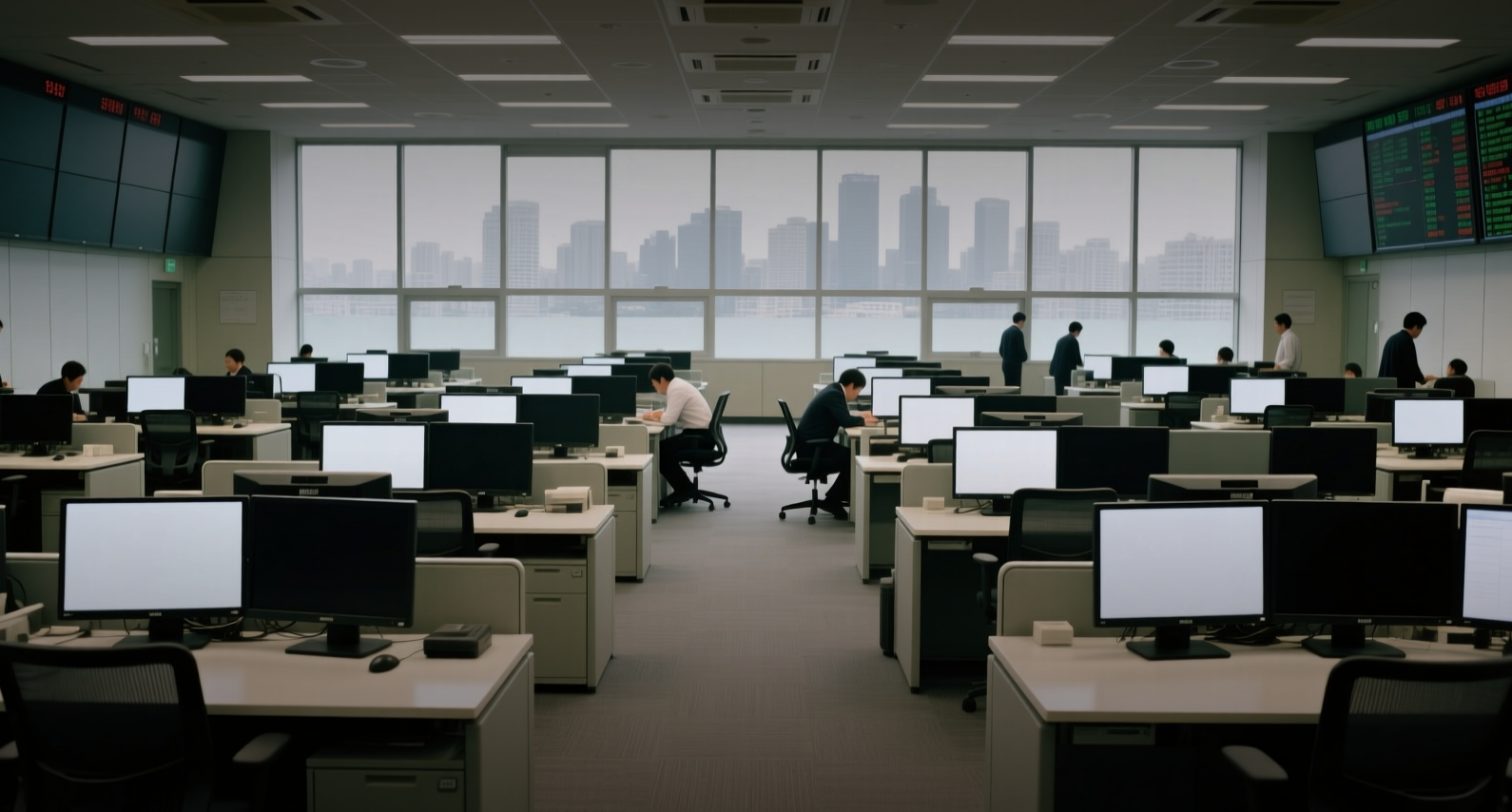
The KOSPI fell 2.86% to 6,640.26 Wednesday as surging oil prices and rising global bond yields hit South Korea's heavyweight technology and industrial stocks.
"Higher yields raise the discount rate applied to future earnings, exposing equities to correction risk," said Han Ji-young, an analyst at Kiwoom Securities.
The benchmark opened more than 3 percent lower, making Seoul one of Asia's weakest major markets. Japan's Nikkei 225 slid about 1 percent to 65,647 as Tokyo Electron dropped 4.1 percent and Lasertec lost 3.1 percent. The rotation punished the same groups that led losses a day earlier, when construction fell 4.16 percent, machinery equipment dropped 2.36 percent and transportation equipment declined 2.12 percent, while insurance gained 1.13 percent and chemicals rose 0.74 percent.
The slide leaves the KOSPI exposed to further outflows if crude keeps climbing and Treasury yields extend toward 4.78 percent, the highest since early 2025, after Fed Chair Kevin Warsh reinforced his willingness to tighten policy if inflation fails to ease.
Chip Buybacks Can't Offset the Macro Squeeze
The selloff tracked renewed US-Iran fighting that pushed Brent crude above $91 a barrel, with WTI settling at $85.76, while the US 10-year Treasury yield climbed toward 4.78 percent. Japan's benchmark 10-year bond yield touched 3 percent for the first time since 1996, and the yen hovered near 160 per dollar, adding to pressure on regional exporters.
Buyback programs at Samsung Electronics and SK Hynix offered only limited support. The repurchases — Samsung buying for employee stock compensation and SK Hynix for cancellation — have kept "Other Corporations" in net buying for 10 consecutive sessions, including roughly 1 trillion won ($729.7 million) the prior day. Yet that buying failed to stem the decline, a sign that macro pressure outweighed corporate support. Samsung fell more than 2 percent in early trading before paring losses, while SK Hynix swung to a gain of about 2 percent and POSCO Holdings rose more than 2 percent.
Record semiconductor exports cushioned the blow. South Korean exports surged 68.7 percent in August to $98.26 billion, with semiconductor shipments nearly tripling to a record $46.65 billion on AI-related memory demand. Strength in US chip stocks — Nvidia rose 1.48 percent and Micron gained 2.77 percent overnight — helped limit the damage.
Yeom Dong-chan, an analyst at Korea Investment & Securities, said the market is pricing in semiconductor slowdown concerns too quickly, adding that valuations remain low even allowing for future earnings estimate downgrades. The won traded at 1,369.1 per dollar, down 1.1 won from the prior session.
Deutsche Bank analysts flagged the same dynamic across global equities this week, noting that rising yields and geopolitical instability are pushing investors into defensive utilities and consumer staples while technology and real estate suffer the largest sell-offs. For Seoul, whose index leans heavily on Samsung Electronics, SK Hynix and industrial exporters, the composition magnifies the damage.
If oil and yields keep climbing, the KOSPI's tech-heavy structure leaves it more exposed than regional peers, and the failure of buybacks to arrest the slide may raise questions about how much support such programs can provide in a sustained selloff. Strong US labor data due this week could add to the pressure by strengthening the case for a September rate increase, according to Chris Larkin of E*Trade.
This article is for informational purposes only and does not constitute investment advice.
