
Lucid Group shares fell 33% over the past month to $4.70, trailing Tesla and Rivian, as surging revenue collided with a negative $1.476 billion free cash flow that forced production cuts.
Lucid Group shares fell 33% over the past month to $4.70, trailing Tesla and Rivian, as surging revenue collided with a negative $1.476 billion free cash flow that forced production cuts.
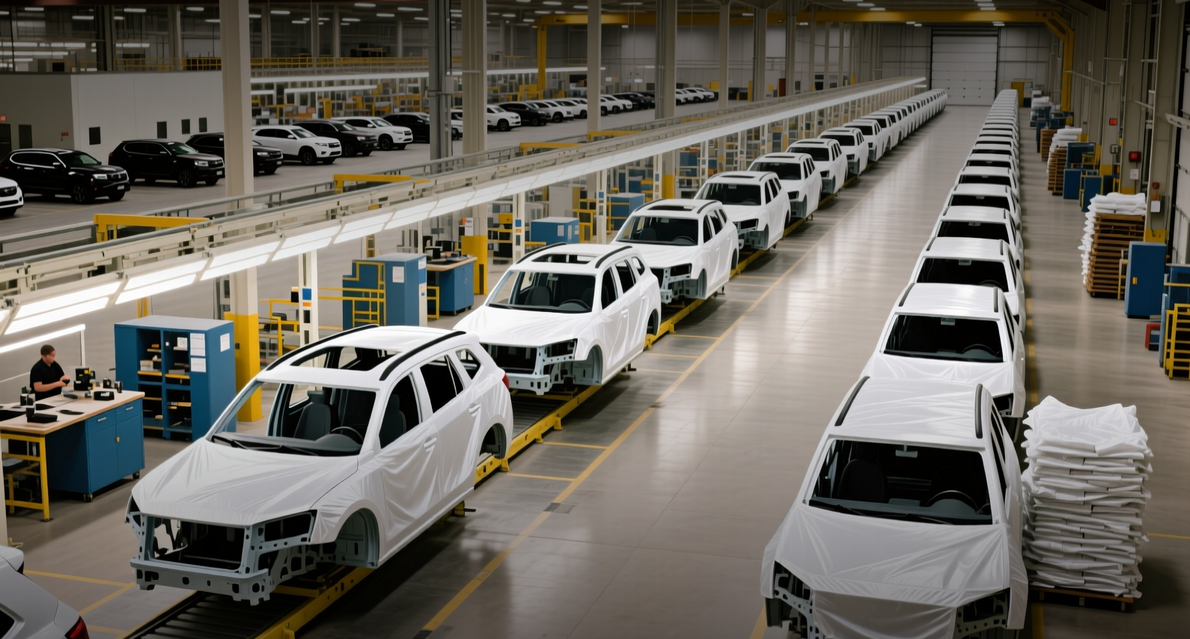
A 33% monthly slide has pushed Lucid Group shares to $4.70, leaving the EV maker far behind Tesla and Rivian as investors weigh surging revenue against a cash burn that forced management to cut production.
Lucid's new chief executive has framed the reset as necessary, trimming output to lower inventory and preserve cash while targeting $1.4 billion of cash-flow improvements for 2026, the company said. The plan also leans on the Gravity SUV program, robotaxi work with Uber and Nuro, and a future midsize vehicle line to widen the addressable market.
Second-quarter revenue rose 56% year over year to $405 million, with deliveries up 19% to 3,953 vehicles. Free cash flow was negative $1.476 billion, and the company ended the quarter with $3 billion of total liquidity — a cushion that buys time but not unlimited runway at the current burn rate.
The monthly decline stands out against peers. Rivian shares rose 0.87% to $16.14 and Tesla gained 11% to $366.11 over the same stretch, while the Global X Autonomous & Electric Vehicles ETF (DRIV) fell just 2% to $34.89. The fund holds Tesla alongside Nvidia and Alphabet, a reminder that the autonomous-vehicle theme has broadened well beyond pure EV makers.
The bull case rests on execution
Lucid's supporters point to the Gravity program, which the company calls America's most powerful three-row crossover, and the robotaxi partnerships with Uber and Nuro as optionality a pure vehicle-sales model lacks. The $1.4 billion of identified 2026 cash-flow improvements, if delivered, would materially slow the drain that has defined the company's post-IPO years.
The stock has swung violently on such hopes before. In July, a $129 million stake from a Saudi prince helped drive a 25% intraday surge, and the company denied bankruptcy speculation that had earlier pushed shares down sharply. The new CEO's turnaround plan, which called out years of underperformance in blunt terms, was followed days later by a fresh 52-week low — evidence that investors remain skeptical of promises until the financials back them up.
The bear case is the balance sheet
The counterweight is the numbers. Revenue growth of 56% has not translated into profitability, and the deliberate production cut means deliveries will lag demand in the near term even as the company clears inventory. Tesla's scale and Rivian's larger production base give both a wider margin for error than Lucid, which has little room for execution missteps as it tries to reach the next stage of its growth plan.
The broader EV demand picture adds little comfort. Tesla has flagged uneven demand, including slower growth in China-made vehicle sales during August, yet its scale and diversified business give the stock a very different risk profile from Lucid's. Rivian likewise operates from a larger production base, leaving the smaller maker with the least room to absorb a demand shortfall.
For investors, the question is whether the 33% decline has priced in the worst. Lucid shares could rebound if cost cuts take hold, Gravity gains traction and the midsize program expands the market. But stronger revenue alone may not change the investment case while free cash flow stays deeply negative. Holders should keep position sizes moderate, and those without a stake may prefer to wait for evidence that the operational reset is translating into stronger financial results before treating the slide as a value entry point.
This article is for informational purposes only and does not constitute investment advice.
