
Lumilens, a two-year-old startup, has raised more than $700 million at a $5.5 billion valuation to replace copper wiring in AI data centers with optical connections.
Lumilens, a two-year-old startup, has raised more than $700 million at a $5.5 billion valuation to replace copper wiring in AI data centers with optical connections.
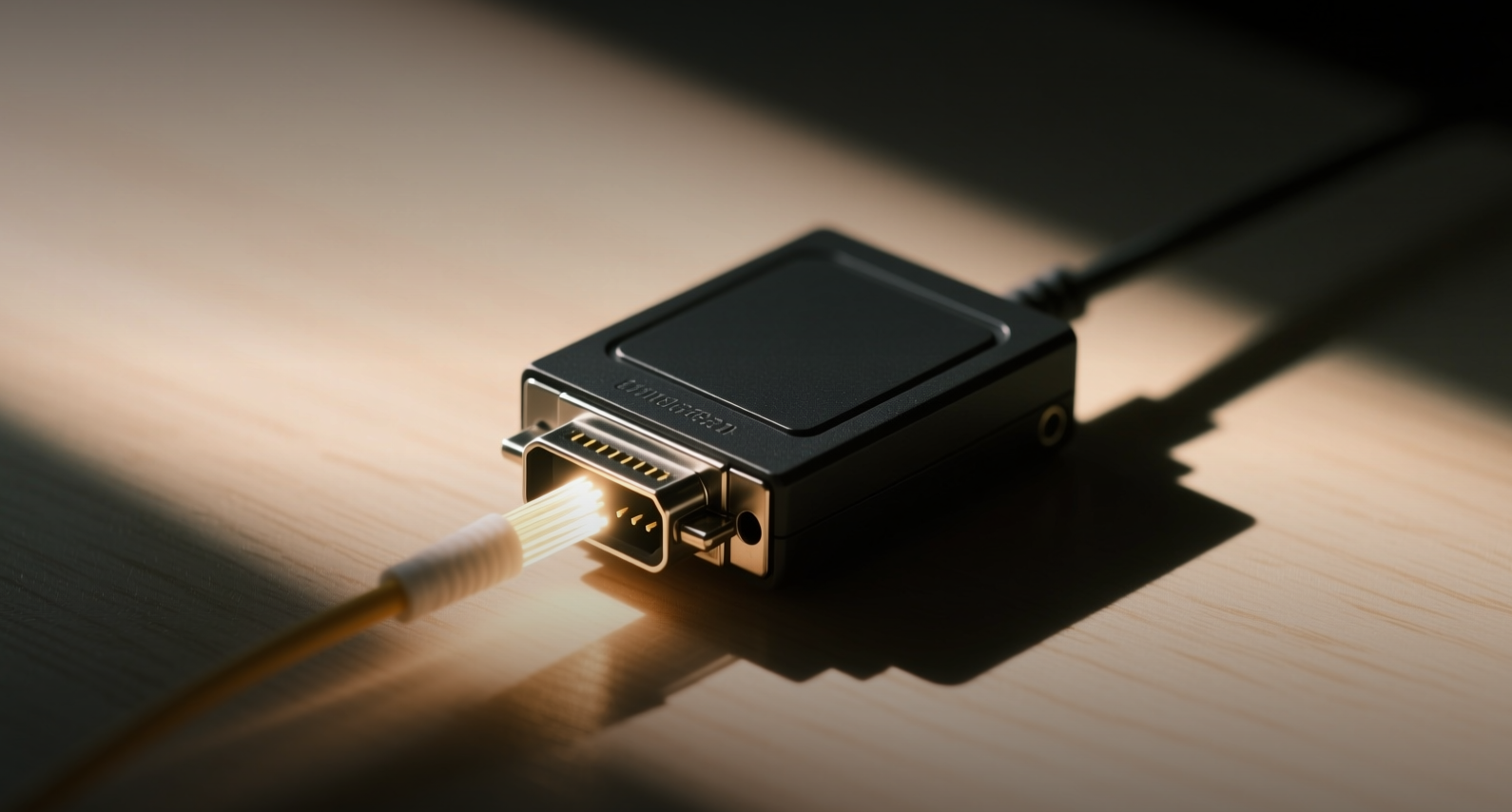
Optical interconnects are moving from lab curiosity to data-center standard as Lumilens, a two-year-old San Jose startup, raised more than $700 million at a $5.5 billion valuation to replace copper wiring throttling AI clusters.
"The constraint on AI has shifted from how many GPUs you can buy to how many you can connect," Chief Executive Ankur Singla said.
The round was co-led by Atreides Management, Bain Capital Ventures, Meritech, Seligman Ventures and Spark Capital, bringing total funding above $900 million. Lumilens has begun shipping optical transceivers to an unnamed hyperscaler under a multi-billion-dollar agreement.
The funding comes as hyperscalers spend billions to expand data centers for AI, and as the Trump administration weighs banning imports of certain data-center components from China, including optical gear.
Why copper is the bottleneck
Graphics processing units today are typically connected with copper wiring, which is cheap and reliable but becomes less effective when handling larger amounts of data over longer distances. As companies cram more-powerful chips into data centers, moving information quickly between processors has become a bigger challenge. Optical connections transmit information using light instead of electrical signals, offering a path around that bottleneck.
The prevailing obstacle is cost. Optical equipment can be several times more expensive than copper, according to Singla, making it hard to justify unless the performance gains are significant. "Copper is way cheaper today and will be way cheaper than optics," he said in an interview, adding that his goal is to close that gap.
That has pushed Lumilens to focus as much on manufacturing its products as on designing the chips inside them. Singla said he is also committed to manufacturing outside of China, a stance that took on greater significance after Reuters reported the Trump administration is planning to ban imports of certain data-center components from China, including optical gear.
The competitive field
Lumilens is working on two types of optical products. One connects separate server racks across a data center, known as "scale out." The other is designed to connect chips within a single rack, known as "scale up." Its first product, an optical transceiver, converts electrical signals into light so data can travel over fiber-optic cables. It is already shipping the small device to the unnamed hyperscaler, which is using the technology alongside its own AI chips.
Lumilens is not alone in chasing the opportunity. Lightmatter, founded in 2017, has raised $850 million and was last valued at $4.4 billion in 2024. Celestial AI, founded in 2020, was pursuing a similar approach before Marvell acquired it in February for $3.25 billion. "Optics has always been there, but never used," said Umesh Padval, managing partner at Seligman Ventures, an investor in Lumilens. "The AI boom could finally change that."
The company has hired executives and engineers from Cisco, Juniper Networks, Meta, Marvell, Lumentum and Coherent, bringing expertise in photonics and large-scale networking. It plans to use the fresh capital to scale up engineering and manufacturing operations.
What it means for investors
The optical interconnect race is a direct bet on how hyperscalers — Amazon, Alphabet, Microsoft and Meta — will wire the next generation of AI data centers. Nvidia's GPUs, the workhorses of AI training, are increasingly limited by how quickly data can move between them, and optical links promise to remove that constraint. For investors, the question is whether Lumilens can scale manufacturing fast enough to win share from incumbents and peers before the copper-to-optics transition matures.
This article is for informational purposes only and does not constitute investment advice.
