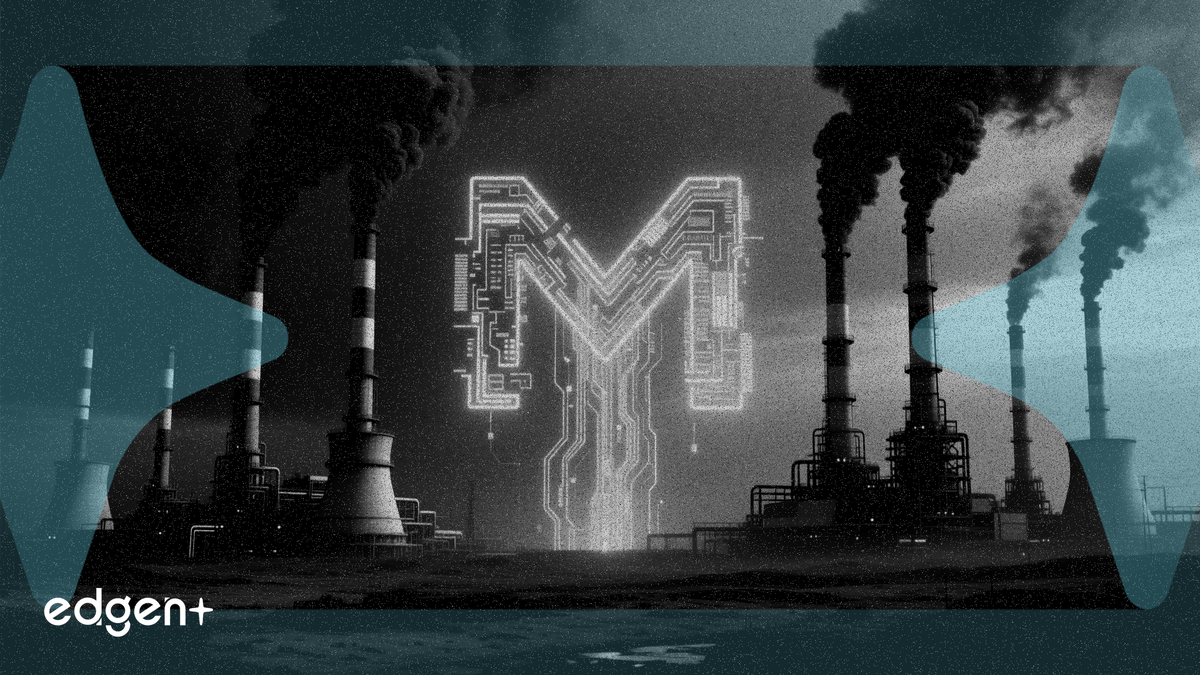
Meta's massive new AI data center in Louisiana promises an economic boom but at the cost of a significant environmental footprint, requiring a tripling of local natural gas power generation.
Meta Platforms Inc.'s $10 billion "Hyperion" data center campus in Louisiana highlights the immense energy and capital required for generative AI, forcing the construction of 10 new natural gas plants and sparking a debate over the technology's environmental costs and community impact. The project underscores a critical challenge for the tech industry: balancing the voracious computational and energy demands of artificial intelligence with environmental sustainability and social responsibility.
"Our state is showing how high-tech and households can thrive on the same power grid," an Entergy Louisiana representative wrote in a public statement, highlighting a projected $2.8 billion in customer savings over 20 years as a result of the deal. The utility argues that adding large-scale customers like Meta allows for critical grid upgrades while lowering costs for residential customers.
The 2,250-acre campus in Richland Parish, large enough to cover a significant part of Manhattan, will require up to 7.5 gigawatts of total power upon completion. The project was secured with a generous $3.3 billion package of tax breaks from the state, which includes the complete elimination of sales tax on GPU purchases for the site, according to a Sherwood News analysis.
The investment is a crucial test of whether massive AI infrastructure can be built without overwhelming local grids and communities. While Meta (META) secures its long-term AI compute capacity, Richland Parish is already experiencing a 170% surge in housing prices since the project's announcement in January 2025. This sharp increase, coupled with the promise of just 500 long-term operational jobs, raises questions about the project's ultimate benefit for the local population.
A New Kind of Gentrification
Before Meta's arrival, Richland Parish was a struggling agricultural community with an average weekly wage of just $870 in 2025, equivalent to about $41,000 per year. The sudden spike in housing costs is now pricing many long-time residents out of the market, creating a modern form of gentrification driven by data center development. While property owners have seen their asset values soar, the corresponding rise in tax assessments could force sales, displacing the very community the project is ostensibly meant to help.
A Grid Under Pressure
The environmental footprint of the Hyperion campus is substantial. To meet its energy needs, utility partner Entergy Louisiana received approval to fast-track the construction of natural gas turbine plants, tripling the number originally planned. The new plants will add 5,200 megawatts of fossil-fuel-powered energy generation. This has drawn criticism from groups like the Alliance for Affordable Energy and the Union of Concerned Scientists, who point to the noise pollution, which can be similar to a commercial airport, and potential health effects from infrasound. Further scrutiny has come from Washington, with Representative Alexandria Ocasio-Cortez confronting the EPA over claims of water pollution linked to the construction.
The Utility's Defense
Entergy contends that its "Fair Share Plus" pledge ensures Meta pays the full cost to power its facilities while providing additional community benefits. The utility claims Meta has agreed to donate millions to energy efficiency programs and bill support for vulnerable customers. According to Entergy, Louisiana's regulated energy market prevents the bill spikes and reliability issues seen in deregulated states like Texas, as every new project requires Public Service Commission approval to ensure it benefits all customers. The utility argues that these large industrial users help subsidize the cost of grid maintenance and upgrades that would otherwise fall entirely on residential and small-business customers.
The $10 billion capital expenditure is a fraction of Meta's reported $200 billion long-term bet on AI. Investors are closely watching to see if this massive, energy-intensive infrastructure spending will translate into a durable competitive advantage against rivals like Google (GOOGL) and Amazon (AMZN). However, the project's deep reliance on fossil fuels introduces significant ESG (Environmental, Social, and Governance) risks that could attract further regulatory scrutiny and impact the company's valuation. The success or failure of the Hyperion campus will likely serve as a blueprint for the next wave of AI infrastructure, defining the economic and environmental terms of the industry's expansion.
This article is for informational purposes only and does not constitute investment advice.