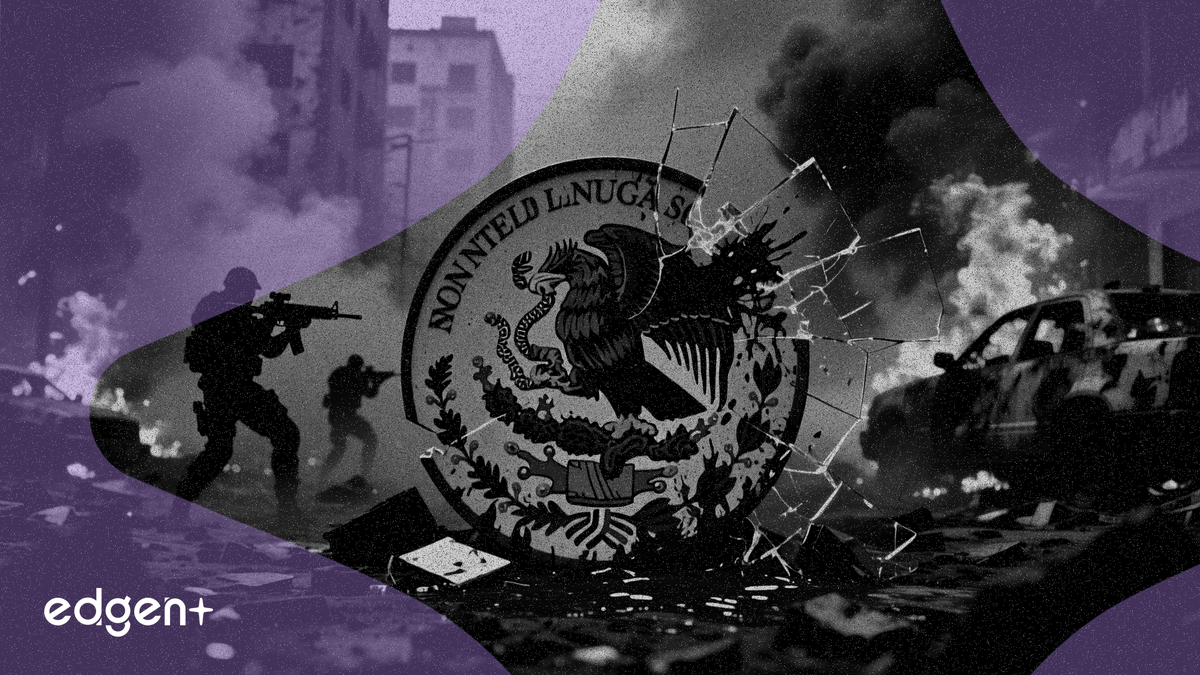
A US indictment of a sitting Mexican governor has uncorked a brutal civil war within the Sinaloa cartel, leaving thousands dead and shaking the foundations of the country's political establishment.

A U.S. indictment of Sinaloa's governor for allegedly accepting bribes from the "Chapitos" faction has triggered a nearly two-year civil war against the rival "Mayitos," resulting in 3,000 deaths since 2024 and exposing deep-seated political corruption.
"When there’s a betrayal at the top, it’s the worst thing that can happen to an organization like this," said Eduardo Guerrero, a Mexican security expert. "It generates a violent struggle between two factions, as is happening now in Sinaloa.”
The conflict was sparked by the mid-2024 kidnapping of Sinaloa cartel co-founder Ismael “El Mayo” Zambada by one of Joaquín “El Chapo” Guzmán's sons, Joaquín Guzmán López. Zambada was subsequently delivered to U.S. authorities in a bid by Guzmán López to secure a favorable plea deal. The move backfired, igniting a bloody feud that has left another 3,600 people missing.
The indictment of Governor Rubén Rocha Moya, a first for a sitting Mexican governor, and the ongoing cartel infighting threaten to destabilize a key U.S. trading partner. Drug Enforcement Administration head Terry Cole testified in the Senate that the indictment is "just the start about what’s to come in Mexico," signaling further actions against corrupt officials.
The current war began when the 78-year-old Zambada, a legendary mediator in the criminal underworld, was lured into a trap by his own godson, Joaquín Guzmán López. Zambada believed he was attending a meeting to resolve a political dispute. Instead, he was ambushed by Guzmán López’s gunmen, who killed a local politician, Héctor Cuén, at the scene and bundled Zambada onto a plane bound for El Paso, Texas, where U.S. officials took both men into custody.
While Guzmán López hoped handing over a kingpin of Zambada's stature would reduce his own sentence, the betrayal shattered the internal power structure of the Sinaloa cartel. Zambada’s faction, the "Mayitos," led by his son Ismael “Mayito Flaco” Zambada, immediately declared war on the "Chapitos," the faction controlled by El Chapo's sons. The last time a high-level cartel leader was betrayed in such a manner in the early 1990s, the resulting turf war led to the mistaken-identity killing of a Catholic Cardinal and years of bloodshed.
Initially, the younger, wealthier, and more numerous Chapitos were expected to dominate the conflict. However, the Mayitos have proven to be a more resilient and "belligerent" force, according to a report from Mexico's Attorney General's office. They have systematically infiltrated the Chapitos' territory in Culiacán, kidnapping, torturing, and killing their rivals to extract intelligence.
The Chapitos' power has also been eroded by U.S. law enforcement. Two of El Chapo's sons, Ovidio Guzmán López and Joaquín Guzmán López, are in U.S. custody and cooperating with authorities. The alleged ringleader, Iván Archivaldo Guzmán Salazar, and his brother are reportedly in talks for a negotiated surrender. The indictment of Governor Rocha, who allegedly won his 2021 election with the help of the Chapitos' armed intimidation, further weakens the faction by cutting off their state-level protection.
The U.S. indictment alleges that Governor Rocha and nine other officials took millions in bribes to protect the Chapitos' fentanyl trafficking operations. The charges claim Rocha met with two of El Chapo's sons before his election to secure their support. After his victory, he allegedly allowed state and local police to act as enforcers for the cartel, murdering enemies and kidnapping those suspected of cooperating with the U.S.
Rocha has temporarily stepped down, calling the charges "false and malicious" and part of a political campaign against his Morena party. Mexican President Claudia Sheinbaum has demanded "solid and irrefutable" evidence from the U.S. but has initiated a separate Mexican investigation. The episode highlights the endemic corruption that has allowed cartels to flourish and complicates diplomatic relations between Mexico and the United States.
This article is for informational purposes only and does not constitute investment advice.