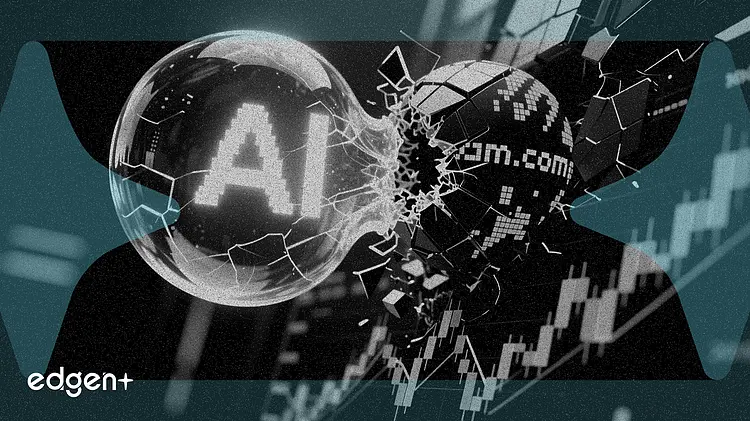
(P1) Famed investor Michael Burry is raising alarms over the artificial intelligence boom, warning that the sector’s rapid ascent shows similarities to the dot-com bubble fueled by speculative financing.
(P2) "Burry, who rose to prominence for his bet against the subprime mortgage market featured in ‘The Big Short,’ pointed to evidence that an increasingly large amount of junk-bond debt and venture capital money is pouring into the AI sector," according to a report.
(P3) The caution comes as key AI-related market segments have become overheated, with the semiconductor sector jumping 138% in the last year. While the S&P 500 has seen a mild pullback of 0.22%, the tech-heavy Nasdaq 100 has remained more resilient, dipping only 0.06% as investors grapple with whether valuations have become too stretched.
(P4) At stake is the stability of the tech-led market rally, with Burry's warning suggesting that the foundation of the AI boom may be built on the same kind of risky, low-quality debt that has preceded previous market corrections. Investors are now weighing whether to heed the warning or continue riding the powerful momentum in AI.
The comparison to the dot-com era hinges on the quality of capital flowing into the AI space. Burry’s concern focuses on the use of high-yield, high-risk junk bonds to fund capital-intensive AI projects, a sign that speculative fervor may be overriding prudent financial diligence. This mirrors the late 1990s, when companies with little revenue or profits were able to raise significant capital before ultimately collapsing.
This dynamic is creating a precarious environment for investors. While hardware providers like Nvidia (NVDA) have seen massive gains, their valuations are now a topic of intense debate. According to one analysis, even a dominant player like Nvidia remains a concern, as a blowout earnings report might not be enough to satisfy a market accustomed to euphoric gains. The stock was recently down 4.4% in a single session, highlighting the potential for sharp swings.
The broader question is whether the current AI hardware trade has become too crowded. As software valuations have reset, some analysts argue they now present a relative value play compared to the high-flying semiconductor stocks. The situation has all the makings of a trader's playground in the coming months, where volatility could become the new normal. Burry’s warning serves as a timely reminder for investors to scrutinize the underlying financial health of their AI investments, rather than relying on market hype alone.
This article is for informational purposes only and does not constitute investment advice.