
NATO’s potential military deployment to the Strait of Hormuz by July marks the first major test of European military autonomy as the U.S. pivots its strategic focus away from the continent.
NATO’s potential military deployment to the Strait of Hormuz by July marks the first major test of European military autonomy as the U.S. pivots its strategic focus away from the continent.
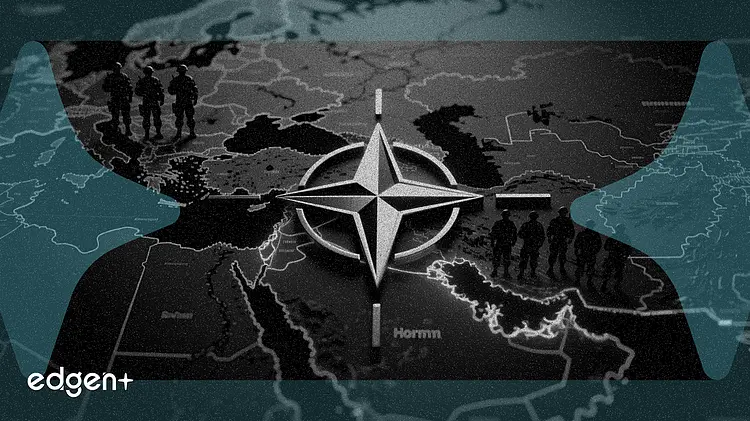
NATO is considering a military deployment to the Strait of Hormuz if it is not reopened by July, a move that tests the alliance’s operational capacity as the U.S. pulls back from its role as Europe’s primary security organizer. The potential action comes as Washington’s strategic pivot away from Europe becomes a military reality, forcing allies to confront regional crises with their own assets.
"While they may be able to sit on the bottom for a while and operate somewhat quietly on their batteries for a while, they have no air-independent propulsion system (AIP) like more modern diesel-electric submarines," Tom Shugart, a retired U.S. Navy submarine warfare officer, said of the Iranian Ghadir-class mini-subs deployed to the strait. "This will make them more vulnerable to detection and destruction."
The crisis has already choked off one of the world’s most vital oil arteries. Just six vessels transited the strait in a recent two-day period, a fraction of the historical average of 138, according to the Joint Maritime Information Center. In response, a French carrier strike group, a U.K. destroyer, and two Italian minesweepers are moving toward the region. The deployments coincide with the planned withdrawal of 5,000 U.S. troops from Germany, including a brigade combat team and a long-range fires battalion.
At stake is the security of a waterway that handles about 20 percent of the world’s petroleum products, with a continued closure threatening to fuel global inflation and destabilize energy markets. The situation in the Strait of Hormuz is the first major military test of the new NATO bargain: Europe takes more responsibility for regional security while the U.S. keeps the strategic levers but focuses elsewhere.
The potential Hormuz operation is not happening in a vacuum. It is the direct result of a strategic realignment foreshadowed by former President Donald Trump and formalized in the 2026 National Defense Strategy. For the first time, Europeans are moving into leadership of all three major NATO Joint Force Commands: the U.K. at Norfolk (Atlantic artery), Italy at Naples (Mediterranean/Southern Flank), and Germany and Poland at Brunssum (Eastern Flank). These commands are responsible for the actual conduct of regional war, from force deployment to logistics.
This new military map elevates Poland as the core of the Eastern Flank, Italy as the anchor for Mediterranean and Middle East spillover, and Britain as the guardian of the Atlantic reinforcement route. The shift is reinforced by changes in U.S. force posture, including the withdrawal of the combat brigade and Tomahawk missile battalion from Germany—capabilities European allies long assumed America would provide. NATO’s recent exercises, such as Steadfast Dart 26 and Amber Shock 26, reflect this new reality, focusing on rapid deployment to the Eastern Flank and logistics in the critical Suwałki Gap.
While NATO allies are stepping up, the Hormuz crisis exposes critical gaps in European military capacity. A French carrier strike group, a U.K. destroyer, and Italian minesweepers are en route, but questions of scale and sustainability remain. The EU’s Operation Aspides in the Red Sea, which has supported over 640 merchant vessels, has been hampered by a shortage of high-end naval ships and a limited appetite for risk among member states.
This European flotilla will face an Iranian military built for asymmetric warfare in the shallow, confined waters of the Persian Gulf. Iran has deployed Ghadir-class mini-subs, which, while having limited range and endurance, could threaten merchant ships or lay mines. Defense analyst Tom Shugart noted that these diesel-electric submarines must "eventually have to come up and snorkel," creating vulnerabilities. However, their presence complicates any naval operation.
The crisis in the Strait of Hormuz is therefore more than a regional conflict; it is a defining moment for the future of European security. It forces Europe to convert years of increased defense spending into a coherent, deployable, and sustainable military force capable of securing its own vital interests. The success or failure of any NATO operation in the strait will provide a clear verdict on whether the new strategic bargain can work in practice.
This article is for informational purposes only and does not constitute investment advice.
