
U.S. natural gas futures settled down 2 percent at $2.916 per mmBtu as cooler late-September forecasts cut power-sector cooling demand, with strong LNG exports limiting the downside.
U.S. natural gas futures settled down 2 percent at $2.916 per mmBtu as cooler late-September forecasts cut power-sector cooling demand, with strong LNG exports limiting the downside.
The first trading session after the Labor Day holiday brought Nymex natural gas futures to a 2 percent loss, settling at $2.916 per million British thermal units as weather models pointed to a pronounced cooling of late-September temperatures across the U.S. power grid's key demand regions.
"Cooling demand is expected to step down steadily through the second half of September, making today's decline look more like a repricing of near-term weather exposure than a sharp deterioration in fundamentals," Gelber & Associates said in a note.
The decline deepened through the session. Nymex natural gas traded off 0.4 percent at $2.963 per mmBtu in early trading before settling 2 percent lower. Eli Rubin of EBW Analytics said "the summer will transition rapidly into fall," noting that even meteorologists who estimated cooling demand gains over the holiday weekend acknowledge cooler weather in the 11-to-15-day window. The regional breakdown for late September is "mildly supportive" for gas prices, with late-season cooling demand in the South Central region and early heating demand in the upper Midwest and New England, Rubin added.
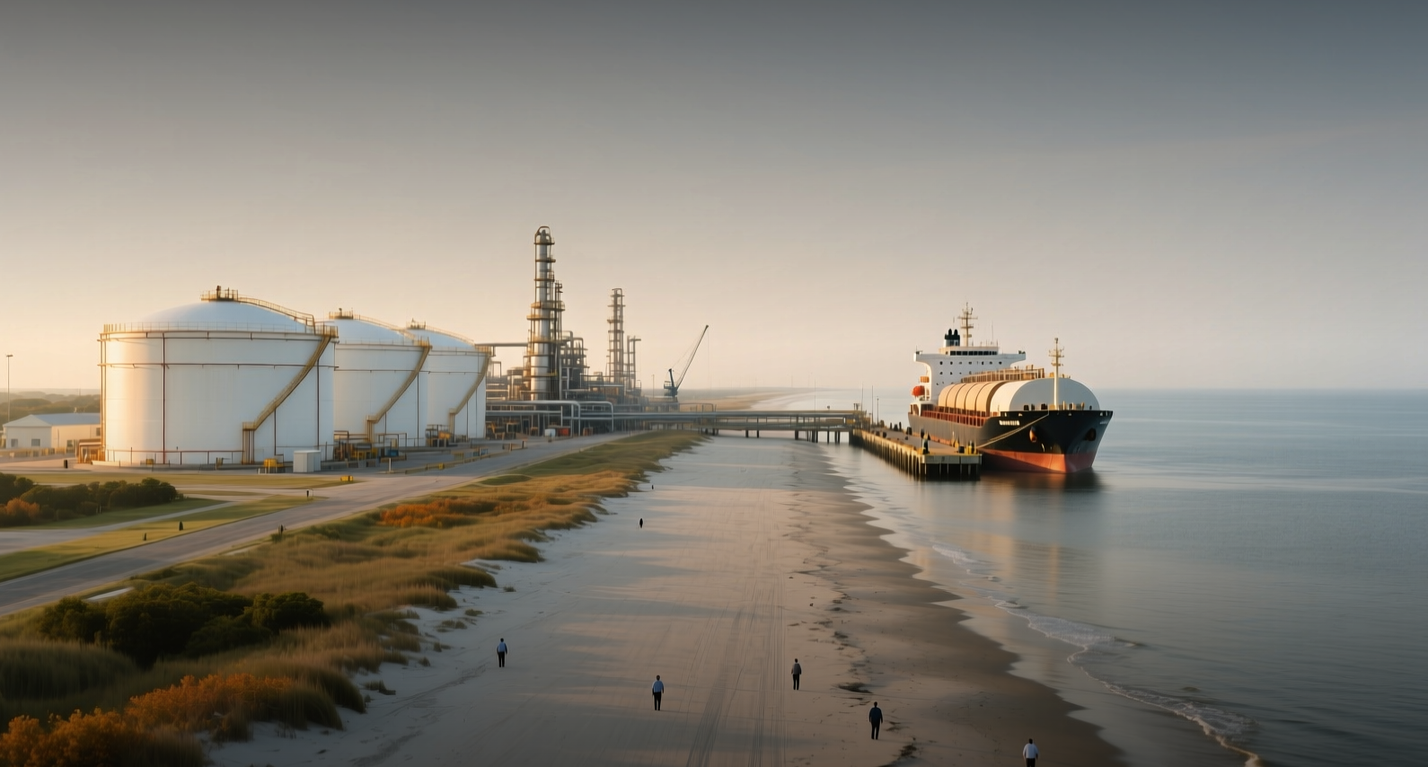
Strong LNG export demand remains the strongest counterweight to the bearish weather outlook, Gelber & Associates said. LNG prices have climbed to multi-year highs as West Asia conflict and supply disruptions tighten global supply, according to market reports. The structural pull from U.S. export terminals provides a floor under domestic prices even as seasonal cooling demand fades, limiting the downside from the weather repricing.
The seasonal transition is the dominant driver of near-term pricing. Cooling demand typically peaks in mid-summer across the U.S. South and Southwest, then erodes through September as overnight temperatures moderate and the sun angle drops. The current forecast tracks that seasonal template, with the 11-to-15-day outlook showing a pronounced shift toward autumn conditions across most of the country.
The market's reaction is concentrated in the front of the curve, consistent with a weather-driven repricing rather than a broader reassessment of supply-demand fundamentals. The decline comes as traders position for the shoulder season — the period between peak cooling and peak heating demand — when natural gas typically faces its weakest consumption of the year.
LNG exports are the key variable to watch. U.S. liquefaction capacity has expanded steadily in recent years, with new export capacity along the Gulf Coast increasing the country's role as a marginal supplier to global markets. The West Asia conflict has pushed international LNG prices to multi-year highs, making U.S. cargoes increasingly competitive and supporting sustained export volumes.
For traders, the question is whether the weather repricing extends further or finds support from the LNG bid. If cooler-than-normal temperatures persist into early October, cooling demand could fade faster than expected, putting additional pressure on front-month prices. Conversely, any disruption to LNG export flows — whether from weather events at Gulf Coast facilities or geopolitical developments — could quickly reverse the decline.
The near-term price path will be determined by the tug-of-war between seasonal demand erosion and the structural LNG bid. The expanding export base has changed the seasonal calculus for U.S. natural gas, providing a year-round demand channel that partially offsets the traditional weakness of the September-October shoulder period. With the West Asia conflict keeping global LNG supply tight, the export pull is likely to remain a persistent bullish factor even as domestic weather-driven demand weakens into October.
This article is for informational purposes only and does not constitute investment advice.
