
The US auto safety regulator is reviewing roughly 1,000 Tesla Cybercab vehicles, probing whether the company's compliance certification for its driverless two-seater meets federal motor vehicle safety standards.
The US auto safety regulator is reviewing roughly 1,000 Tesla Cybercab vehicles, probing whether the company's compliance certification for its driverless two-seater meets federal motor vehicle safety standards.
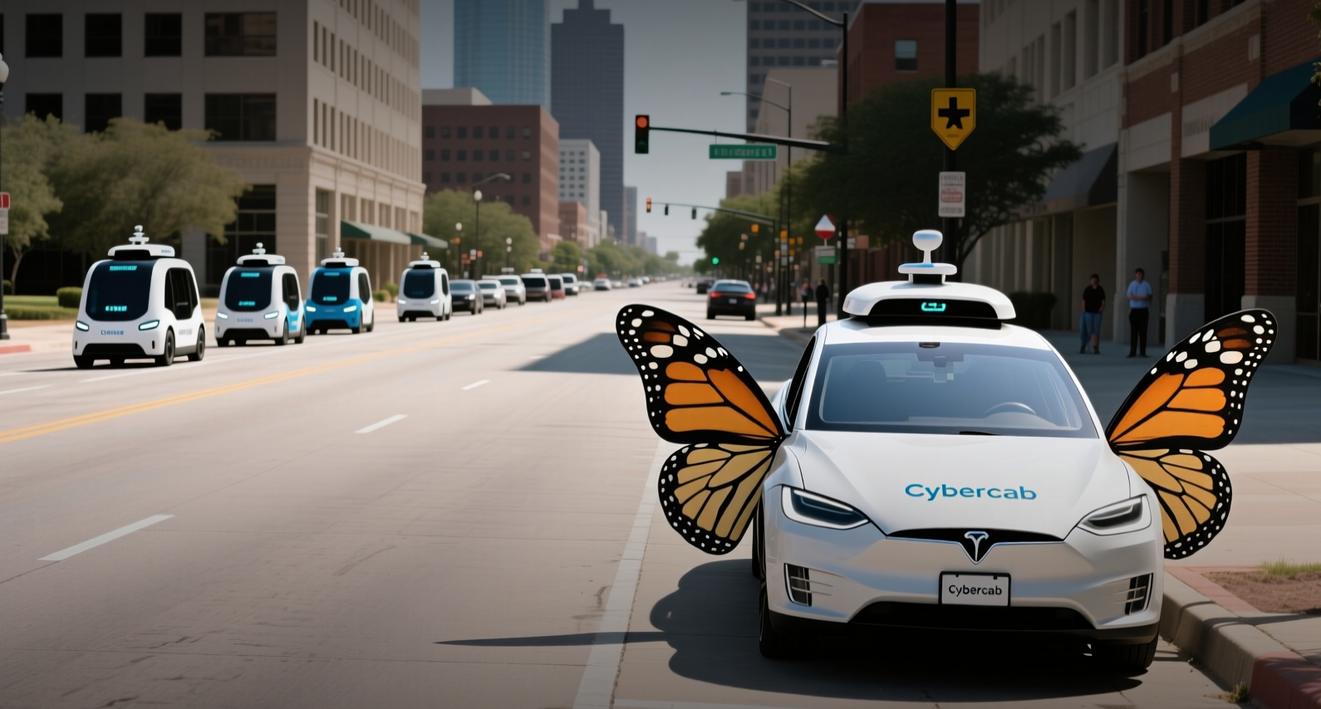
Tesla's self-certification of federal safety compliance faces its first major test as NHTSA opened an audit into roughly 1,000 Cybercab vehicles Thursday, days after the driverless two-seater began carrying passengers in Austin.
The agency is examining "the process and technical data on which Tesla relied when certifying the Cybercab," a spokesperson for the National Highway Traffic Safety Administration said, according to Reuters.
Tesla began commercial use of a small number of Cybercabs in Austin on Thursday, one day before the audit was announced. The two-seater features butterfly doors and lacks permanently attached manual controls including a brake pedal, gas pedal, steering wheel and mirrors — all of which federal motor vehicle safety standards generally require. Tesla has not announced an exemption covering those requirements, and the company appears to be relying on self-certification, under which manufacturers certify their own compliance and the regulator checks afterwards.
The audit introduces compliance risk for Tesla's robotaxi roadmap at a critical juncture. Tesla's valuation of roughly $1.4 trillion depends in part on autonomy as a growth driver while its core EV business faces intensifying competition. Shares fell more than 2 percent in premarket trading. Possible outcomes range from no further action to a requirement that the vehicles come off the road until the exemption question is resolved.
The distinction between self-certification and formal exemption is central to the case. Under the US system, manufacturers certify their own compliance with federal standards and the regulator verifies afterwards. In Europe, a vehicle needs type approval before it can carry passengers. The US approach means Tesla's Cybercab entered service first and now faces regulatory questions after the fact.
Tesla's fleet in Texas remains small. The state has 420 autonomous vehicles registered, including 45 Cybercabs, compared with 988 vehicles registered by Waymo. A robotaxi service depends on having a car close enough to pick someone up when they open the app, and 45 vehicles spread across a city are unlikely to provide that consistently. Reuters reporters testing the service encountered long waits and trips that ended short of the advertised destination, with one journey leaving passengers around a 15-minute walk from where they were supposed to arrive.
The audit comes as Washington has been moving in Tesla's direction. The Department of Transportation has proposed dropping the brake pedal requirement for autonomous vehicles, which would remove one of the requirements the Cybercab currently does not meet. But state regulators have not always been persuaded: Tesla asked Nevada for permission to operate 5,000 robotaxis in Las Vegas but was granted 10, and it still lacks the permits needed to run a driverless service in California.
Tesla has been reducing human oversight in stages across its markets. It launched in Miami with no safety monitor and operates Model Ys in Texas and Florida with monitors in some vehicles, making the Cybercab an extension of an existing approach rather than an entirely new one. Ashok Elluswamy, Tesla's head of AI, said the service is open to the entire public, although the company has not said when it will start charging fares.
What other manufacturers will be watching most closely is the precedent this creates. If a car without the controls required by federal standards can carry members of the public while regulators determine whether it is legally allowed to do so, the exemption process risks becoming less of a gate than it was designed to be. NHTSA has not opened a formal investigation or identified a specific standard it believes Tesla has breached, and Tesla has not publicly responded to the agency's statement.
This article is for informational purposes only and does not constitute investment advice.
