

Key Takeaways:
- Nvidia certified Samsung, SK Hynix and Micron to supply HBM4 memory for Vera Rubin
- HBM4 doubles bandwidth to 2 TB/s per stack versus about 1 TB/s for HBM3E
- SK Hynix held 62% HBM market share; its shares surged 90% this year
Key Takeaways:
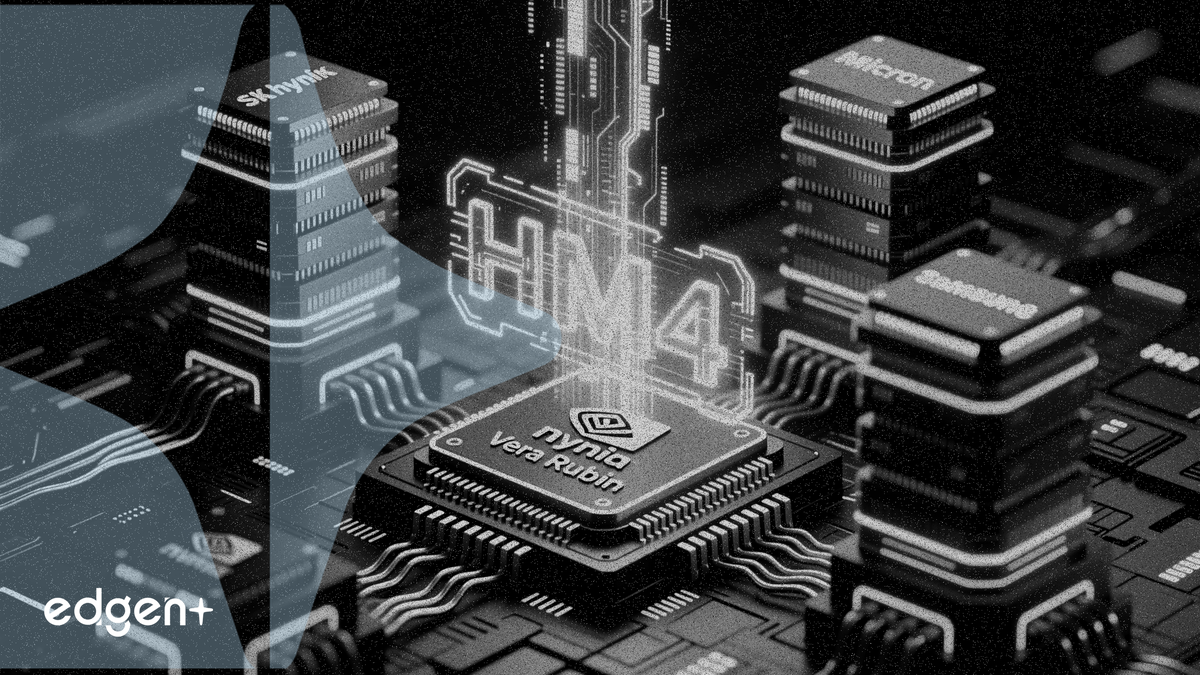
Nvidia certified all three major memory chipmakers to supply HBM4 for its next-generation Vera Rubin AI platform.
Nvidia Corp. certified Samsung Electronics, SK Hynix and Micron Technology to supply HBM4 memory for its Vera Rubin AI accelerator, broadening the supply base for the most critical component in next-generation AI servers.
"All three suppliers have completed certification and are already moving into production, competing to support Nvidia's newest AI chips," Chief Executive Officer Jensen Huang said during a visit to Seoul's Gimpo International Airport on June 5.
HBM4 doubles the interface width to 2,048 bits compared with HBM3E, enabling up to 2 terabytes per second of bandwidth per stack under the JEDEC standard, versus about 1 TB/s for the prior generation. Vera Rubin, Nvidia's next AI platform, is set for delivery in the third quarter.
The certification expands Nvidia's supplier base in a market where SK Hynix held 62% share in the second quarter of 2025, according to Astute Group. SK Hynix shares have surged about 90% this year, adding more than $80 billion in market value, while Samsung and Micron have gained about 40% and 80%, respectively.
Huang's visit extends beyond supply chain logistics. He is scheduled to meet with senior executives from Hyundai Motor, LG, SK, Samsung and Naver, and plans his first roundtable with South Korean robotics and AI startups. "Robotics technology will be South Korea's next big frontier," Huang said, as he pushes to build a "physical AI" ecosystem.
SK Group Chairman Chey Tae-won separately said "the memory bottleneck will persist through 2030" and pledged to double total wafer production capacity within five years. Arm Chief Executive Officer Rene Haas described memory as "probably the toughest" bottleneck to resolve, highlighting the industry-wide supply constraints.
HBM4 Competition Intensifies
SK Hynix has completed internal validation and quality assurance for HBM4 and is ready for mass production, the company said. Its latest HBM4 product doubles bandwidth and improves power efficiency by 40% compared with the prior generation, according to the company. Samsung Electronics used the Computex trade show to unveil the industry's first physical mockup of HBM5, its eighth-generation high-bandwidth memory, as it vies for leadership in the next-generation market.
Micron Technology, despite securing certification, saw its shares fall 5.82% in early trading on June 5, adding to a 7.7% loss the prior day driven by broader semiconductor weakness after Broadcom's poorly received earnings report. Having risen more than 800% in the past 12 months, Micron remains vulnerable to profit-taking. A separate report from SemiAnalysis on Nvidia reducing modular memory capacity for Vera Rubin server racks contributed to selling pressure, though the firm's head, Dylan Patel, subsequently said "there's nothing bearish" about the analysis.
Supply Constraints Reshape Pricing
As HBM generations advance with larger die sizes and rising demand, the crowding-out effect on conventional DRAM capacity is expected to intensify, according to research firm Trendforce. "This will provide suppliers with strong justification for raising HBM prices and strengthen their pricing power in HBM negotiations next year," Trendforce analysts wrote. Each HBM unit requires roughly three times the semiconductor wafer capacity of standard memory, meaning expanded HBM supply reduces production of other memory types and drives prices higher across the sector.
For investors, the HBM4 certification confirms that Nvidia's Vera Rubin ramp is on track, but the competitive dynamics among suppliers are shifting. SK Hynix, with its first-mover advantage and 62% market share, is best positioned to capture the initial wave of orders. Samsung's early HBM5 mockup suggests it is racing to close the gap, while Micron's certification removes a key overhang but leaves it as the third player in a three-supplier market. Nvidia shares, which have gained about 120% over the past 12 months, trade at roughly 35 times forward earnings.
This article is for informational purposes only and does not constitute investment advice.
