

Nvidia's data center revenue surged 92 percent to a record $75.2 billion last quarter, cementing its control over the AI computing platform as the industry prepares to spend as much as $4 trillion on infrastructure by 2030.
Nvidia's data center revenue surged 92 percent to a record $75.2 billion last quarter, cementing its control over the AI computing platform as the industry prepares to spend as much as $4 trillion on infrastructure by 2030.
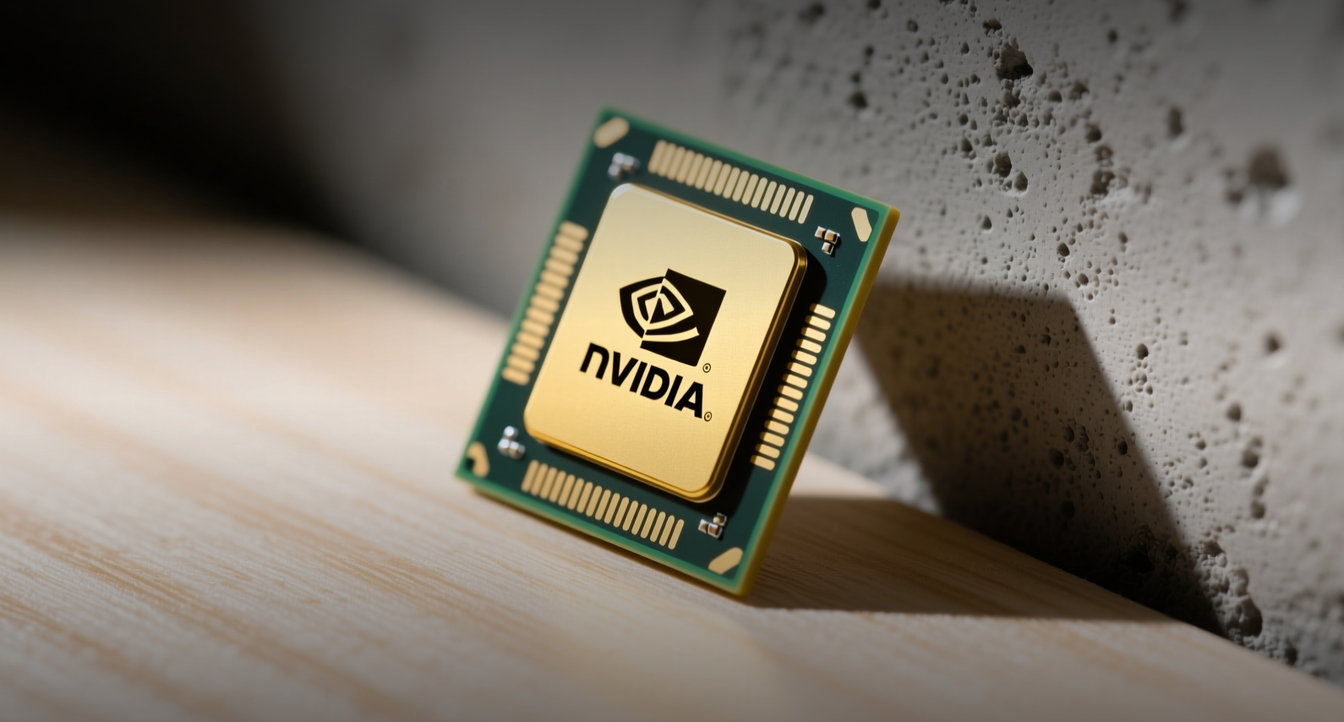
Nvidia's data center revenue surged 92 percent to a record $75.2 billion last quarter, reinforcing its grip on the AI computing platform as the industry prepares to spend as much as $4 trillion on infrastructure by 2030.
"This is the largest infrastructure expansion in human history," Jensen Huang, chief executive officer of Nvidia, said on the earnings call.
The company reported record revenue of $81.6 billion for the first quarter of fiscal 2027, up 85 percent from a year earlier, with non-GAAP earnings per share of $1.87 beating estimates. Networking revenue more than doubled to $14.8 billion, while non-GAAP gross margins expanded to 75 percent from 60.8 percent a year ago, reflecting pricing power in its Blackwell systems.
Nvidia shares trade at 22.15 times forward earnings, a discount to its historical average, even as the stock has gained 25.6 percent over the past year. With guidance for $91 billion in second-quarter revenue and Wall Street projecting 90 percent earnings growth this fiscal year, the question is whether the market has fully priced in the scale of the AI buildout.
The $4 Trillion Infrastructure Bet
Nvidia believes AI capital expenditure will reach $3 trillion to $4 trillion by 2030, a projection that shows the scale of the buildout underway. The company booked $81.6 billion in quarterly revenue and guided for $91 billion in the current period, implying annualized revenue above $360 billion. Wall Street expects earnings per share to climb 90 percent to $8.69 in fiscal 2027 and grow another 34 percent to $11.67 in fiscal 2028, according to consensus estimates.
The opportunity extends beyond training large language models. Huang highlighted growing demand for agentic AI and enterprise inference workloads, which require additional compute capacity beyond the initial model training phase. Nvidia's networking business, which grew 199 percent to $14.8 billion, reflects the need for high-speed interconnects in AI factories — clusters of thousands of GPUs working in parallel.
Valuation Gap Creates an Opening
Despite the growth trajectory, Nvidia's stock has fallen 6.1 percent over the past month, part of a broader sell-off in AI and technology shares. Wedbush Securities described the recent weakness as a "Twilight Zone" scenario where strong long-term fundamentals are being overshadowed by short-term investor concerns about rising compute costs and heavy AI spending.
The stock trades at 22.15 times forward earnings, a discount to its historical average and below many high-growth technology peers. Of the 49 analysts covering Nvidia, 43 rate it a Strong Buy, with an average price target of $301.92 — implying 52 percent upside from current levels. The most bullish target on the Street sits at $500, suggesting the stock could more than double.
Morgan Stanley reaffirmed its Overweight rating with a $288 price target, naming Nvidia its preferred pick in the processor space. Truist Securities maintained a Buy rating with a $307 target after Nvidia unveiled new AI-focused products at GTC Taipei.
For investors, the divergence between Nvidia's financial performance and its stock price presents a familiar tension: is the market correctly discounting future competition and spending fatigue, or is it underestimating the duration of the AI infrastructure cycle? With Dell Technologies reporting $24.4 billion in AI orders in a single quarter and raising its AI server revenue guidance to $60 billion for fiscal 2027, demand across the AI supply chain shows no signs of slowing. Nvidia, as the primary beneficiary of that spending, remains the highest-conviction bet on the thesis — but at a valuation that no longer assumes perfection.
This article is for informational purposes only and does not constitute investment advice.
