

Key Takeaways: Nvidia is extending its reach into the earliest stages of data center development, investing hundreds of millions in Cloverleaf Infrastructure to secure power supply years before construction begins.
Key Takeaways: Nvidia is extending its reach into the earliest stages of data center development, investing hundreds of millions in Cloverleaf Infrastructure to secure power supply years before construction begins.
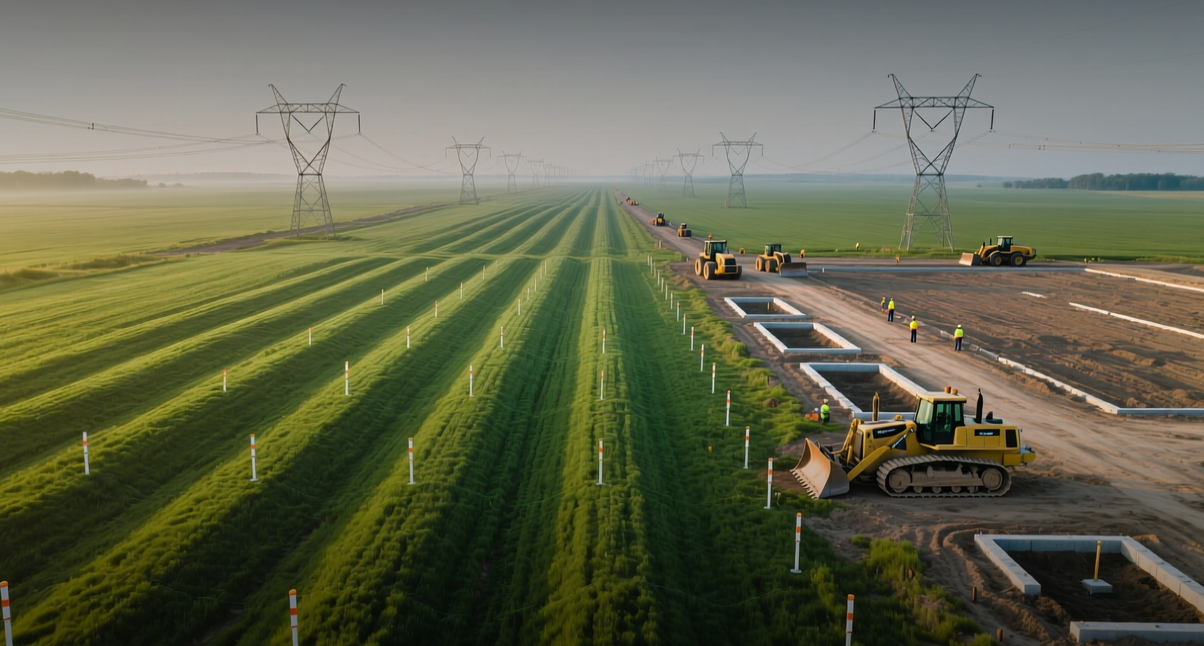
Nvidia is in advanced talks to invest several hundred million dollars in Cloverleaf Infrastructure, a power developer that secures grid access for data center projects, the Wall Street Journal reported.
The deal could be announced as soon as Friday morning, the Journal reported, citing people familiar with the matter. Cloverleaf, founded in 2024, has sold more than 7 gigawatts of powered land to data center developers, including sites in Wisconsin for Oracle and OpenAI.
The company holds a pipeline exceeding 10 gigawatts and raised $300 million in its founding year from energy investors NGP and Sandbrook Capital. Cloverleaf has been working with JPMorgan Chase to evaluate strategic options, including a potential full sale.
The investment follows Nvidia's $2 billion stake in Lancium, the power developer behind Oracle's Abilene, Texas campus, and an equity position in SoftBank's SB Energy tied to OpenAI's Ohio data center. Power has become the binding constraint on AI infrastructure expansion, and Nvidia is spending billions to ensure data center supply keeps pace with demand for its chips.
Cloverleaf's core business model centers on signing agreements with utility companies that give data center developers confidence they can connect to the grid before breaking ground. The company targets projects with 10 to 15 gigawatts of peak power capacity across sites in Wisconsin and Georgia, two states where data center construction has accelerated sharply.
Wisconsin has become a key location for AI infrastructure. Oracle and OpenAI are both developing sites there through Cloverleaf-powered land, while Georgia's favorable tax incentives and proximity to major fiber networks have drawn a surge of data center development.
The power bottleneck is not hypothetical. Data center developers routinely face multi-year interconnection queues with utilities, and grid capacity has become the single largest constraint on AI infrastructure growth. By securing power rights before construction begins, Cloverleaf effectively removes the most uncertain part of the data center development cycle.
The Cloverleaf investment is part of a broader strategy by Nvidia to control the full AI infrastructure stack, from chip design to power generation. Earlier this week, Nvidia took an equity stake in SB Energy, SoftBank's power subsidiary, in a deal tied to a large campus in Ohio that OpenAI has leased for 20 years. Nvidia also agreed to provide a roughly $250 billion financial backstop for that project, which sits on a decommissioned uranium-enrichment facility and could cost more than $500 billion in full, including chips.
In Lancium, Nvidia holds about 20 percent of the company, with an additional $1 billion outlay potentially pushing that stake to 28 percent. Lancium's Abilene, Texas campus hosts the Oracle infrastructure from which OpenAI rents computing capacity.
Nvidia has outlined plans to mobilize more than $500 billion in third-party capital for AI infrastructure, working with financial heavyweights including Apollo and Blackstone. The strategy is straightforward: by committing capital to power companies at the earliest stages, Nvidia can influence which data center projects get built, where they get built, and how quickly they come online — ensuring that future data center supply keeps pace with demand for its GPUs.
The competitive stakes are significant. AMD and custom silicon developers such as Google's TPU and Amazon's Trainium compete for the same AI workloads, but none have matched Nvidia's vertical integration into power infrastructure. If Nvidia can secure power and data center capacity ahead of rivals, it strengthens its position as the default supplier for AI compute.
For investors, the pattern is clear: Nvidia is converting its massive cash generation into strategic infrastructure assets that extend its moat beyond chip design. The company's willingness to deploy billions into power developers shows that it views electricity access as the ultimate constraint on AI growth — and one it intends to control.
This article is for informational purposes only and does not constitute investment advice.
