
Key Takeaways: OpenAI's first consumer hardware device — a $300 to $400 doughnut-shaped smart speaker with cameras and moving parts — is set to launch in 2027.
Key Takeaways: OpenAI's first consumer hardware device — a $300 to $400 doughnut-shaped smart speaker with cameras and moving parts — is set to launch in 2027.
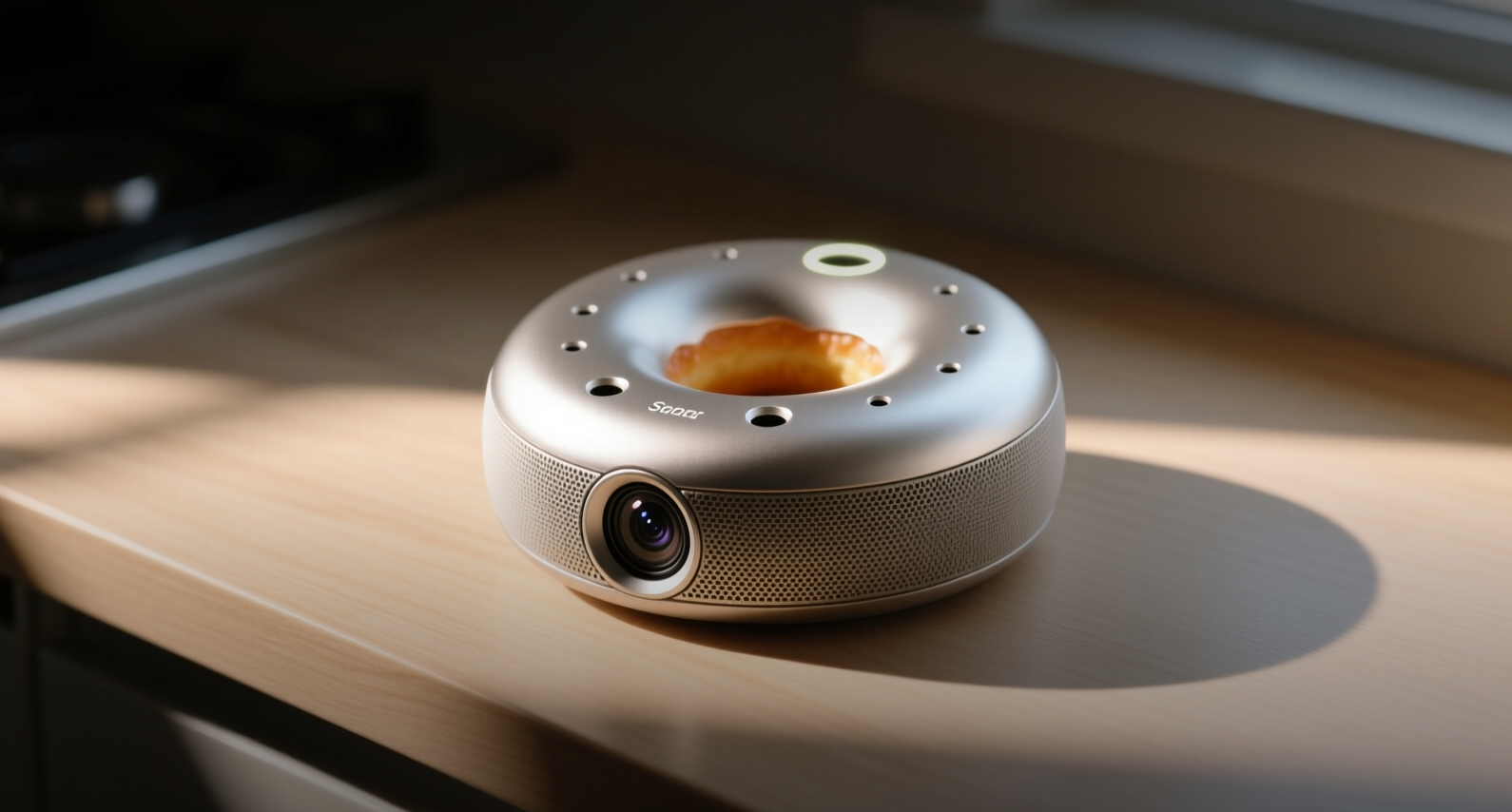
OpenAI plans to launch a $300 to $400 doughnut-shaped smart speaker in 2027, entering a consumer hardware market where Amazon's Echo, Google's Nest, and Apple's HomePod already compete.
The battery-powered device, developed with LoveFrom — the design firm founded by former Apple design chief Jony Ive — is positioned internally as an "AI-first computer" rather than a conventional smart speaker, according to a Bloomberg report citing people familiar with the project.
The hockey puck-sized device features speaker grills, microphones, lights that indicate when it's listening, a camera system, and sensors that feed visual information about the user's surroundings into the AI. Moving mechanical parts are designed to give it personality during interactions. It will use more advanced conversational models than ChatGPT's current voice mode, learning about the user over time to tailor conversations.
The launch would mark OpenAI's first step into physical hardware, a move that could reshape a smart speaker market where Amazon's Echo and Apple's HomePod have long dominated. The company faces an active lawsuit from Apple, which alleges OpenAI sought to use proprietary manufacturing techniques from one of Apple's longtime suppliers.
Apple filed litigation accusing OpenAI of stealing product designs, claiming the AI company asked a longtime Apple supplier to develop a metal finishing technique similar to what the iPhone maker already offers. OpenAI dismissed the claims, saying the lawsuit is "too vague and generalized." In a court filing, the company said it has "no use, need or desire for Apple's trade secrets" and maintains it is developing "something entirely new and different from anything at Apple."
It's unclear whether the prototype Apple referred to in its suit is the doughnut-shaped product in development or a separate device. Internally, OpenAI is pushing forward on the new device despite the legal battle, according to Bloomberg.
The smart speaker is the first of an ambitious suite of new-age devices OpenAI plans to offer, with the speaker seen as the safest bet to start with — as smart glasses that record video and audio face mounting privacy concerns. Consumers have grown wary of smart devices, especially wearables, after reports of people being secretly filmed in public places and fears of faces being logged in unknown databases.
Standard smart speakers like Amazon's Echo come equipped with motion sensors rather than built-in cameras, though newer versions with display screens — such as the popular Echo Show models — do have cameras. OpenAI's device will include a camera system and sensors that can feed visual information about the customer's home into the AI bot.
The device's advanced technology is designed to learn more about the user over time, tailoring conversations and acting more like a human. It will be battery-powered and able to work from different spots around the house, such as placed on a kitchen counter or held in a user's hand.
For investors, OpenAI's hardware push represents a strategic bet that AI can move beyond the smartphone and desktop into ambient computing. The company's ChatGPT subscription business has established a strong software foundation, but hardware margins and consumer adoption remain unproven. Amazon's Echo line has struggled to find a compelling use case beyond basic commands, and Apple's HomePod has captured only a fraction of the smart speaker market. OpenAI's differentiation will depend on whether its conversational AI can deliver a genuinely more useful experience than existing voice assistants — and whether consumers are willing to pay $300 to $400 for it.
This article is for informational purposes only and does not constitute investment advice.
