


The AI data center bottleneck has shifted from chip supply to the physical layer connecting thousands of GPUs.
The AI data center bottleneck has shifted from chip supply to the physical layer connecting thousands of GPUs.
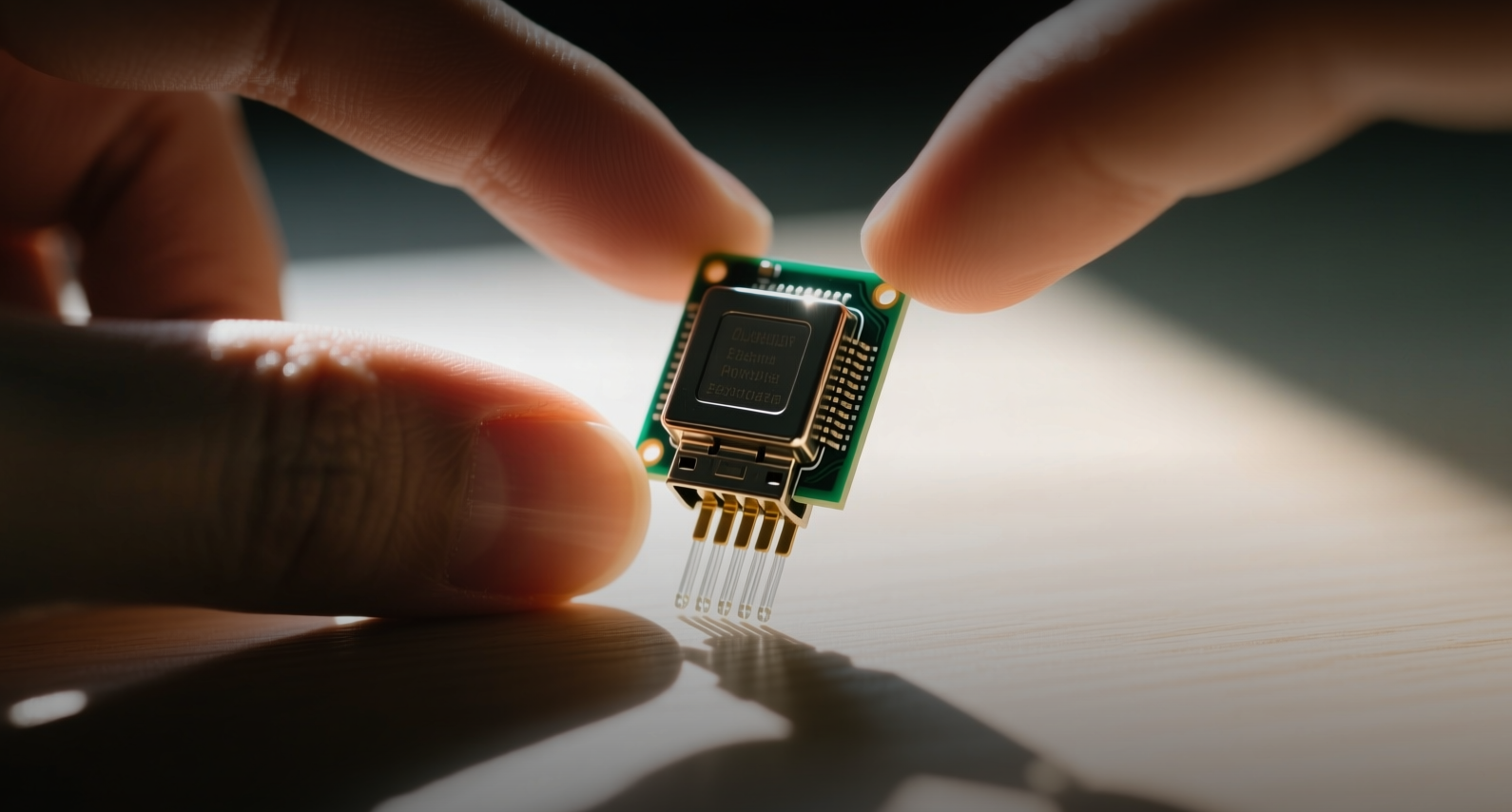
Copper cables can no longer move data fast enough between GPU racks in AI data centers, pushing the industry toward optical interconnect technology that Samil PwC projects will reach $580 million by 2030.
"Just as Korea created a super-gap in memory semiconductors, there is ample room for specialized areas in optical communications where Korea's strengths can be demonstrated," Lee Seung-hwan, Samil PwC AX Node Leader (Partner), said.
Coherent reported Q4 FY2026 revenue of $2.045 billion, up 33.7 percent year over year, with its datacenter segment growing 59 percent. Lumentum posted revenue of $1.006 billion, up 109.3 percent, with non-GAAP gross margin at 50.4 percent.
Nvidia has invested $2 billion each in Lumentum and Coherent, while TSMC is building co-packaged optics manufacturing infrastructure. The shift from copper to optical could reshape AI system architecture from integration-centric to distributed designs.
Traditional copper cables face a fundamental constraint: power efficiency degrades as network bandwidth increases. In the high-bandwidth environments used by major AI data centers, copper's effective transmission distance is limited to just a few meters, according to the Samil PwC report released August 13. As AI data centers scale to tens of thousands of GPUs, inter-rack distances grow, weakening electrical signals.
Optical communications technology addresses this in three stages. Stage one introduces optical transceivers for rack-to-rack connections, converting electrical signals to light for transmission along fiber optic cables with minimal signal loss. Stage two is co-packaged optics (CPO), which integrates optical engines directly into switch chip packages, shortening electrical signal paths and improving power efficiency. The CPO market is projected to grow at a compound annual rate of 38 percent to reach $580 million by 2030. Stage three involves optical conversion of GPU chip-to-chip interfaces, a technology that could overcome physical distance constraints between compute chips entirely.
Coherent's Q4 results illustrate the demand surge. The company booked $2.045 billion in revenue, with its Datacenter & Communications segment producing $1.615 billion — 79 percent of total sales — growing 59 percent on a pro forma basis. Non-GAAP EPS came in at $1.74, beating consensus by 7.6 percent. The company guided Q1 FY2027 revenue to $2.20 billion to $2.40 billion and is doubling internal indium phosphide output by year-end, with plans to double again by 2027.
Lumentum took a different approach, focusing on the laser engine inside optical modules. Revenue hit $1.006 billion, up 109.3 percent year over year, with non-GAAP gross margin reaching 50.4 percent — a 1,260 basis point jump. The company's optical circuit switching backlog exceeds $400 million, and it guided Q1 revenue to $1.225 billion to $1.275 billion with operating margin of 39.5 percent to 40.5 percent.
TSMC is building CPO manufacturing infrastructure including silicon photonics chips, while Korean companies Daehan Optical Communications, OE Solutions, and Lightron are active in optical cable and transceiver segments. Daehan has signed supply contracts for optical cables for U.S. AI infrastructure.
The report raises the possibility that optical communications could shift AI systems from an "integration-centric" model to a "flexible distributed architecture." In a high-speed optical connectivity environment, the constraint requiring GPUs and HBM to be physically placed in close proximity gradually eases, potentially changing memory placement and system design approaches.
For investors, the optics trade has already run hard. Lumentum shares have gained 679 percent over the past year and trade at 43 times forward earnings. Coherent is up 205 percent and trades at roughly 60 times forward earnings. Both companies' next two quarters of CPO and optical circuit switching revenue will determine whether the valuations hold.
This article is for informational purposes only and does not constitute investment advice.
