


Qualcomm on Wednesday unveiled the Dragonfly C1000, a data center CPU designed for agentic AI workloads, and signed Meta as its first major customer for production beginning in 2028.
Qualcomm on Wednesday unveiled the Dragonfly C1000, a data center CPU designed for agentic AI workloads, and signed Meta as its first major customer for production beginning in 2028.
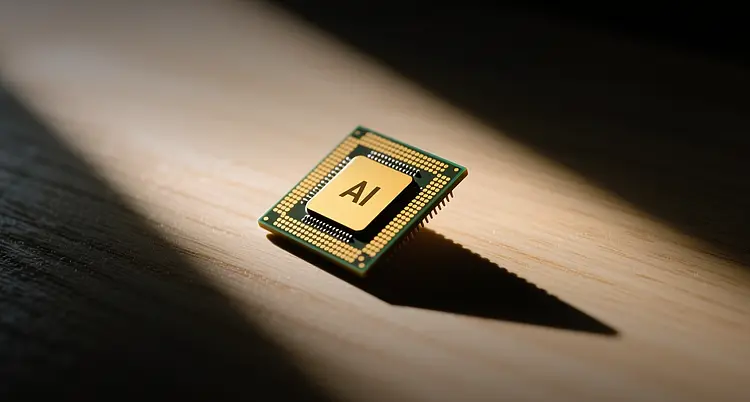
Qualcomm is entering the data center CPU market with a chip designed for agentic AI, threatening to disrupt a segment dominated by Nvidia, AMD and Intel. The Dragonfly C1000, announced Wednesday, prioritizes computing performance per watt — a metric that has become the battleground for AI infrastructure spending as hyperscalers race to contain power costs.
"Agentic AI workloads demand a fundamentally different compute architecture than traditional inference or training," said Cristiano Amon, Qualcomm's chief executive, in a statement. "The Dragonfly C1000 was built from the ground up to deliver high throughput without the power penalty."
The Dragonfly C1000 is Qualcomm's first dedicated data center CPU, marking a strategic expansion beyond its core smartphone and automotive chip businesses. The company said the chip is optimized for agentic AI — autonomous AI systems that can plan, reason and execute multi-step tasks — a workload category that is driving the next wave of data center demand. Qualcomm did not disclose the chip's process node, transistor count or thermal design power, though the company said it will enter production in 2028.
Meta Platforms Inc. has signed on as the first major customer, a win that gives Qualcomm immediate credibility in a market where incumbents have years of customer relationships and optimized software ecosystems. The social media giant, which operates one of the world's largest AI infrastructure fleets, has been aggressively diversifying its hardware supply chain, investing in custom silicon and alternative architectures to reduce dependence on Nvidia's GPUs.
Why power efficiency matters more than raw performance
Data center power consumption has become a defining constraint for AI expansion. A single Nvidia H100 GPU draws as much as 700 watts under load, and hyperscale clusters consuming 50 megawatts or more are becoming common. Qualcomm's focus on performance-per-watt with the Dragonfly C1000 directly addresses this bottleneck, potentially offering data center operators a way to increase compute density without exceeding facility power budgets.
The chip enters a market where Nvidia commands roughly 80% of AI accelerator spending, according to industry estimates, while AMD's MI300 series and Intel's Gaudi accelerators compete for the remainder. Qualcomm's approach differs by targeting the CPU — not GPU — segment of AI inference, a space where Intel's Xeon and AMD's EPYC processors currently dominate but where power efficiency improvements have been incremental.
Meta's hardware diversification strategy
For Meta, the partnership extends a multi-pronged hardware strategy that already includes custom MTIA chips for inference, a growing fleet of Nvidia GPUs, and investments in alternative architectures. The company has been among the most vocal hyperscalers about the need for more efficient AI compute, with chief executive Mark Zuckerberg previously stating that power constraints, not chip availability, would be the limiting factor for AI expansion.
Meta did not disclose the scale of its Dragonfly C1000 deployment or the financial terms of the agreement. Qualcomm said additional customer announcements are expected before production begins in 2028.
Qualcomm shares have gained roughly 18% year-to-date through Tuesday's close, outperforming the Philadelphia Semiconductor Index's 12% advance. The company trades at 16 times forward earnings, a discount to Nvidia's 35 times and AMD's 28 times, reflecting investor skepticism about Qualcomm's ability to break into the data center market. The Dragonfly C1000 announcement and Meta's endorsement could begin to close that gap — if Qualcomm delivers on its power-efficiency claims and meets the 2028 production timeline.
This article is for informational purposes only and does not constitute investment advice.
