


Qualcomm laid out a multiyear roadmap to challenge Intel and AMD in data centers, targeting a CPU launch by mid-2028 with Microsoft as its first cloud customer.
Qualcomm laid out a multiyear roadmap to challenge Intel and AMD in data centers, targeting a CPU launch by mid-2028 with Microsoft as its first cloud customer.
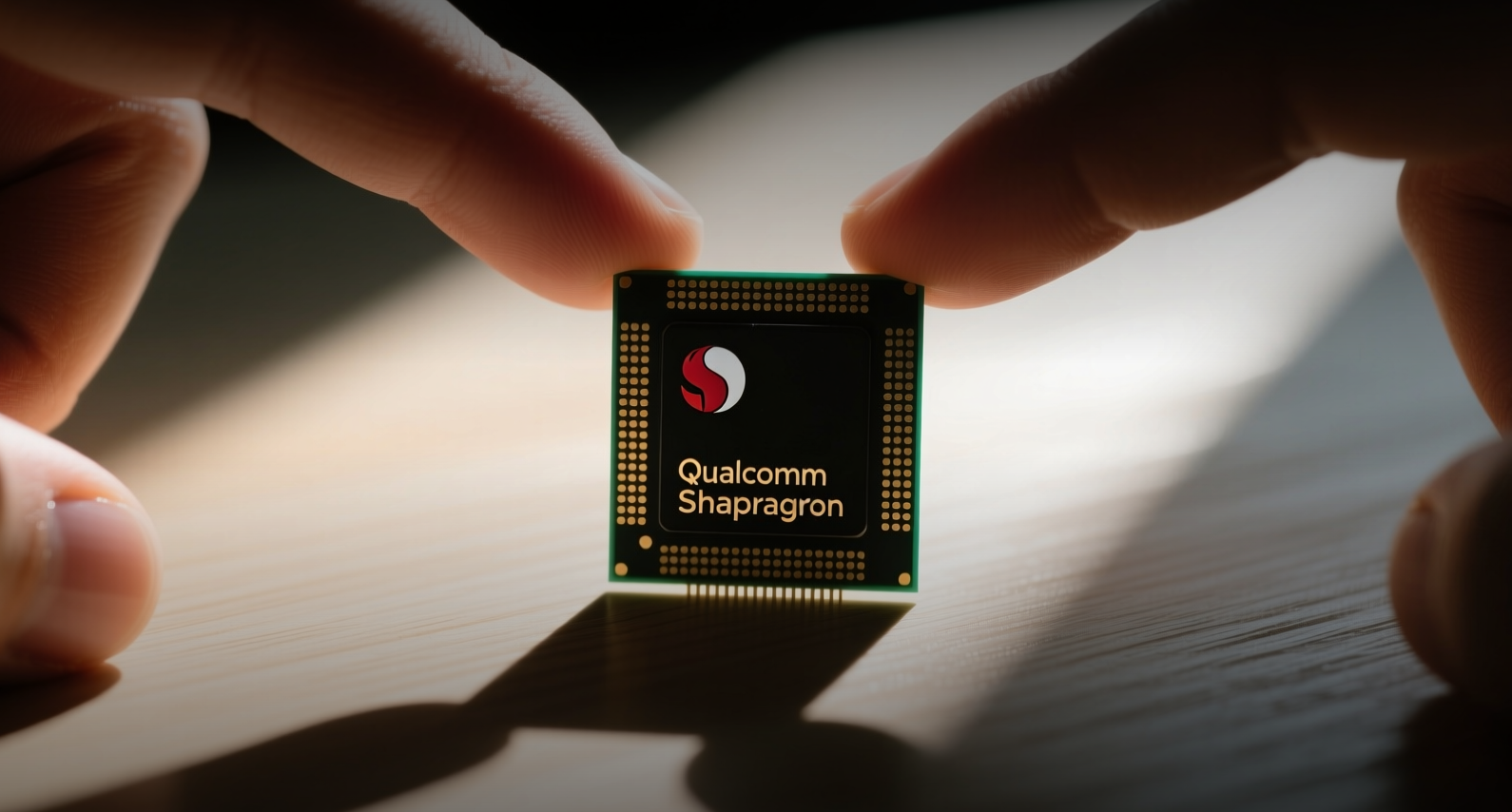
Qualcomm plans to enter the data center CPU market by mid-2028, challenging Intel and AMD's dominance, with Microsoft set to deploy its high-bandwidth compute chips in Azure.
"Qualcomm is uniquely positioned to deliver horizontal platforms that give customers real choice in how and where they deploy AI," Cristiano Amon, the company's president and chief executive officer, said at Qualcomm's investor day on Wednesday.
The company's first high-bandwidth compute chip, AI250, is expected by mid-2027, with a second-generation HBC chip following in 2028. Custom silicon will start generating meaningful revenue from the first quarter of 2027. Qualcomm also announced the nearly $4 billion acquisition of Modular, a startup founded by Chris Lattner — the creator of Apple's Swift programming language — that builds software to optimize AI workloads across different chips, directly challenging Nvidia's CUDA platform.
The push into data center infrastructure marks a strategic shift for Qualcomm, which generates the vast majority of its roughly $39 billion in annual revenue from smartphone chips. Success would open a high-margin market currently dominated by Intel's Xeon and AMD's EPYC processors, though the company faces a crowded field that includes Nvidia's Grace CPU and homegrown designs from Amazon's Graviton and Google's Axion.
The data center CPU push comes as Qualcomm accelerates its diversification beyond mobile. Late last year, the company acquired Ventana Micro Systems, a startup building server CPUs based on the open-standard RISC-V architecture. It is also developing custom ASIC designs for data centers, with China's ByteDance reported to be an early customer.
The Modular acquisition, expected to close in the second half of 2026, brings a team of about 150 employees including Lattner and co-founder Tim Davis, both of whom previously worked on Google's tensor processing units. Modular's software platform allows developers to write AI code that runs across different chips without rewriting for each architecture — a capability that could help Qualcomm's customers avoid vendor lock-in to Nvidia's CUDA ecosystem.
Qualcomm's entry targets a server CPU market valued at roughly $30 billion annually, where Intel holds about 70% share and AMD accounts for most of the remainder. Nvidia's Grace CPU, based on Arm architecture, has gained limited traction since its 2023 launch. Qualcomm's chips are also Arm-based, giving it a potential edge in power efficiency — a critical factor as data center operators struggle with surging electricity demand. Meta's Prometheus data center in Ohio, for instance, will consume one gigawatt of power — equivalent to the output of a large nuclear reactor — when fully operational, according to a recent report from The Economist. That has fueled a growing backlash against data center construction across the US, making power efficiency a key selling point for any new server chip.
Qualcomm shares have gained about 25% over the past 12 months, valuing the company at roughly $210 billion. The data center push could add $3 billion to $5 billion in annual revenue by 2030, according to estimates from Morgan Stanley, though the timeline remains long. Intel, trading at 22 times forward earnings, faces the most direct threat from Qualcomm's entry, while AMD at 28 times forward earnings has more room to absorb competition given its strong EPYC roadmap.
This article is for informational purposes only and does not constitute investment advice.
