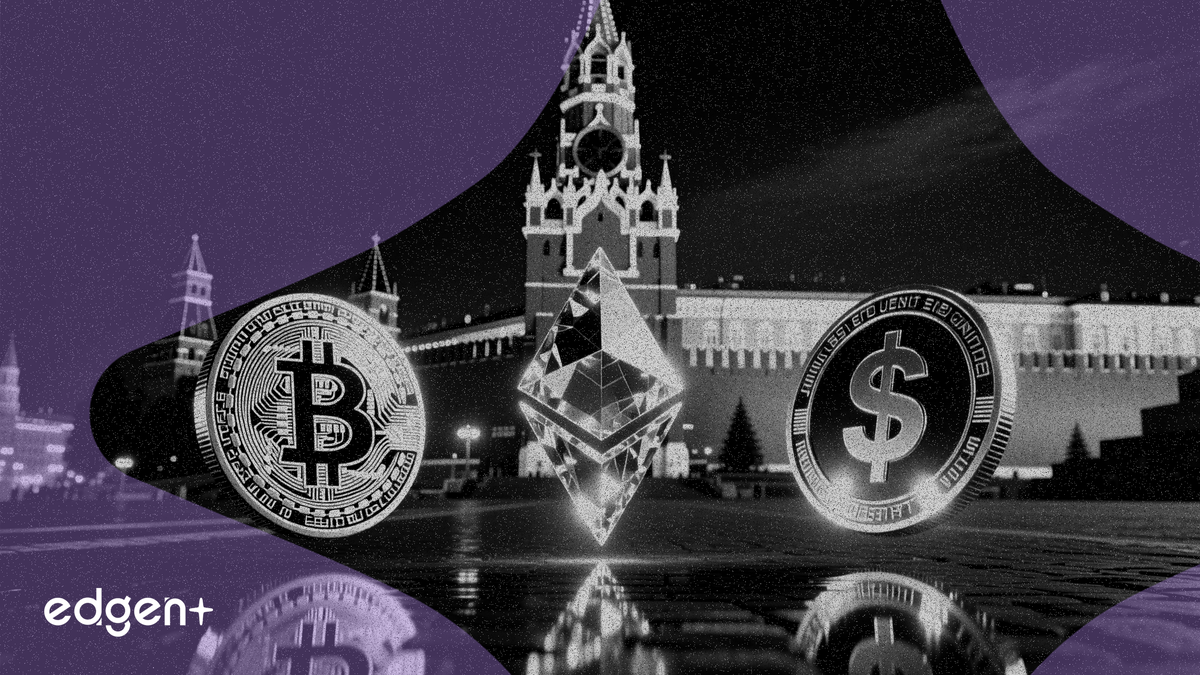
Russia's central bank has narrowed the legal crypto market to just three tokens, granting ordinary citizens access to Bitcoin, Ether and Tether while shutting the door on all other digital assets.
The Bank of Russia confirmed on June 5 that BTC, ETH and USDT will be the only cryptocurrencies permitted for purchase by retail investors once the country's crypto legalization framework takes effect. The monetary authority made clear it has no intention of expanding the list, according to a statement from the regulator.
"The central bank has selected the three largest assets by market capitalization to minimize risk for retail investors while providing a controlled entry point into digital assets," a Bank of Russia official said. "Expanding the list would introduce unnecessary complexity and exposure to less liquid markets."
The shortlist excludes every altcoin, including Solana, XRP and Cardano, as well as all decentralized finance tokens and memecoins. Russian traders will be limited to the two largest proof-of-work cryptocurrencies and the dominant dollar-pegged stablecoin, which together represent roughly 70 percent of the total crypto market capitalization. The central bank's decision follows years of debate between the Ministry of Finance, which pushed for broader legalization, and the central bank, which had previously proposed a blanket ban on crypto trading.
Sanctions Evasion Context
The approval comes as Western regulators intensify scrutiny of Russia's use of cryptocurrency to bypass economic sanctions imposed after the 2022 invasion of Ukraine. A report by the Henry Jackson Society think tank, authored by 17-year-old researcher Alexander Browder, documented how Russian state defense lender Promsvyazbank launched the A7A5 ruble-pegged stablecoin in partnership with fugitive Moldovan banker Ilan Shor, with reported turnover reaching $100 billion by early 2026.
The U.K. responded in May with a sanctions package targeting the A7 network, which London said uses Kyrgyzstan's financial system to channel funds to Russia's war effort. The EU followed with a crackdown on crypto as part of its 20th sanctions package against Russia. Russia's Foreign Ministry retaliated by adding Browder and four other British citizens to its entry ban list, calling the report "disinformation."
Market Structure Impact
By limiting legal access to three tokens, the central bank creates a two-tier market in Russia: a regulated channel for BTC, ETH and USDT, and a gray market for everything else. The approach mirrors strategies used by other jurisdictions seeking to balance innovation with control, though the explicit refusal to expand the list is unusually restrictive compared with frameworks in the European Union under MiCA or in Singapore under the Payment Services Act.
The decision also carries implications for stablecoin adoption in the region. Tether, the issuer of USDT, has been expanding its footprint in neighboring Georgia, where it announced plans to launch GEL?, a digital token pegged to the Georgian lari, with backing from Prime Minister Irakli Kobakhidze's government. The Bank for International Settlements has warned that privately issued stablecoins could threaten financial stability and undermine monetary sovereignty, urging countries to accelerate development of central bank digital currencies instead.
For Russian traders, the three-token limit removes legal uncertainty for BTC, ETH and USDT positions but creates a compliance boundary that may push demand for excluded assets into unregulated channels. The framework's implementation timeline has not yet been disclosed.
This article is for informational purposes only and does not constitute investment advice.