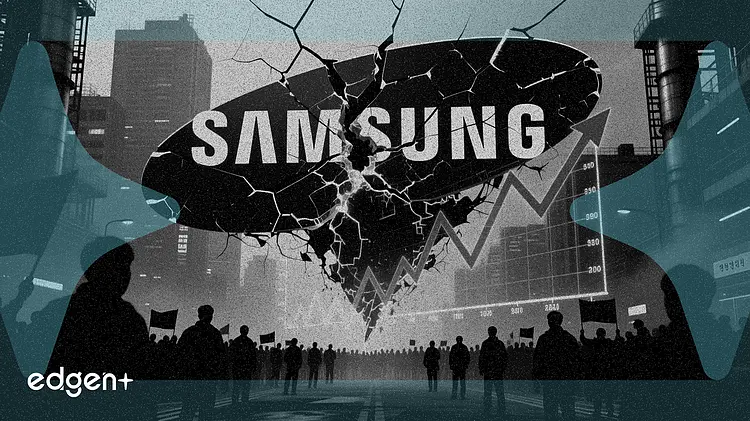
South Korea’s finance minister said a threatened strike by more than 90,000 unionized Samsung Electronics workers poses a significant risk to the country's economic growth, exports, and markets.
"The results of the negotiations are very important," Finance Minister Koo Yun-cheol said on Thursday, urging a resolution. "We are looking at the gravity of the impact on the national economy."
The warning comes after marathon negotiations between the world’s biggest memory chipmaker and its largest labor union ended without an agreement. The union is demanding Samsung allocate 15 percent of its operating profits to employee bonuses and remove a cap that limits bonus payments to 50 percent of annual base salary. Samsung has so far rejected the demands, offering a "one-off performance payment" for 2026, according to union representative Choi Seung-ho.
A strike could halt or slow production at Samsung, a critical global supplier of memory chips and AI semiconductors that recently surpassed a $1 trillion market valuation. The union has threatened an 18-day walkout starting May 21, raising concerns of disruptions to global technology supply chains. Shares in rival SK Hynix rose on expectations it could benefit from Samsung’s labor issues.
The dispute follows growing frustration among Samsung employees after rival SK Hynix agreed to compensation reforms last year, including the removal of caps on bonus payments.
The government is actively trying to prevent the walkout, with Prime Minister Kim Min-seok convening an emergency meeting and ordering "proactive support to ensure dialogue between the union and management can continue." While the government has the power to invoke emergency arbitration to temporarily ban a strike, officials have indicated they prefer a resolution through dialogue.
The potential walkout puts Samsung's production schedule at risk ahead of a typically busy season for electronics manufacturing. Investors will be watching for any signs of a breakthrough in talks before the union's May 21 strike deadline.
This article is for informational purposes only and does not constitute investment advice.