
The Philadelphia Semiconductor Index is on pace for its best quarter ever, but the rally has become a tale of two markets — memory and storage stocks are crushing it while AI chip leaders like Nvidia are barely keeping up.
The Philadelphia Semiconductor Index is on pace for its best quarter ever, but the rally has become a tale of two markets — memory and storage stocks are crushing it while AI chip leaders like Nvidia are barely keeping up.
The Philadelphia Semiconductor Index is on pace for its best quarter ever, but the rally has become a tale of two markets — memory and storage stocks are crushing it while AI chip leaders like Nvidia are barely keeping up.
The Philadelphia Semiconductor Index surged 81% in the second quarter, its strongest quarterly performance on record, extending a 2026 rally that has pushed year-to-date gains to 94% — the best annual showing since the 1999 internet bubble. The advance has been anything but uniform. Memory and storage companies dominate the leaderboard, while Nvidia Corp., the poster child of the AI boom, has become the index's worst performer.
"The past six months have been all about the market going all-in on AI infrastructure, but now people are starting to ask whether that's sustainable and whether we should be worried," said CJ Muse, senior managing director and technology analyst at Cantor Fitzgerald.
SanDisk Corp. has surged 764% year to date, the best performance in the S&P 500. Micron Technology Inc. has gained 301%, pushing its market capitalization past $1 trillion, making it the index's second-strongest stock. Western Digital Corp., Seagate Technology Holdings Plc and Intel Corp. round out the top five, with Intel up 257% as Wall Street grows more confident in its foundry turnaround. SK Hynix Inc. is seeking a $29.4 billion US listing, underscoring the sector's momentum.
The divergence raises a fundamental question for investors: Is the semiconductor rally broadening out, or are the bottlenecks that made memory stocks the biggest winners now signaling a rotation away from pure AI plays?
Memory Stocks Surge as Nvidia Lags Behind
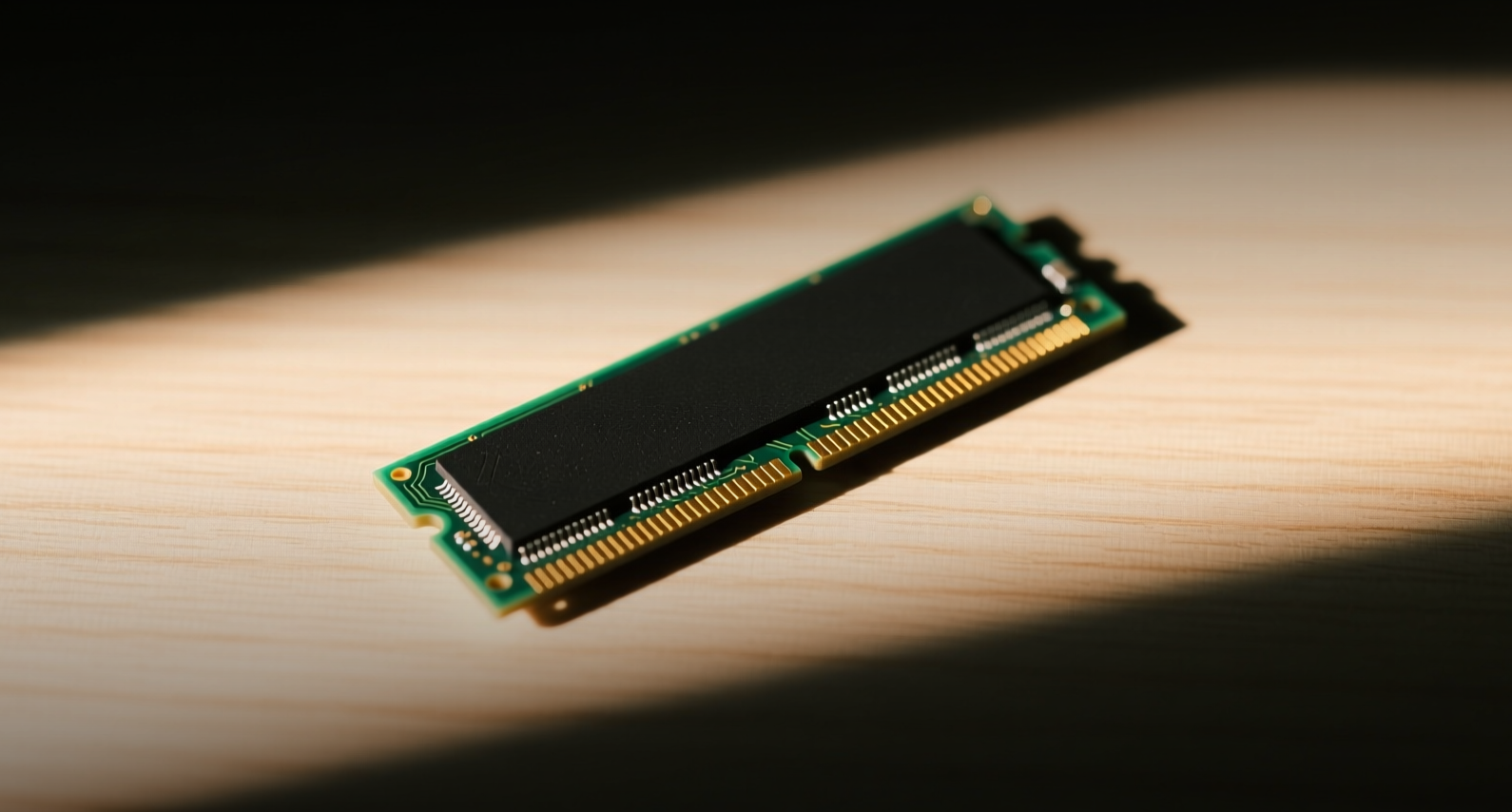
The biggest winners this year are the companies that make the chips everyone else needs. Memory and storage have become the semiconductor industry's bottleneck, as AI workloads demand ever-larger amounts of high-bandwidth memory (HBM, the specialized DRAM that sits alongside AI accelerators to feed them data at high speed). That dynamic has propelled Micron and SanDisk to valuations that would have seemed unthinkable a year ago.
"We're seeing investors chase the bottleneck in semiconductors, and right now that bottleneck favors memory and also favors Intel's foundry revival," said Sean Sun, a portfolio manager at Thornburg Investment Management, which holds multiple semiconductor stocks.
The contrast with Nvidia could not be starker. The world's largest company by market capitalization has gained just 4.5% this year, making it the weakest stock in the SOX index. Broadcom Inc., the No. 2 US semiconductor company, has fared only slightly better at 7.6%. Both companies face their own supply constraints — Nvidia depends on TSMC's advanced packaging capacity (CoWoS, a chip-stacking technology that links GPUs with HBM memory), while Broadcom's custom chip business is similarly constrained.
"Nvidia and Broadcom are running into those bottlenecks — they're not the high-beta names they used to be," Sun said. "I think they'll continue to perform well, but right now investors want the leverage that comes with the strongest theme."
Valuation Expansion Meets Record Volatility
The SOX index trades at about 26 times forward earnings, well above its 10-year average of 19 times and not far from the recent peak of 30 times reached in 2024. By comparison, the Nasdaq 100 trades at 23 times and the S&P 500 at 20 times. Analysts have raised their 2027 earnings growth forecast for chip companies to 49%, up from 35% in April, with revenue growth expected at 37%, according to Bloomberg Intelligence data. That far exceeds the S&P 500's projected 17% earnings growth and 7.4% revenue growth for the same period.
Valuation dispersion within the sector is extreme. ARM Holdings Plc trades at more than 140 times forward earnings, and Intel at about 100 times — levels that by traditional measures signal severe overvaluation. Nvidia, by contrast, trades at 18 times forward earnings, its lowest since 2018 and well below its 10-year average of 36 times. Micron's forward multiple of about 8 times has some on Wall Street wondering whether the market is pricing in peak earnings.
The rally has come with a volatility spike that shows no signs of abating. The Cboe Semiconductor ETF Volatility Index has climbed 83% this year, on track for its largest annual increase on record, and sits at its highest level since April's tariff shock. This month, the SOX has had only one trading day with a closing range of less than 1%. The index has swung from a single-day gain of 7.9% to a loss of more than 10%.
Hedge funds are selling TMT stocks at the fastest pace in a decade, Goldman Sachs prime brokerage data shows, while retail investors' rapidly shifting sentiment amplifies the swings. On the demand side, Microsoft Corp., Amazon.com Inc., Alphabet Inc. and Meta Platforms Inc. remain committed to aggressive capital spending plans. But Apple Inc. has been forced to raise product prices citing higher memory chip costs, raising concerns about end-demand elasticity. Meanwhile, reports that OpenAI is considering delaying its initial public offering have added a fresh note of caution, given the company's importance as a buyer of AI chips.
"The investor base has changed, and that's amplifying volatility, and at the same time it seems like every week there's a new white paper pointing to new AI capabilities," Muse said. "We're going to be in this highly volatile market for quite some time."
For investors, the message is clear: the semiconductor bull market is intact, but the easy money has been made in the names that were supposed to be the safe bets. The real question is whether the memory-led rotation has room to run — or whether the volatility that now defines the sector will eventually catch up with the winners.
This article is for informational purposes only and does not constitute investment advice.
