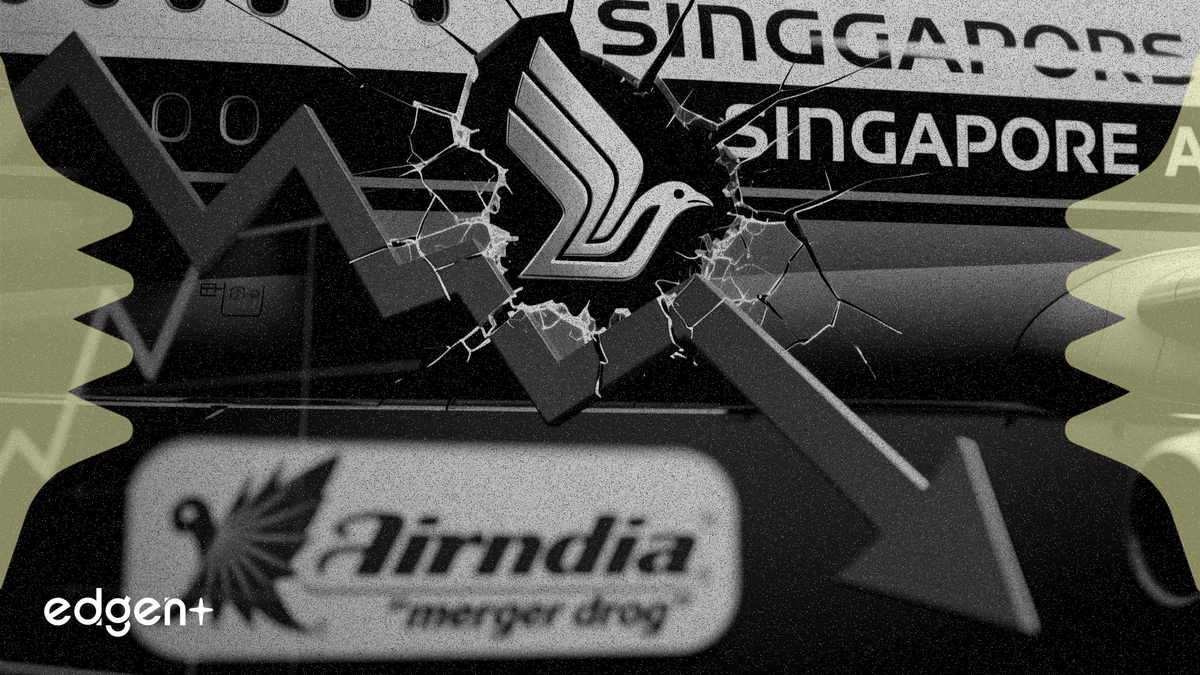
Lợi nhuận hàng năm của Singapore Airlines Ltd. đã giảm mạnh 57%, do khoản lỗ ngày càng tăng từ khoản đầu tư vào Air India và việc không còn khoản lợi nhuận lớn một lần từ năm trước đã xóa sạch sự tăng trưởng mạnh mẽ của doanh thu hành khách.
Tập đoàn SIA cho biết trong báo cáo thường niên: "Air India phải đối mặt với những cơn gió ngược như tình trạng gián đoạn chuỗi cung ứng toàn ngành, hạn chế không phận, những khó khăn trong hoạt động tại các thị trường trọng điểm ở Trung Đông và giá nhiên liệu bay ở mức cao".
Lợi nhuận ròng của hãng cho năm tài chính kết thúc vào tháng 3 năm 2026 đã giảm xuống còn 1,18 tỷ đô la Singapore từ mức 2,78 tỷ đô la Singapore của một năm trước đó. Sự sụt giảm này là do SIA phải gánh 945,2 triệu đô la Singapore phần lỗ của mình trong tổng số lỗ 3,56 tỷ đô la Singapore cả năm của Air India. Con số này cao hơn nhiều so với việc chỉ hạch toán bốn tháng thua lỗ trong năm tài chính trước đó. Kết quả này cũng bị ảnh hưởng do thiếu khoản lợi nhuận phi tiền mặt trị giá 1,1 tỷ đô la Singapore đã được ghi nhận vào tháng 11 năm 2024 sau khi việc hợp nhất Vistara hoàn tất.
Kết quả kinh doanh làm nổi bật gánh nặng tài chính từ vụ hợp nhất đầy tham vọng, vốn nhằm giúp Singapore Airlines có một chỗ đứng đáng kể tại thị trường hàng không Ấn Độ đang tăng trưởng nhanh chóng. Bất chấp thua lỗ, hãng hàng không này vẫn mô tả 25,1% cổ phần của mình là một "thành phần cốt lõi" trong chiến lược dài hạn, thể hiện cam kết kiên trì với chương trình tái cơ cấu tốn kém của Air India.
Để ứng phó với môi trường kinh doanh khó khăn, Air India đã hoãn tăng lương hàng năm trong ít nhất một quý và đang triển khai các biện pháp quản lý chi phí chặt chẽ hơn. Giám đốc điều hành Campbell Wilson đã thúc giục nhân viên hạn chế các khoản chi tiêu không thiết yếu và xem xét lại chi phí nhà cung cấp.
Áp lực vận hành cũng khiến hãng hàng không quốc gia Ấn Độ phải tạm dừng các chuyến bay trên nhiều tuyến quốc tế và giảm tần suất trên các chặng bay Bắc Mỹ, Châu Âu và Úc trong khoảng thời gian từ tháng 6 đến tháng 8 năm 2026 để cải thiện tính ổn định của mạng lưới.
Bất chấp những khoản lỗ hiện tại mà các kiểm toán viên đánh giá là rủi ro tài chính, Singapore Airlines vẫn chưa thực hiện bút toán giảm giá trị khoản đầu tư. Hãng hàng không đang phối hợp chặt chẽ với chủ sở hữu đa số là Tata Sons để hỗ trợ quá trình xoay chuyển tình thế kéo dài nhiều năm của Air India, với niềm tin rằng lợi ích chiến lược dài hạn từ việc tiếp cận một trong những thị trường du lịch tăng trưởng nhanh nhất thế giới cuối cùng sẽ bù đắp được những nỗi đau tài chính ngắn hạn.
Bài viết này chỉ mang tính chất thông tin và không cấu thành lời khuyên đầu tư.