

Apple's new Siri AI features unveiled at WWDC 2026 will not launch on iPhones or iPads in the European Union or China, putting as much as 40 percent of the company's revenue at risk, according to analysts.
Apple's new Siri AI features unveiled at WWDC 2026 will not launch on iPhones or iPads in the European Union or China, putting as much as 40 percent of the company's revenue at risk, according to analysts.
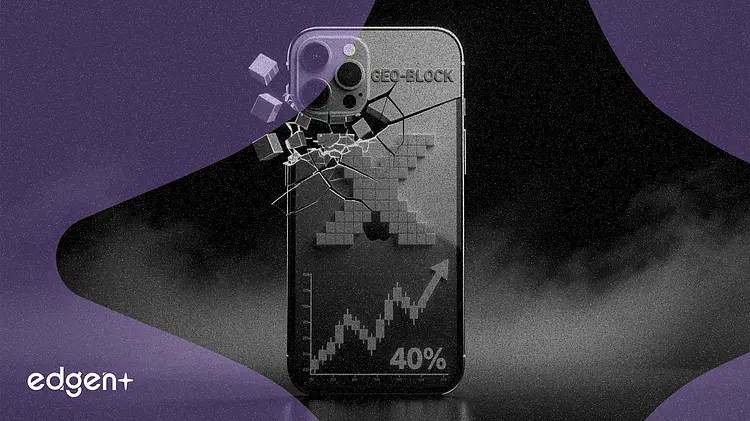
Apple's Siri AI overhaul, unveiled Monday at WWDC 2026, will skip iPhones and iPads in the European Union due to a regulatory standoff with the Digital Markets Act, while China remains entirely off-limits — a gap that could affect as much as 40 percent of the company's sales.
"It is not detrimental for Apple to be slow to market, but the unavailability in Europe and China represents a meaningful headwind," said Tom Forte, senior consumer internet analyst at Maxim Group, noting the two regions account for up to 40 percent of Apple's revenue.
Apple shares fell 1.9 percent to $301.54 on Monday as investors digested the regulatory constraints. The company said Siri AI will still launch on Mac, Apple Vision Pro and Apple Watch in the EU, but the flagship iPhone and iPad experiences — including a dedicated Siri app, expanded Visual Intelligence, integrated writing tools and a new Siri mode in the Camera app — will be absent when iOS 27 and iPadOS 27 ship later this year.
The delay threatens to slow iPhone upgrade cycles in two of Apple's largest markets and weaken its competitive positioning against AI rivals such as OpenAI's ChatGPT, Anthropic's Claude and Google's Gemini, all of which remain accessible in the EU. Apple said it has no timeline for resolving the dispute.
DMA Standoff Blocks Apple's Trusted System Agent Proposal
The European Commission rejected Apple's proposed solution called Trusted System Agent — an intermediary layer designed to let third-party virtual assistants safely access the same device features as Siri AI while preserving user privacy. Apple offered to roll out the system over 18 months. Regulators said no.
According to Apple, the DMA requires the company to give any AI system nearly unlimited access to a user's device, including the ability to read and send messages, make purchases and access files across any app — without the user's ongoing visibility and control. Apple said security researchers have demonstrated that AI systems can be hijacked to steal personal data such as passwords and photos.
"We're deeply disappointed that our EU users won't have Siri AI on iPhone or iPad when we share our new software releases later this year," said Craig Federighi, Apple's senior vice president of Software Engineering. "Their refusal to engage constructively on solutions that preserve privacy and security means we do not currently have a timeline for Siri AI's availability on iOS and iPadOS in the EU."
China Market Entirely Shut Out
Apple also said Siri AI will not be available in China while the company works through regulatory requirements, without providing further detail. The dual-market exclusion covers two of Apple's most important geographies: the EU generated roughly 25 percent of Apple's total revenue in fiscal 2025, while greater China contributed about 17 percent, according to company filings.
EU-based developers will also be unable to test or integrate the new Siri AI features into their iPhone and iPad apps, potentially slowing the broader developer ecosystem for Apple's AI platform in the region.
The new Siri AI features are powered by a combination of on-device processing and Apple's private cloud computing technology. Apple said some of its models were built using Google's Gemini technology, while larger models will run in cloud infrastructure using Nvidia chips. The company will begin offering the upgraded Siri in English, with additional languages to follow.
This article is for informational purposes only and does not constitute investment advice.
