
Key Takeaways:
- SK Hynix shipped 12-layer HBM4E samples to major customers
- Chip reaches 16Gbps per pin with 20% better power efficiency
- Heat resistance improved 17% vs HBM4 using Advanced MR-MUF
Key Takeaways:
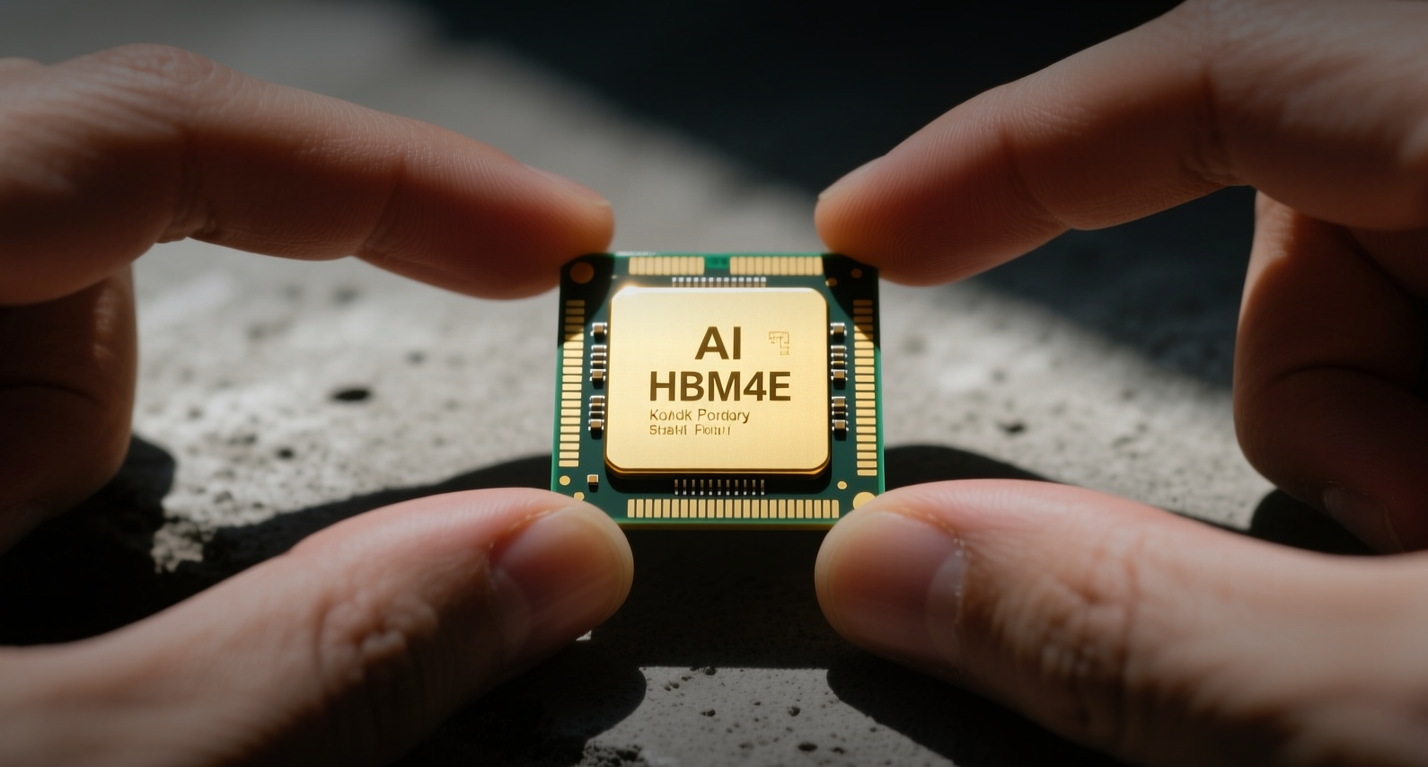
SK Hynix Inc. shipped samples of its 12-layer HBM4E memory chip to major customers, pushing data speeds to 16Gbps per pin while cutting power consumption by more than a fifth versus prior-generation high-bandwidth memory.
"The company was able to deliver samples of the 12-stack HBM4E on schedule thanks to its advanced HBM development and production expertise," Ahn Hyun, President and Chief Development Officer at SK Hynix, said in a statement. "Through close collaboration with our partners, we will deliver the value needed in the market while reinforcing our technology leadership as a full-stack AI memory creator."
The 12-layer HBM4E achieves 48GB capacity per stack using Advanced MR-MUF (Mass Reflow Molded Underfill), a process that injects liquid protective material between stacked dies. The company improved heat resistance by 17% compared with the preceding HBM4 generation, enabling stable operation in high-performance computing environments where thermal management is a bottleneck. The chip also reduces data transfer latency through interface and design optimizations, according to the company.
HBM chips are a critical component in AI accelerators, handling the massive data throughput required to train and run large language models. SK Hynix is Nvidia Corp.'s primary HBM supplier, having successfully ramped production across HBM3, HBM3E, and HBM4 generations. The HBM4E samples arrive as rivals Samsung Electronics Co. and Micron Technology Inc. compete for a share of the AI memory market, which has become one of the fastest-growing segments in semiconductors.
Competitive Stakes in AI Memory
The HBM4E's 16Gbps pin speed and 20% power efficiency improvement over previous models give SK Hynix a potential edge in the next wave of AI infrastructure buildouts. Nvidia's current-generation Blackwell and upcoming Rubin architectures rely on high-bandwidth memory to feed data to compute cores — any latency or bandwidth bottleneck directly impacts training throughput and inference cost per token. SK Hynix said it will work with partners to prepare for mass production in a timely manner, though it did not disclose a specific timeline or which customers received the samples.
Investment Angle
SK Hynix shares trade on the Korea Exchange (000660.KS) and have benefited from the AI memory boom as hyperscalers pour capital into data center expansion. The company's ability to deliver HBM4E samples on schedule reinforces its leadership position against Samsung and Micron, both of which are racing to qualify next-generation HBM products with Nvidia. If SK Hynix maintains its pole position as lead supplier, it could capture the majority of the estimated $30 billion-plus HBM market projected for 2027, according to industry estimates. The key risk: Samsung's aggressive push into HBM4E and potential shifts in Nvidia's supplier allocation strategy.
This article is for informational purposes only and does not constitute investment advice.
