


Memory chip stocks have erased $400 billion in market value in a month, dragging the iShares Semiconductor ETF into a bear market from its June high.
Memory chip stocks have erased $400 billion in market value in a month, dragging the iShares Semiconductor ETF into a bear market from its June high.
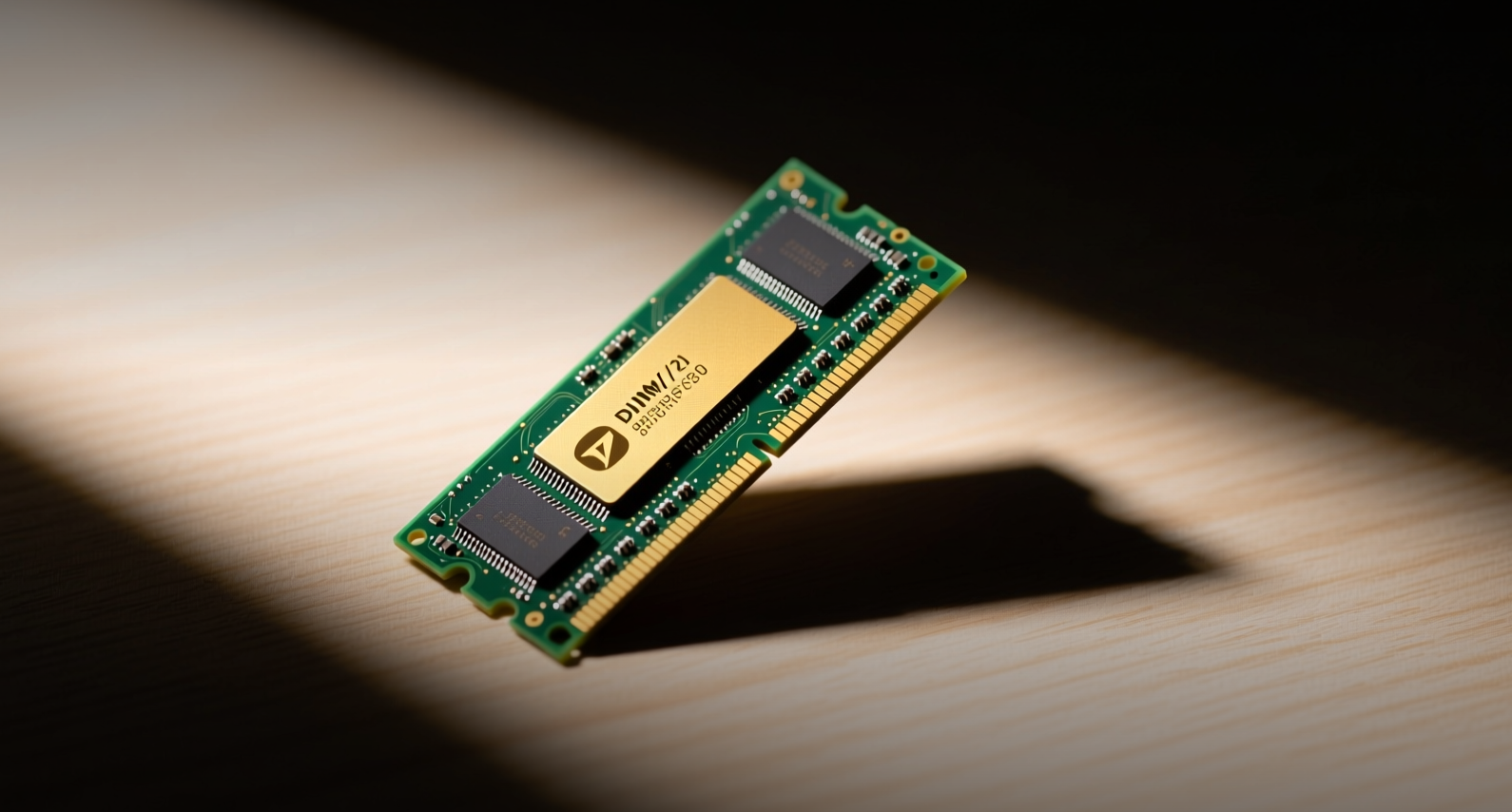
Memory chip stocks have erased $400 billion in market value in a month, dragging the iShares Semiconductor ETF into a bear market from its June high.
The iShares Semiconductor ETF has fallen 20% from its June 22 all-time high, dragged down by a 30% decline in Micron Technology as investors price in a peak in the memory chip cycle despite record earnings. The broader sell-off has erased roughly $3.3 trillion from global chip stocks in about a month.
"Memory has always been a brutally cyclical business, and record margins have historically invited the same response: competitors add supply until prices crack," Micron CEO Sanjay Mehrotra said on the company's June earnings call, acknowledging the structural tension even as he called high-bandwidth memory "a strategic asset" in AI systems.
Micron's fiscal third-quarter results showed revenue more than quadrupling year over year to $41.5 billion, with adjusted gross margin surging to 84.9% from 39% a year earlier. The company guided for roughly $50 billion in fourth-quarter revenue and adjusted earnings per share of about $31. Yet the stock trades at roughly 20 times earnings — and only about seven times the annualized earnings implied by its own guidance — a multiple that signals the market does not believe the earnings will stick.
For investors seeking semiconductor exposure without the concentration risk of a pure-play fund, the Vanguard Information Technology ETF offers a lower-cost alternative with nearly half its 46.4% weighting in semiconductor stocks balanced by Apple, Microsoft, and other tech giants.
Why Memory Stocks Are Getting Crushed
The disconnect between earnings and stock price reflects a familiar pattern in the memory industry. High-bandwidth memory, a form of dynamic random-access memory essential for AI computing clusters, has given Micron and its Korean rivals Samsung and SK Hynix extraordinary pricing power. Micron's data-center-focused segments produced $25.3 billion of revenue in the fiscal third quarter, up from about $4.9 billion a year earlier.
But investors are betting that record margins invite supply. Micron's adjusted gross margin of 84.9% — up from 39% a year ago — has historically been unsustainable in an industry where competitors add capacity until prices crack. The stock's valuation reflects that pessimism: at about $885 per share, Micron trades at roughly seven times the annualized earnings from its own fourth-quarter guidance, a multiple that only makes sense if earnings are about to peak.
A Lower-Cost Alternative to SOXX
The iShares Semiconductor ETF's 7.6% weighting in Micron and 17.3% combined weighting in equipment makers Applied Materials, KLA Corp., Lam Research, and ASML — all of which have more than doubled in the past year — has amplified the sell-off. The fund's 0.34% expense ratio also exceeds the Vanguard Information Technology ETF's 0.09%.
The Vanguard fund provides 46.4% semiconductor exposure alongside large positions in Apple and Microsoft, which are not in SOXX. That diversification cushions against the memory cycle risk. If the memory bottleneck is resolved and margins compress for companies like Micron, the value could shift to companies building and using AI tools rather than those providing the infrastructure. Micron, for example, now makes up 5% of the Vanguard Tech ETF, compared with 4.3% of the Nasdaq-100 and 1.4% of the S&P 500.
This article is for informational purposes only and does not constitute investment advice.
