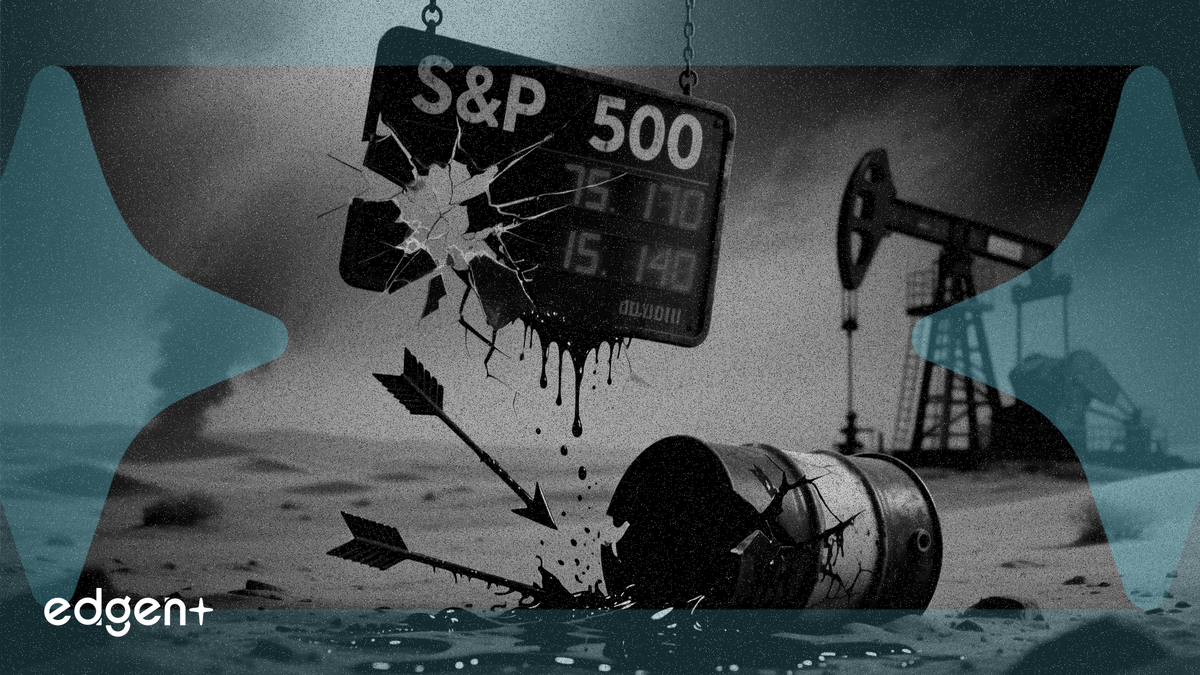
A months-long Middle East conflict shows no signs of resolution, pushing crude above $92 a barrel and dragging equity futures from record levels.
S&P 500 and Dow Jones Industrial Average futures edged lower Wednesday, stalling near record highs as a surge in crude oil prices tied to the prolonged Middle East conflict weighed on risk appetite.
"The absence of a clear breakthrough in U.S.-Iran negotiations, combined with renewed incidents in the region, reinforces worries that restrictions affecting the Strait of Hormuz could remain in place longer than anticipated," said Joseph Dahrieh, managing director at Tickmill.
Front-month West Texas Intermediate crude futures traded at $92.31 a barrel, up 0.2%, after President Trump on Monday declared that Israel and Hezbollah had agreed to halt fighting. Yet the lack of a verifiable ceasefire and continued skirmishes — including U.S. strikes on Iranian air defenses and drone sites — have kept the geopolitical risk premium embedded in oil prices.
The stalemate threatens to derail what had been a resilient equity rally, with the S&P 500 hovering near all-time highs. Higher crude prices typically raise input costs across transportation, manufacturing, and consumer sectors, squeezing margins and dampening spending power. Traders are now watching for any concrete progress in U.S.-Iran talks, with the next round of negotiations expected in the coming days.
Oil's Rally Pressures Transport, Consumer Sectors
The energy sector was the sole gainer in premarket trading, while airlines, logistics, and consumer discretionary names faced selling pressure as traders priced in higher fuel costs. The broader market's advance-decline ratio tilted negative, with decliners outpacing advancers by roughly two to one in early New York trading.
The Cboe Volatility Index, or VIX, ticked up toward 16, reflecting renewed demand for portfolio hedges after spending much of the past month below 14. The move higher in volatility coincided with a 5-basis-point rise in the 10-year U.S. Treasury yield to 4.38%, as investors priced in both sticky inflation risks from higher energy costs and reduced odds of near-term Federal Reserve rate cuts.
The U.S. dollar index held near 104.5, supported by safe-haven flows, while gold edged up 0.3% to $2,358 an ounce as geopolitical uncertainty boosted demand for traditional havens.
The months-long conflict has now entered its third month with no end in sight. While Trump has pushed to end the Lebanon conflict in hopes of unlocking a broader deal with Tehran, the absence of a formal agreement leaves the Strait of Hormuz — through which about 20% of the world's oil passes — vulnerable to continued disruption. Any reopening of the strait would likely send crude prices sharply lower and provide a tailwind for equities, but traders remain skeptical of a near-term resolution.
This article is for informational purposes only and does not constitute investment advice.