

Tencent Holdings has hired former OpenAI researcher Yao Shunyu as its chief AI scientist, signaling China's biggest bet yet on artificial general intelligence.
Tencent Holdings has hired former OpenAI researcher Yao Shunyu as its chief AI scientist, signaling China's biggest bet yet on artificial general intelligence.
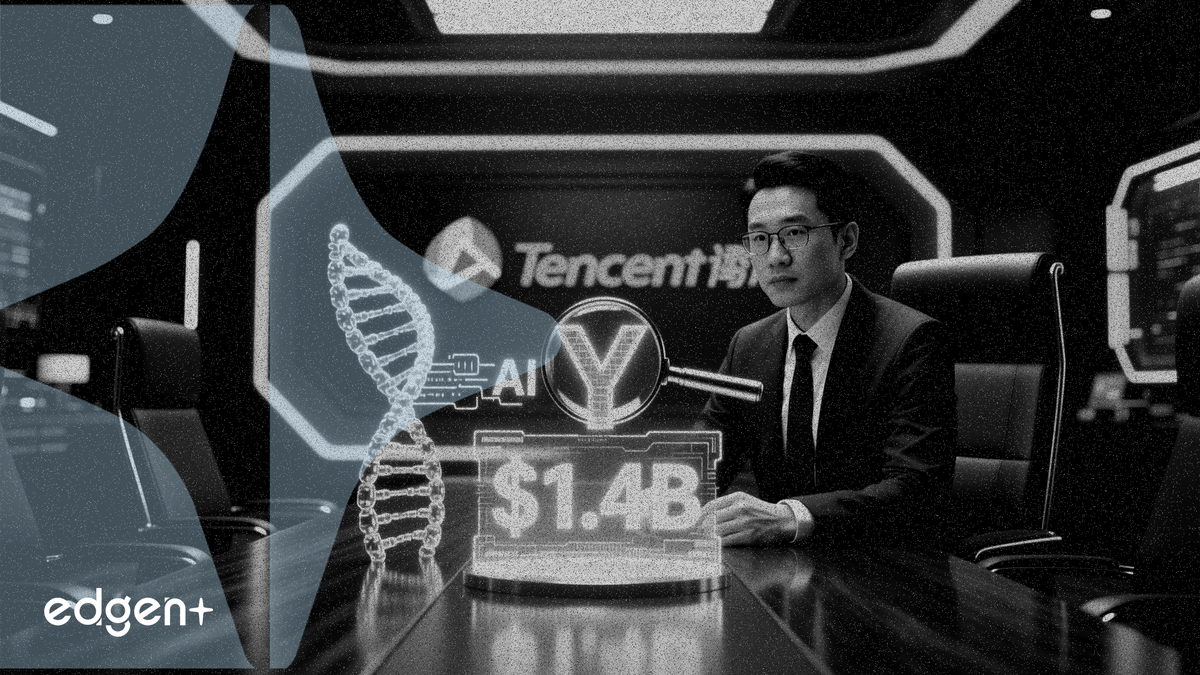
Tencent Holdings has hired former OpenAI researcher Yao Shunyu as its chief AI scientist, signaling China's biggest bet yet on artificial general intelligence.
Tencent Holdings hired former OpenAI researcher Yao Shunyu as chief AI scientist, positioning China's largest technology company to compete directly with US rivals in the race toward artificial general intelligence.
"My personal goal is that in China we should establish a long-term AGI organization," Yao said Friday at a Tencent event in Beijing, according to CNBC's translation from Mandarin.
Yao, who joined Tencent within the past year after leaving his role at OpenAI, said the path forward requires foundational research, product development and frontier exploration. He argued that ChatGPT and Claude will not be the only dominant AI applications, describing untapped potential in the "trillions of dollars." Performance of an AI tool matters most, followed by cost, Yao added, saying China's advantage lies in smaller models with more consistent performance on basic tasks.
The hire marks a strategic shift for China's AI sector, which has historically prioritized applied uses in factories and consumer electronics over the pursuit of AGI. Tencent's deepening commitment to advanced AI comes as it also invests 10 billion yuan ($1.4 billion) in DeepSeek's first-ever funding round, which is nearing $7 billion, according to people familiar with the matter. The moves put Tencent in direct competition with OpenAI, Anthropic and Alphabet's DeepMind, while intensifying a cross-border talent war that has already seen Alibaba hire Google DeepMind researcher Hao Zhou and ByteDance recruit Google DeepMind vice president Wu Yonghui.
The Talent Pipeline Shifts East
Uncertainty over US immigration policies has encouraged Chinese nationals working at American AI labs to consider opportunities in their home country, even at lower pay. China is ramping up investment in basic research as part of a five-year plan to pursue scientific breakthroughs, creating a pull factor that complements the push from US visa constraints. Startup Moonshot, which developed the Kimi AI model, was founded by former Meta AI and Google Brain employee Yang Zhilin, illustrating the breadth of the回流.
Yao's optimism contrasts with growing caution in the US. Anthropic warned Thursday that frontier models are approaching the point where they can improve themselves without human oversight, calling for an industry slowdown or pause in new model development. The San Francisco-based startup, which has emphasized AI safety since its founding, earlier this year urged Washington to maintain the US lead over Chinese models.
For investors, the implications are twofold. Tencent's dual strategy — hiring top AGI talent while backing DeepSeek — signals it is placing multiple bets on the next generation of AI. If Yao succeeds in building a long-term AGI organization, Tencent could emerge as a credible challenger to US frontier labs, narrowing a technological gap that Baidu CEO Robin Li previously estimated would take until at least 2034 to close. Tencent shares trade at roughly 18 times forward earnings, a discount to US AI peers, reflecting the market's uncertainty about whether Chinese companies can translate AI investment into revenue growth.
This article is for informational purposes only and does not constitute investment advice.
