
Citadel Securities called the Treasury's expanded bond buyback program "financial repression," warning it could shift market stress from bonds to the dollar.
Citadel Securities called the Treasury's expanded bond buyback program "financial repression," warning it could shift market stress from bonds to the dollar.
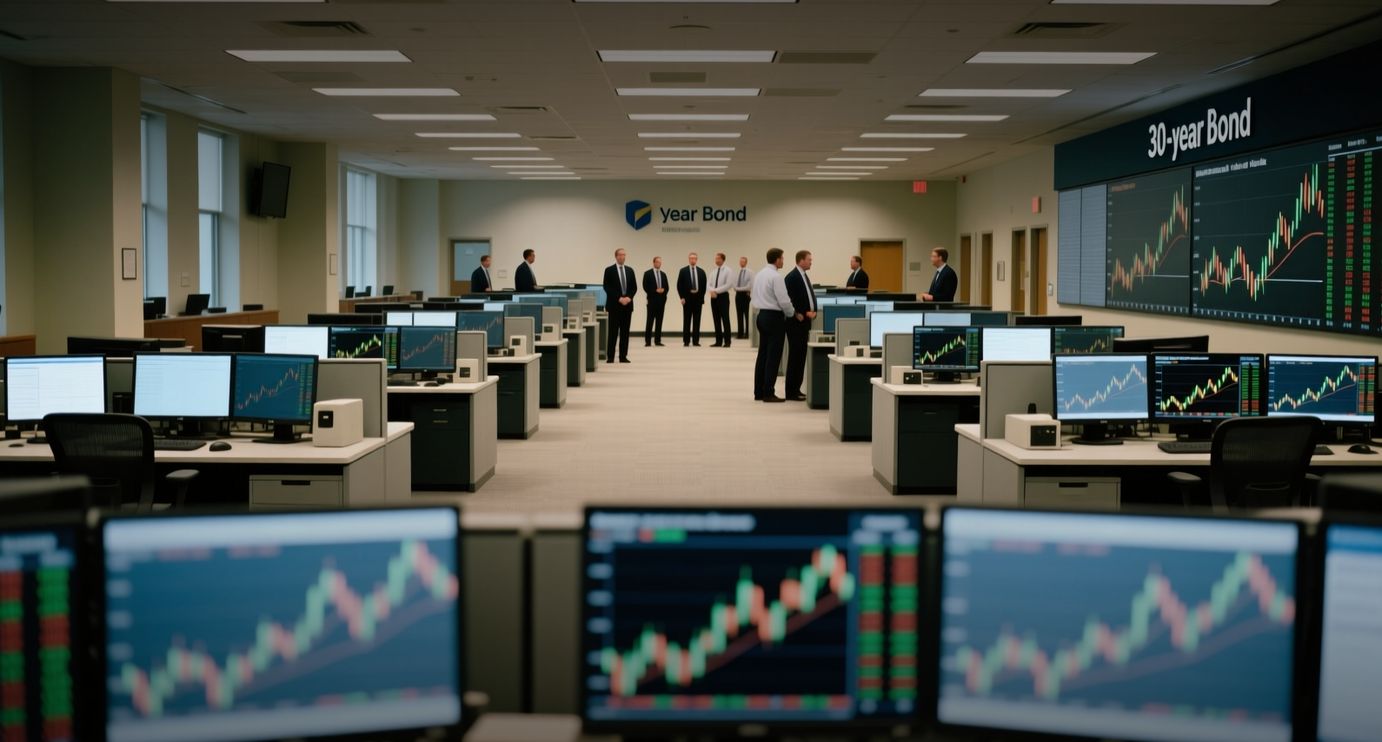
Bessent's plan to expand Treasury buybacks to at least $4 billion per operation drew a "financial repression" warning from Citadel Securities, which says the intervention could shift market stress from bonds to the dollar.
"The intervention could move market reactions from the bond market to the currency market, because lower yields reduce the dollar's appeal and could push up import prices," Citadel Securities said.
The Treasury doubled its minimum buyback size for 10-, 20-, and 30-year bonds to $4 billion from $2 billion, effective Sept. 9 through Nov. 4. The 10-year yield climbed above 4.7 percent Thursday, up from a low of roughly 4.64 percent Wednesday, while the 30-year yield hovered near 5.25 percent, close to the 5.33 percent touched Aug. 18, the highest since 2007.
The intervention comes as the US national debt surpassed $40 trillion this week, and Bessent signaled he may tap the Treasury General Account's roughly $1 trillion balance to fund further purchases. If yields stay elevated and the dollar weakens, the move could complicate the Federal Reserve's inflation fight.
Bessent told CNBC the buyback program could exceed the $4 billion announced Wednesday. "We are going to make a market in these. We routinely do buybacks, and we're going to increase the size of the buyback... it could be more than $4 billion per issue," he said, adding the Treasury is trying to show support during a typically thin August trading session for the 30-year bond.
The announcement's impact proved short-lived. Long-term yields reversed course Thursday morning, with the 10-year climbing above 4.7 percent. The rapid reversal shows buybacks provide temporary liquidity support but do little to address the underlying fiscal and inflation risks driving the term premium higher, said Ole Hansen, head of commodity strategy at Saxo Bank.
A $40 trillion debt load
A confluence of pressures is driving yields higher: a widening fiscal deficit, inflation running above the Federal Reserve's 2 percent target, a weaker dollar, and heavy corporate bond issuance by tech companies funding AI and data center expansions. The national debt has more than doubled in less than a decade, adding $1 trillion in new debt in just a few months.
Bessent said the administration will announce an "increased focus on fiscal consolidation" late this week or early next week, with President Trump, OMB Director Russ Vought, and himself examining both revenue and cost. "We're going to have to grow our way out of this," he said, adding there's "a good chance" the US has already seen peak deficits.
Skepticism on the buyback's staying power
Wall Street experts remain doubtful the Treasury can artificially suppress rates for long. "A moderately bigger buyback program amounts to a weak form Operation Twist... that in itself will have little enduring impact and could backfire if it is seen as showing concern about the ability to fund longer-term at acceptable cost," said Krishna Guha, head of central banking strategy at Evercore ISI. A JP Morgan analyst likened the approach to "paying your mortgage with your credit card."
The intervention may complicate Federal Reserve Chairman Kevin Warsh's job. St. Louis Fed president Alberto Musalem said the central bank "independently set[s] monetary policy, independent of debt management or fiscal policy."
The last time the Treasury intervened this directly in long-dated debt was during the pandemic-era yield curve control debates, when the Fed's own purchases capped yields before inflation forced an exit. If the buyback program fails to hold yields down, the dollar's slide and rising import prices could force the Fed to act more aggressively on rates — a scenario that would pressure risk assets and push investors toward hard assets like gold and bitcoin, which have already rallied on the intervention.
This article is for informational purposes only and does not constitute investment advice.
