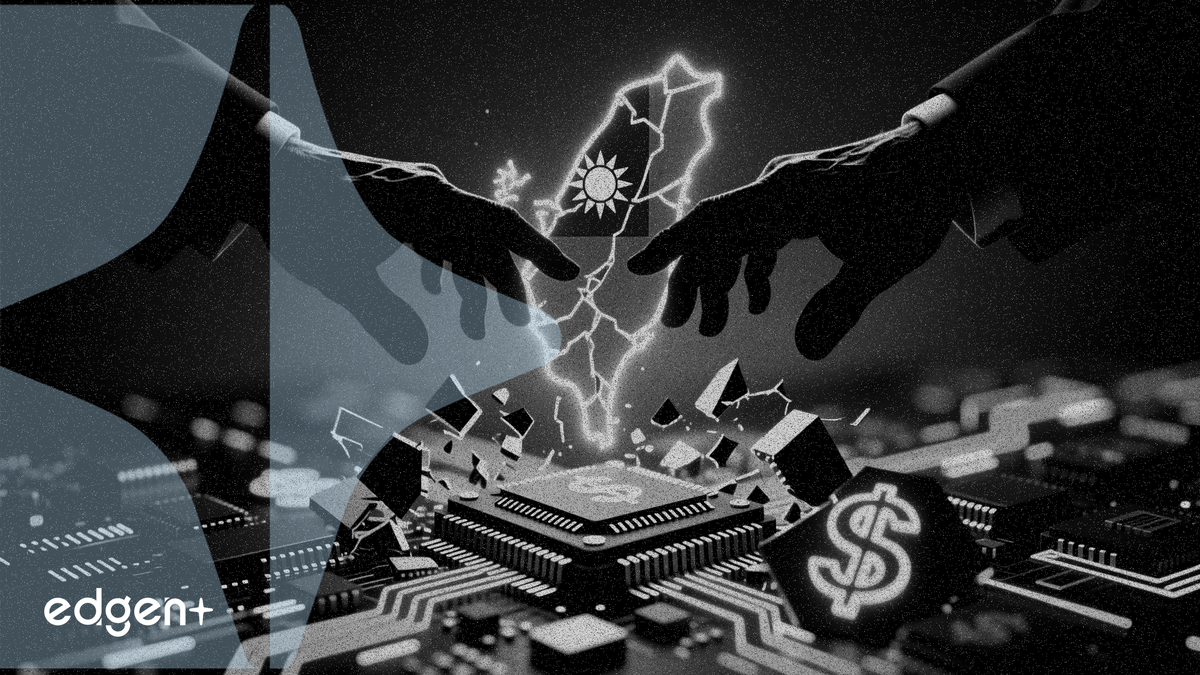
A high-stakes summit in Beijing pits President Trump’s transactional dealmaking against President Xi’s strategic ambitions, with Taiwan and technology control as the central battlegrounds.

President Donald Trump and China’s Xi Jinping concluded a tense summit in Beijing where Xi issued a stark warning over Taiwan, a meeting overshadowed by a U.S. bust of a $2.5 billion Nvidia chip smuggling operation tied to China just days earlier. The talks, aimed at stabilizing relations, instead highlighted a growing chasm between Washington’s economic focus and Beijing’s strategic, security-centric agenda.
"There seems to be an earnestness in Xi’s words that Trump and his entourage have not matched, yet," Bryce Barros, an associate fellow at the GLOBSEC think tank, told Newsweek. "Directly raising the ‘Taiwan question’ to Trump reinforces that confidence. It also flags concerns of how prepared the U.S. side was for Xi’s hardball approach."
The summit yielded few concrete agreements, with a brief U.S. readout highlighting trade, market access, and a shared interest in keeping the Strait of Hormuz open. The meeting occurred as new data showed U.S. producer prices surged 6.0 percent annually, the fastest since 2022, complicating the economic picture for the new Federal Reserve Chair, Kevin Warsh, who was confirmed just last week.
The core conflict remains unresolved: Trump seeks headline-grabbing deals in a midterm election year to soothe economic anxieties at home, while Xi leverages China's control over critical minerals and its influence on Iran to secure long-term strategic goals. The next flashpoint will be whether Trump continues to delay a congressionally approved $14 billion arms package to Taiwan, a key demand from Beijing.
The summit’s backdrop was poisoned by the announcement from U.S. federal prosecutors of charges in a $2.5 billion scheme to illegally export Nvidia AI servers to China. The case, which escalates the U.S. crackdown on technology export control violations, underscores the intense rivalry to dominate artificial intelligence. Nvidia CEO Jensen Huang’s last-minute addition to Trump’s business delegation only amplified the focus on the tech standoff.
The U.S. has sought to hobble China’s AI ambitions by restricting access to advanced semiconductors. In response, Beijing has leveraged its dominance over rare earth elements, critical for high-tech manufacturing, forcing the Trump administration last year to walk back tariff threats. While Trump has permitted the sale of some second-tier Nvidia chips, Xi is pushing for fewer restrictions.
While Trump arrived in Beijing focused on securing commercial contracts for a traveling delegation of CEOs from Tesla, Apple, and Boeing, Xi’s primary objective was security. According to the Chinese Foreign Ministry, Xi called the Taiwan issue "the most important issue" in the relationship, warning that mishandling it could lead to "clashes and even conflicts."
Xi is pressing Trump to revise U.S. policy to explicitly state that "Taiwan is a part of China," a significant shift from Washington's long-standing policy of strategic ambiguity. In his remarks, Xi warned of the "Thucydides Trap," the theory that a rising power like China and an established one like the U.S. are destined for war. Trump, in contrast, focused on his personal relationship with Xi, stating it’s an "honor to be your friend."
The summit demonstrated a widening mismatch between Beijing’s strategic framing of the relationship and Washington’s more transactional approach. While Trump may secure some Chinese purchases of American agricultural products, he returns to a U.S. economy battling a 6.0 percent surge in producer prices and a new Fed chair whose policy direction is uncertain. The lack of a grand bargain leaves the tech and geopolitical rivalry between the two powers set to intensify.
This article is for informational purposes only and does not constitute investment advice.