
The entire world will be hoping that the two leaders can reach agreement on at least a subset of issues and find ways to prevent any further escalation of tensions, with the outcome holding major ramifications for global trade and geopolitics.
The entire world will be hoping that the two leaders can reach agreement on at least a subset of issues and find ways to prevent any further escalation of tensions, with the outcome holding major ramifications for global trade and geopolitics.
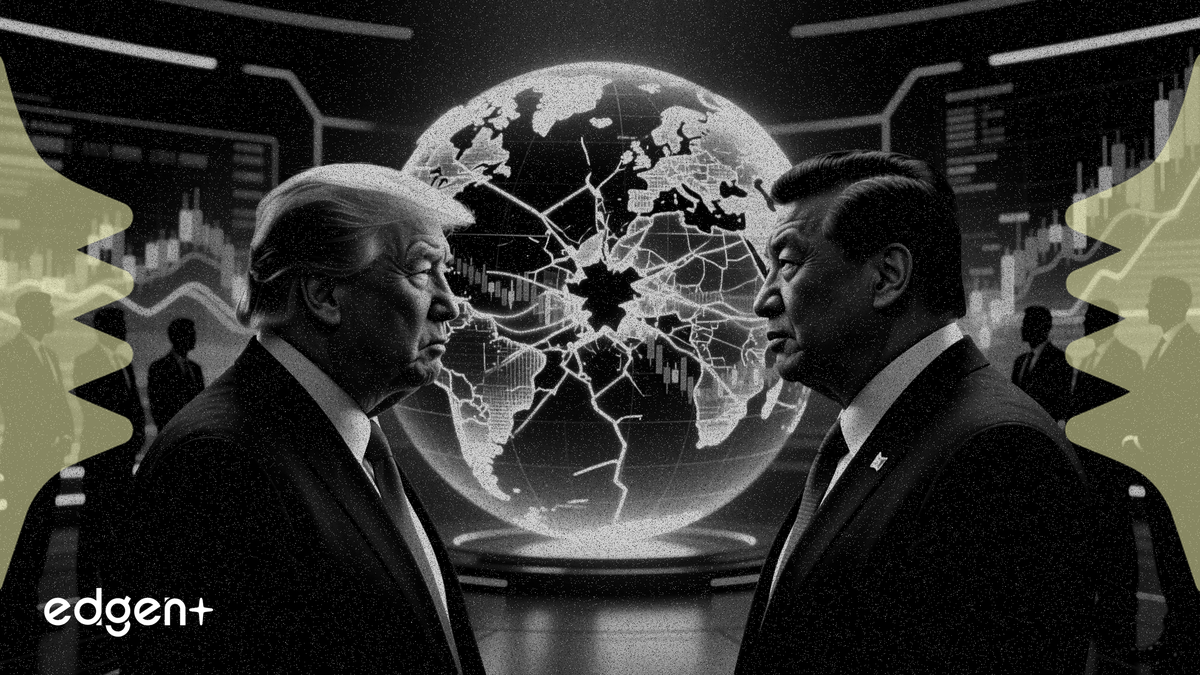
More than 15 top US executives will join President Donald Trump in Beijing this week for a high-stakes summit with Chinese President Xi Jinping, where an agenda spanning trade, technology, and Taiwan will test a volatile relationship rocked by the war in Iran.
"In an increasingly turbulent world, the strategic value of China-U.S. relations becomes more prominent," Chinese Ambassador to the U.S. Xie Feng told Newsweek. He expressed hope the summit would "chart the right course for the future development of China-U.S. relations."
The meeting, delayed from March after the war in the Middle East escalated, comes as Washington accuses Beijing of "industrial-scale" campaigns to steal American AI technology and China counters U.S. sanctions on its refiners processing Iranian crude. The backdrop includes a massive disruption of oil traffic through the Strait of Hormuz, a chokepoint for the majority of China's energy imports, and Chinese export controls on rare earth magnets vital to global automakers.
"The entire world will be hoping that the two leaders can reach agreement on at least a subset of issues … and find ways to prevent any further escalation of tensions on the remaining ones," Eswar Prasad, a professor at Cornell University, told CNBC. A contentious summit, he added, could cripple global trade and growth and threaten "the very survival of the rules-based order."
At the top of the agenda is Taiwan, which China's foreign minister has described as "the biggest point of risk" in the bilateral relationship. Beijing is expected to press Trump to slow weapons sales to the self-governing island, particularly after the administration approved an $11 billion package late last year and another $14 billion sale awaits a final decision. In a call with U.S. Secretary of State Marco Rubio, Chinese diplomat Wang Yi urged Washington to "make the right choices to open up new space for China-U.S. cooperation."
Any ambiguous softening of U.S. support for Taiwan would be "the most destabilizing outcome" of the summit, said Bonnie Glaser, managing director of the Indo-Pacific program at the German Marshall Fund. She warned that a tacit bargain on Taiwan in exchange for other concessions could embolden China to take more assertive steps.
The war in Iran has added another layer of complexity. A massive drop in traffic through the Strait of Hormuz has been a "disaster" for China and the world, Ambassador Xie said, hitting back at what he called "fake news" that China was benefiting from the conflict or providing military aid to Tehran. "China has steadfastly stood on the side of peace, and has been committed to promoting talks for peace," he stated, highlighting diplomatic efforts by Beijing.
While President Trump has claimed China was "very happy" with U.S. efforts to reopen the strait, the bottleneck remains. The conflict has created a severe energy shock, with Southeast Asian nations heavily reliant on Gulf oil bearing the brunt of the economic toll.
Trade and technology remain central points of friction. The two sides are pioneering increasingly sophisticated AI models, a field where Ambassador Xie said the two nations "should engage in a race to the top" rather than a "Star Wars-style rivalry." However, tensions persist over tariffs and U.S. accusations of technology theft.
"Virtually everyone has a stake in the outcome of this meeting," said Chad Bown, a senior fellow at the Peterson Institute for International Economics. For allies in Europe and Japan, a potential deal for China to buy more U.S. energy could push global prices higher and displace their own market share. For Russia, an overall improvement in U.S.-China relations could reduce Beijing's support for its war in Ukraine, according to Dennis Wilder, a former U.S. intelligence official.
This article is for informational purposes only and does not constitute investment advice.
