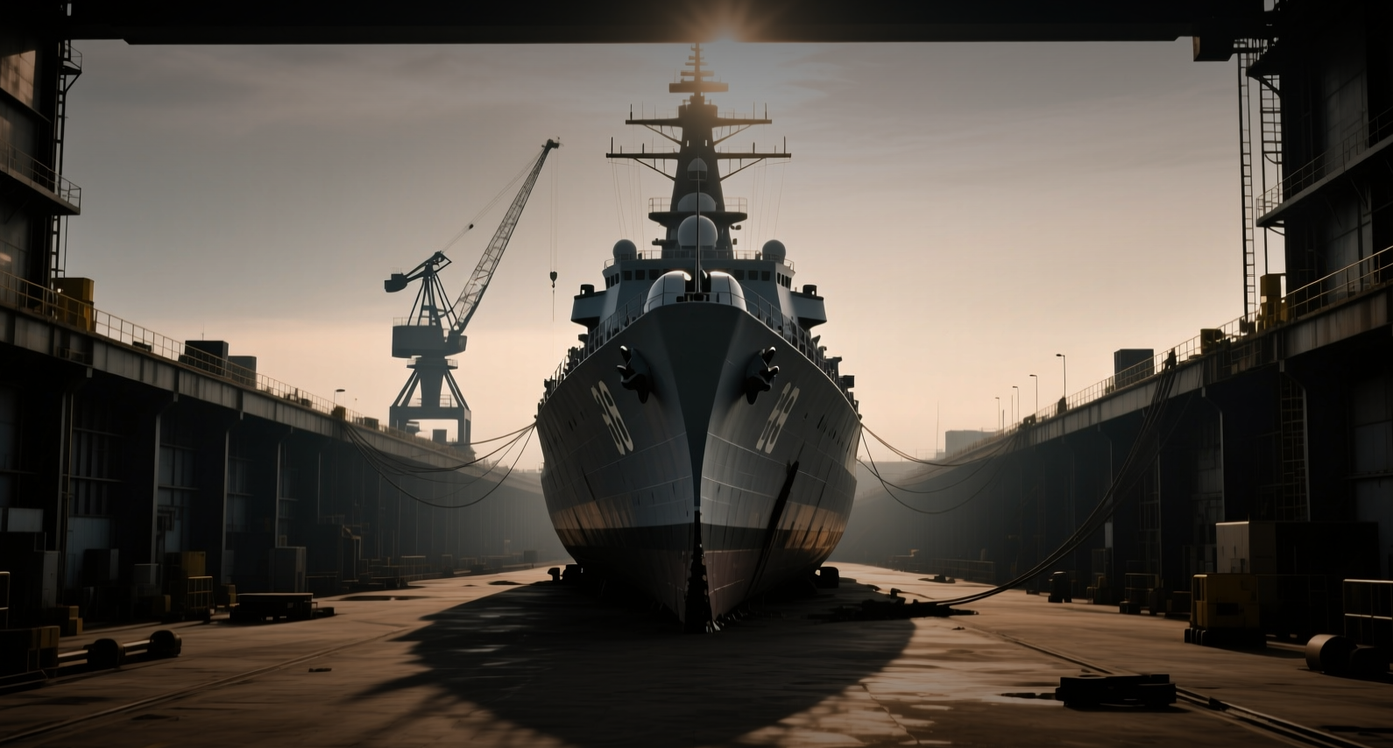
Trump ordered the Navy to open shipbuilding to foreign yards, a historic shift in US defense procurement that lifted Hanwha and Fincantieri shares.
President Donald Trump ordered the Navy to open shipbuilding to foreign yards, lifting Hanwha and Fincantieri shares Friday and drawing sharp opposition from US shipbuilders.
"Every hull built abroad is demand, jobs, and industrial capability diverted from American shipyards this administration pledged to rebuild," Matthew Paxton, president of the Shipbuilders Council of America, said in a statement.
The National Security Presidential Memorandum, "Rebuilding the United States Navy and America's Shipbuilding Industrial Base," allows foreign builders to construct up to two vessels in three ship classes — surface combatants, CONSOL tankers and roll-on/roll-off vessels — before shifting production to the US. Hanwha Group and Fincantieri shares rose Friday after the announcement, while the directive also calls for a fifth public Navy shipyard, the first in more than 80 years, and a redesign of Ford-class carriers to replace electromagnetic catapults with steam systems.
The shift could reshape the global naval shipbuilding market, expanding revenue opportunities for foreign defense builders while threatening US domestic yards. Congress has pushed back, with the House version of the fiscal 2027 National Defense Authorization Act barring foreign construction and the Senate version allowing only two auxiliary ships.
The Finland Model Goes to War
The directive extends a template already used for Coast Guard icebreakers. Bollinger Shipyards is partnering with Finland's Rauma Marine Constructions to build the first two Arctic Security Cutters in Finland before shifting production to Louisiana, while Canada's Davie is building its first two cutters at Helsinki Shipyard before moving to a new Texas facility.
To qualify, a foreign shipbuilder must buy or open a US yard, hire and train American workers, transfer proprietary techniques and establish a US supply chain. The administration can waive the general prohibition on building Armed Forces vessels abroad, with Congress notified and a 30-day wait before contract award. The Navy is also barred from imposing iterative design changes on mature foreign parent designs, with any modifications requiring approval from senior Pentagon, Navy, White House and Office of Management and Budget officials.
The Constellation-class frigate program, based on a Fincantieri design, illustrates the risks of adapting foreign hulls. The Navy cut the program in December 2025 and will accept only the two frigates already being built after cost overruns, delays and design changes.
Carriers, Shipyards and the Hill
The memo revives Trump's long-standing criticism of the Electromagnetic Aircraft Launch System. Within 60 days, the Pentagon must develop a plan to replace EMALS and Advanced Weapons Elevators with steam and hydraulic systems for the future USS Doris Miller (CVN-81), a major departure from the technologies introduced aboard the Ford class.
The directive also orders a plan for a fifth public Navy shipyard near the Pacific Fleet, potentially with three new dry docks, and a review of Naval Sea Systems Command. The Navy's budget request includes $1.85 billion in reconciliation funding to study using foreign yards and potentially fund an initial vessel built in Japan or South Korea.
Analysts caution that integrating foreign-built warships into the US fleet would be unprecedented. "The main difficulties would be first off, we just never really have done that with a combat-type ship," said Bradley Martin, a senior policy researcher at RAND and retired Navy captain. "Another is that the standards would be different."
The political battle is far from settled. The White House's Office of Management and Budget blasted the House NDAA prohibition in July, calling it "a direct decrement to the safety and security of the American people." Senate Democrats have stalled the legislation over defense spending and the conflict with Iran, leaving the foreign-yard pathway in limbo until the NDAA is resolved.
This article is for informational purposes only and does not constitute investment advice.