
Key Takeaways:
- Trump said Russia will not attack NATO, citing his conversations with Putin
- US intelligence warns of a possible limited Russian incursion this fall
- European defense stocks and risk premiums hinge on how markets read the statement
Key Takeaways:
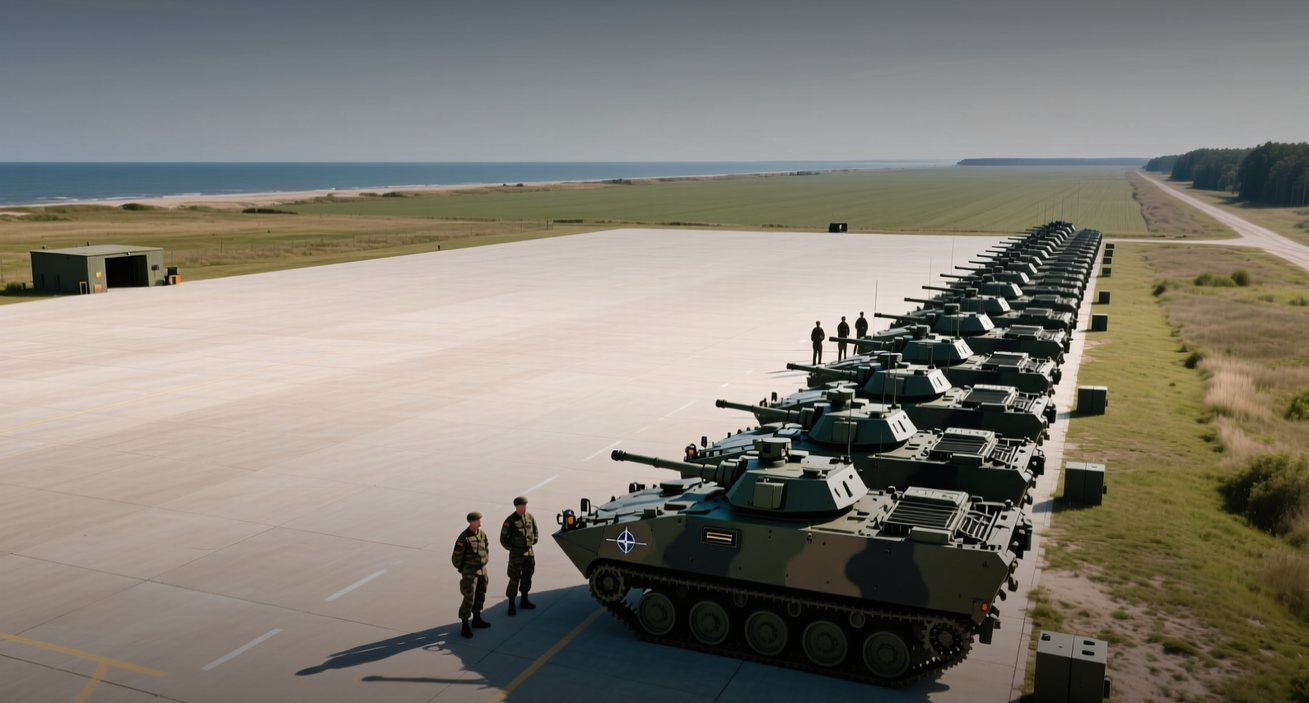
Trump's first public assessment of NATO security since returning to office directly contradicts US intelligence warnings of a possible limited Russian incursion this fall.
On Aug 27, Trump said Russia will not attack NATO, contradicting US intelligence warnings of a possible limited incursion this fall and potentially easing the geopolitical risk premium on European defense stocks.
"Washington now assesses Russia could launch a 'limited' attack on NATO's eastern European edge as soon as this fall," US officials told The Wall Street Journal earlier this month.
The statement comes weeks after CIA Director John Ratcliffe made an unannounced visit to Moscow, where he warned top Russian officials against escalating hybrid warfare against NATO allies, particularly the three Baltic states, Politico reported. Ratcliffe's trip revived memories of former CIA chief William Burns' rare personal visit to Moscow in November 2021, when he warned the Kremlin against invading Ukraine — three months before Russia launched its full-scale invasion.
If markets interpret Trump's statement as reducing the perceived threat level, European defense stocks could face pressure, while a reduction in geopolitical risk premiums could boost risk appetite across European equities. The impact depends on whether investors view Trump's assessment as reliable or as a departure from intelligence community findings.
The intelligence community's assessment stands in sharp contrast to Trump's public confidence. US officials have said Russia could send a small number of troops into the Baltic states or Poland, or escalate hybrid warfare operations, without triggering a full NATO response. A war game run by German newspaper Die Welt in December simulated a Russian incursion into Lithuania in October 2026, finding that with just 15,000 troops, Russia could seize the Lithuanian city of Marijampole from the Suwałki Gap — a 40-mile strip of land linking Belarus to the Russian exclave of Kaliningrad.
NATO has been actively rehearsing for this scenario. The Allied Rapid Reaction Corps, which would be among the first NATO troops deployed if Russian tanks entered the Baltic states, war-gamed a Russian invasion of these three countries in 2030 in May this year. NATO says it picked 2030 because that's when the threat from Russia will be "most acute."
Beyond conventional military scenarios, Russia has been waging a sustained hybrid campaign against NATO members. At least 13 cables under the Baltic Sea were damaged between fall 2023 and the start of 2025. Russia has built at least 10 secret sites capable of firing long-range drones into NATO territory, The Telegraph reported. In August, a drone laden with explosives was found at Leipzig airport in eastern Germany, near planes operated by Ukraine's Antonov Airlines — the airport is a major military aid hub used by NATO forces.
NATO has also said Russia subjects its members to "persistent malicious cyber activities." In 2024, NATO attributed cyber campaigns in Germany and the Czech Republic to a Russian group backed by the GRU foreign military intelligence agency. The alliance has said cyber attacks could trigger Article 5, though it has been ambiguous about the threshold.
In an unusual public statement, a senior NATO official confirmed in January 2025 that the alliance was aware of multiple assassination plots against defense industry leaders, including Armin Papperger, chief executive of German defense giant Rheinmetall.
For European markets, the key question is whether Trump's statement will be read as reducing the perceived threat level or as a political statement disconnected from intelligence assessments. European defense stocks have traded with a geopolitical risk premium since Russia's 2022 invasion of Ukraine. If that premium compresses, defense sector valuations could face pressure. Conversely, a broader reduction in geopolitical risk could support European equities and the euro.
The last time a US president publicly dismissed the Russian threat to NATO was in the lead-up to the 2022 invasion, when Western intelligence assessments were similarly at odds with public messaging. Markets that had priced out the invasion risk were caught off guard when Russia attacked in February 2022.
This article is for informational purposes only and does not constitute investment advice.
