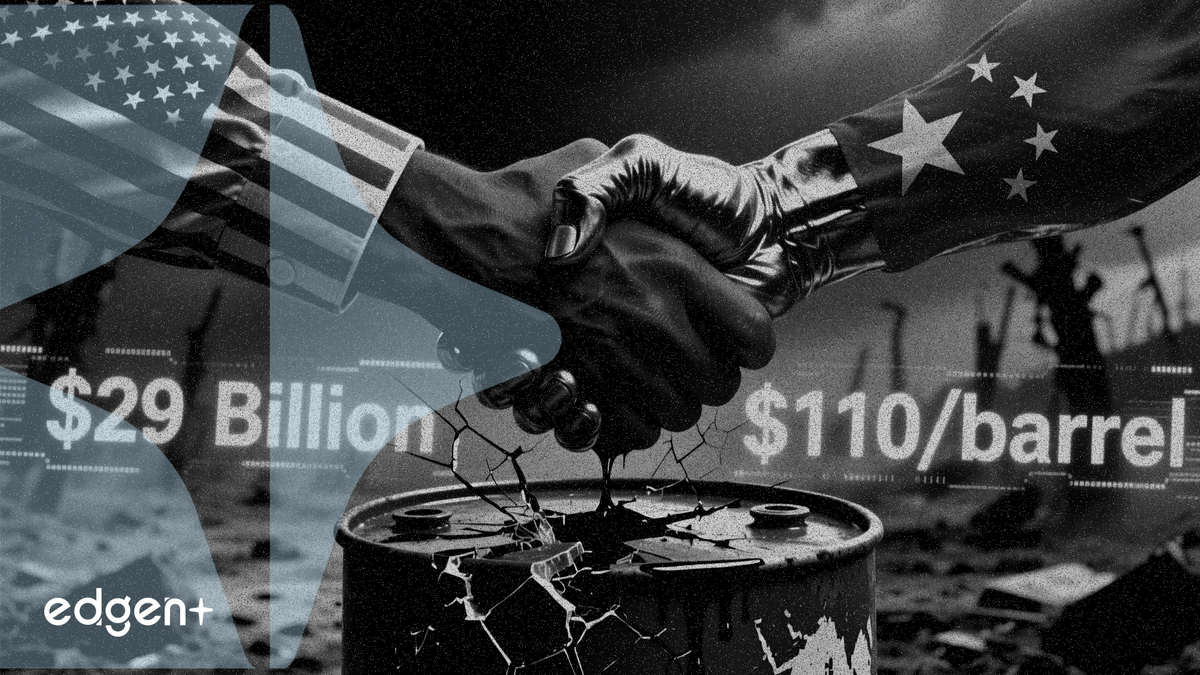
A high-stakes summit in Beijing could decide the fate of a fragile ceasefire in the Iran war, with the conflict's $29 billion cost and its impact on global oil supplies topping the agenda.

(Bloomberg) -- US President Donald Trump arrived in Beijing for a high-stakes summit with Chinese leader Xi Jinping, seeking help to secure a definitive end to the war with Iran as the conflict’s cost to the US surpasses $29 billion and global oil prices hover near $107 a barrel. The meeting, the first U.S. presidential visit to China in nearly nine years, occurs as a month-old ceasefire with Tehran hangs in the balance and Washington’s strategic focus is tested.
"He's going to need Chinese help pressuring the Iranians to get to the deal that he envisions," a former senior U.S. government official told ABC News. However, President Trump offered contradictory views, telling reporters "I don't think we need any help with Iran" before later conceding that Xi "could" help bring the ceasefire "back to life."
The war’s economic toll is mounting, with the Pentagon’s cost estimate rising by $4 billion in the last two weeks alone to $29 billion. The conflict has taken more than 1 billion barrels of Middle East supply offline, according to the International Energy Agency, contributing to accelerating US inflation and record-high diesel prices in four states. Brent crude futures were trading around $107 per barrel on Wednesday.
At stake is whether the world’s two largest economies can cooperate to de-escalate a conflict that has choked a critical global trade artery, or if the summit will merely highlight a deeper rivalry. For markets, the outcome could determine the direction of oil prices, inflation, and the geopolitical risk premium embedded in assets from equities to bonds, with the next move from Tehran or Washington holding the potential to shatter the tenuous calm.
Just as Trump headed for Beijing, a Chinese-owned supertanker, the Yuan Hua Hu, traversed the Strait of Hormuz, a waterway largely blocked since the war began. The transit of the 2-million-barrel capacity vessel, chartered by a unit of state-owned Sinopec, underscores Beijing's leverage as the main buyer of Iranian oil. While US officials have urged China to apply pressure on Tehran, experts believe Beijing will act cautiously to protect its own energy and economic interests.
"China has real leverage [over Iran], but it's not unlimited," said Craig Singleton, who leads the China program at the Foundation for Defense of Democracies. Singleton noted that Beijing could support opening the strait as long as it doesn't appear to be "doing Washington's bidding." Iran, meanwhile, has been firming up its control over the region by striking energy export deals with Iraq and Pakistan, potentially entrenching its grip on the vital waterway.
The war has not only been costly in dollar terms but has also depleted key US military resources, a development closely watched by Beijing. Defense Secretary Pete Hegseth told lawmakers it would take "months and years" to replenish some munitions. One analyst at the Centers for Security and International Studies estimated the military has used half of its critical Tomahawk missiles, creating a risk for a potential future conflict with China.
The economic pain is also being felt at home, a fact Trump dismissed. Asked about the financial strain on Americans from rising prices, the president replied, "I don’t think about Americans’ financial situation... I think about one thing: We cannot let Iran have a nuclear weapon." His comments come as the national average for diesel has surged 60% over the past year, hitting all-time highs in states like Illinois and Michigan and increasing costs for everything from farming to transportation. The trip's delegation also includes Nvidia CEO Jensen Huang, a last-minute addition, signaling that technology competition remains a core, if overshadowed, component of the complex US-China relationship.
This article is for informational purposes only and does not constitute investment advice.