
A 2025 law capping federal graduate student debt is forcing a long-awaited reckoning in higher education, with universities beginning to cut tuition for expensive master's programs.
A 2025 law capping federal graduate student debt is forcing a long-awaited reckoning in higher education, with universities beginning to cut tuition for expensive master's programs.
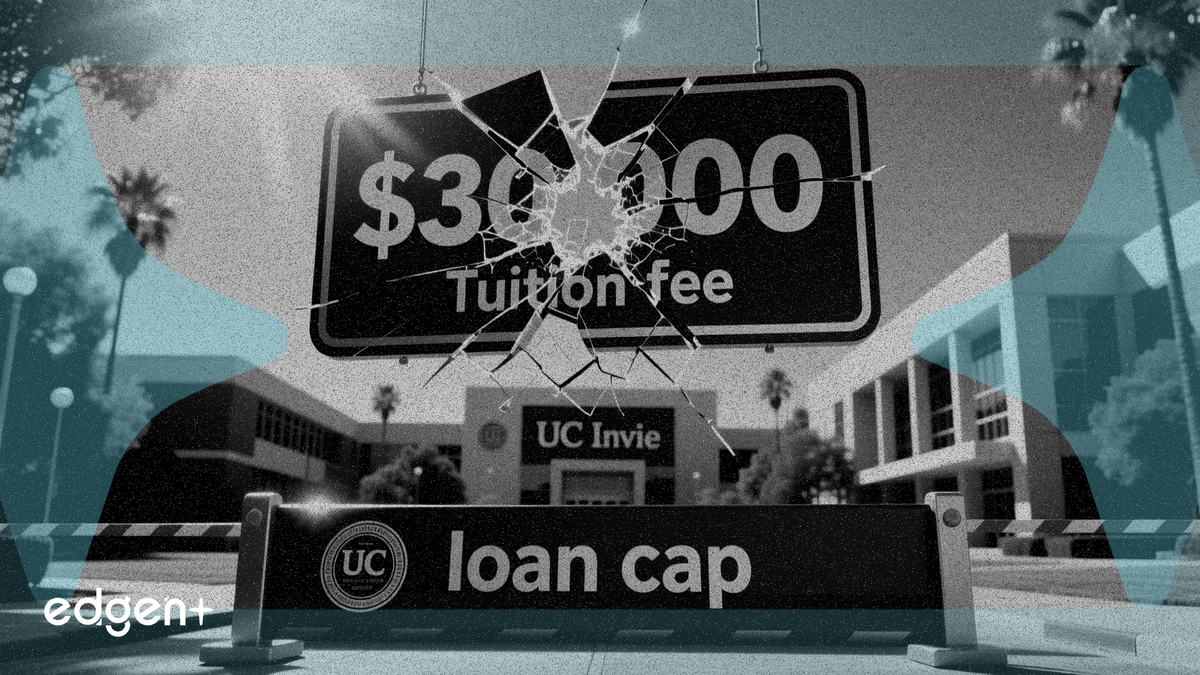
The University of California, Irvine, will cut tuition for its MBA program by $30,000 to $99,000 starting in fall 2026, a direct response to a 2025 tax bill that imposes new caps on federal student loans for graduate programs.
“The Merage Flex MBA’s new tuition falls below the federal loan cap of $100,000, removing a critical financial barrier for working professionals,” the university said in a statement. It added that the move makes its “MBA is priced within reach of government loan limits—making a world-class degree not just aspirational, but truly attainable.”
The Republican-led tax bill passed last year capped the aggregate federal debt that graduate students can take out at $100,000, with an exception of $200,000 for professional degrees in fields like law and medicine. Previously, graduate students could borrow nearly unlimited amounts from the federal government, a system that a 2023 National Bureau of Economic Research study found led to colleges raising sticker prices almost dollar-for-dollar with the increases in federal loan availability.
The new loan cap is imposing a new layer of financial discipline on the higher education sector, forcing universities to compete on price to attract students who can no longer borrow endlessly. While graduate students can still turn to the private market to cover costs above the federal limit, those loans typically carry higher interest rates and lack the income-based repayment and forgiveness options associated with federal debt.
The move by UC Irvine is part of a broader trend of universities adjusting to a shifting financial and demographic landscape. Purdue's Mitch Daniels School of Business is offering a 40% discount for its online MBA for certain students, while the Johns Hopkins Carey Business School is offering a 50% tuition scholarship for Maryland graduates for several master's degrees. Many of these discounted programs, including at UC Irvine and Washington University's Olin Business School, are also being redesigned to focus on high-demand skills like artificial intelligence to boost enrollment.
This pricing pressure comes as universities face multiple financial headwinds. Moody's Ratings recently lowered Columbia University's financial outlook to negative from stable, citing a weaker ratio of cash and investments to expenses compared to its peers. The agency pointed to the new graduate loan caps, uncertain federal research funding, and a decline in international students—who made up 39% of Columbia's student body in fall 2024—as key threats. The university's operating surplus fell by over 63% to $112.6 million in fiscal 2025 from the prior year.
This article is for informational purposes only and does not constitute investment advice.
