
Les États-Unis et la Chine ont convenu de discuter de l'intelligence artificielle, mais les deux puissances mondiales ont des idées fondamentalement différentes sur les objectifs de cette conversation.
Les États-Unis et la Chine ont convenu de discuter de l'intelligence artificielle, mais les deux puissances mondiales ont des idées fondamentalement différentes sur les objectifs de cette conversation.
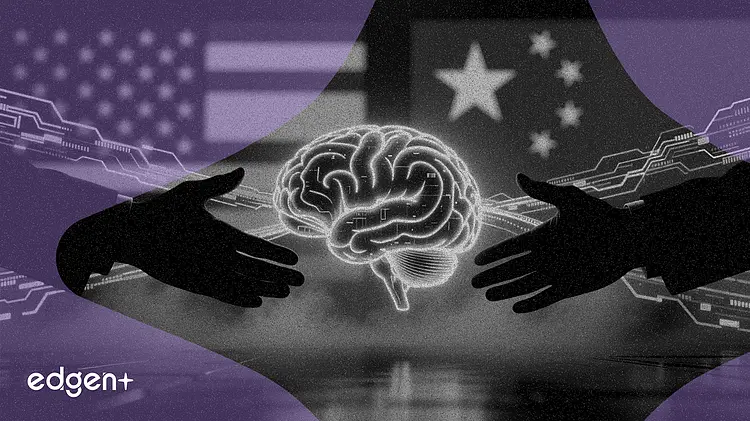
Le président chinois Xi Jinping et son homologue américain Donald Trump ont tenu des discussions constructives sur l'intelligence artificielle lors de leur sommet à Pékin, les deux parties ayant convenu d'établir un dialogue intergouvernemental formel sur cette technologie en progression rapide. Cette initiative, confirmée par le ministère chinois des Affaires étrangères, marque le premier effort conjoint significatif pour gérer les risques et la concurrence dans un secteur devenu un front central de la rivalité stratégique élargie entre les deux nations.
« En tant que deux grandes puissances de l'intelligence artificielle, la Chine et les États-Unis devraient promouvoir conjointement son développement et sa gouvernance », a déclaré mardi Guo Jiakun, porte-parole du ministère chinois des Affaires étrangères, lors d'une conférence de presse. Il a ajouté que le dialogue visait à mieux servir « le progrès de la civilisation et le bien-être de la communauté internationale ».
L'accord de dialogue repose toutefois sur un socle de méfiance stratégique profonde. Le sommet de Pékin a produit un cadre pour gérer les différends plutôt que pour les résoudre, reflétant un schéma observé dans d'autres domaines de la relation bilatérale. Pour Washington, l'objectif est souvent transactionnel : créer une concurrence gérable pour garantir des gains économiques. Pour Pékin, l'objectif est plus stratégique : façonner les règles d'engagement et obtenir la reconnaissance de son statut et de ses « intérêts fondamentaux », selon une analyse du Council on Foreign Relations. Ce nouveau dialogue sur l'IA s'inscrit parfaitement dans cette dynamique de « rivalité gérée ».
Bien que le dialogue puisse réduire les tensions géopolitiques immédiates pour l'industrie mondiale de l'IA, les sources profondes de la concurrence restent inchangées. Les États-Unis continuent de restreindre l'accès de la Chine aux semi-conducteurs avancés et à la technologie de l'IA par le biais d'entités telles que le Comité sur les investissements étrangers aux États-Unis (CFIUS), tandis que la Chine poursuit une stratégie agressive pilotée par l'État pour atteindre l'autosuffisance technologique et le leadership mondial dans les domaines critiques.
Pékin a explicitement déclaré son objectif de devenir un leader mondial des interfaces cerveau-machine (BCI) d'ici 2027, un domaine qui repose lourdement sur l'IA. Des entreprises chinoises comme NeuroXess, basée à Shanghai, mènent déjà des essais cliniques sur des implants cérébraux alimentés par l'IA qui aident les personnes paralysées à contrôler des appareils par la pensée, selon un récent rapport de Nature. Cette poussée agressive souligne les enjeux élevés, car le leadership en IA est considéré comme essentiel pour la puissance économique et militaire future.
Il est peu probable que ce nouveau canal de dialogue interrompe cette course. Au lieu de cela, il pourrait servir de « dispositif de gestion », un lieu où les deux puissances peuvent exprimer leurs griefs et réduire le risque de mauvais calcul avant que les différends ne dégénèrent en crises majeures. Cela rappelle l'établissement de conseils bilatéraux pour le commerce et l'investissement, conçus pour gérer les litiges sur les biens non sensibles tout en laissant les questions contentieuses comme les technologies de pointe et la politique industrielle non résolues.
Pour les investisseurs, le dialogue introduit une couche de prévisibilité dans une relation volatile, bénéficiant potentiellement aux entreprises technologiques multinationales comme Nvidia, AMD et TSMC en empêchant un découplage complet des écosystèmes d'IA américains et chinois. Cependant, le conflit fondamental entre les contrôles à l'exportation menés par les États-Unis et la quête d'autonomie de la Chine continuera de générer de l'incertitude. Les discussions peuvent créer un plancher pour la relation, mais le plafond reste bas alors que les deux parties continuent de contester les règles de la nouvelle ère technologique.
Cet article est à titre informatif uniquement et ne constitue pas un conseil en investissement.
