
Washington is set to unveil its most aggressive economic campaign against Iran in nearly five decades, threatening secondary sanctions on any country that keeps trading with Tehran.
Washington is set to unveil its most aggressive economic campaign against Iran in nearly five decades, threatening secondary sanctions on any country that keeps trading with Tehran.
Washington is set to unveil its most aggressive economic campaign against Iran in nearly five decades, threatening secondary sanctions on any country that keeps trading with Tehran.
The US will announce Monday what Treasury Secretary Scott Bessent calls the "greatest financial offensive ever marshalled" against Iran, threatening sanctions on any nation that buys its oil, transfers funds or moves crude by sea.
"At dawn begins an economic D-Day — the single greatest financial offensive ever marshalled against an adversary," Bessent wrote in the Financial Times, saying the war with Iran is entering its "endgame" after US and Israeli strikes degraded Tehran's military and nuclear programs. He is due to hold a press conference at 2 p.m. EDT (1800 GMT) Monday.
The escalation threatens to upend global energy markets. Mohsen Rezaei, secretary of Iran's Supreme National Security Council, said Sunday that "if the economic war continues, not a single drop of oil will be exported, neither through the Strait of Hormuz nor from anywhere in the Persian Gulf," a chokepoint that carries about one-fifth of global oil and gas exports in peacetime. He said Iran would treat any country's participation in the US economic campaign as an act of war.
Sanctions target Iran's trade partners
Bessent signaled the US would use its full enforcement toolkit against three categories of activity: purchasing Iranian oil, transferring remittances to Tehran, and ship-to-ship transfers of Iranian crude at sea. President Donald Trump, who on Aug. 19 called the campaign the "most crushing economic operation" against Iran, warned that "any country that allows its financial institutions, businesses, airports, or government entities to provide any type of lifeline to Iran will itself face tremendous economic consequences."
The measures extend a pressure campaign that began with the Feb. 28 outbreak of war, when Washington imposed a naval blockade on Iranian ports and targeted companies, brokers and tankers accused of helping Iran sell oil abroad. The US has reported 18 military personnel killed and more than 750 wounded in the conflict, which has also killed thousands in Iran and Lebanon and displaced millions.
Iran's oil countermeasure
Iran has dismissed the threats as a "complete erosion of sovereignty," with Foreign Ministry spokesman Esmaeil Baghaei saying no state can compel foreign banks, enterprises or airports to renounce commerce with Tehran. Foreign Minister Abbas Araghchi called the campaign "a movie we have seen countless times," pointing to sanctions imposed under President Barack Obama in 2012. "Same bull. Different bullies," he wrote.
Iranian President Masoud Pezeshkian said the US aims to collapse the government but insisted Iran has not become "a second Venezuela," while Revolutionary Guard spokesman Ramazan Mohbi said Tehran would continue economic ties "under the nose of the Americans."
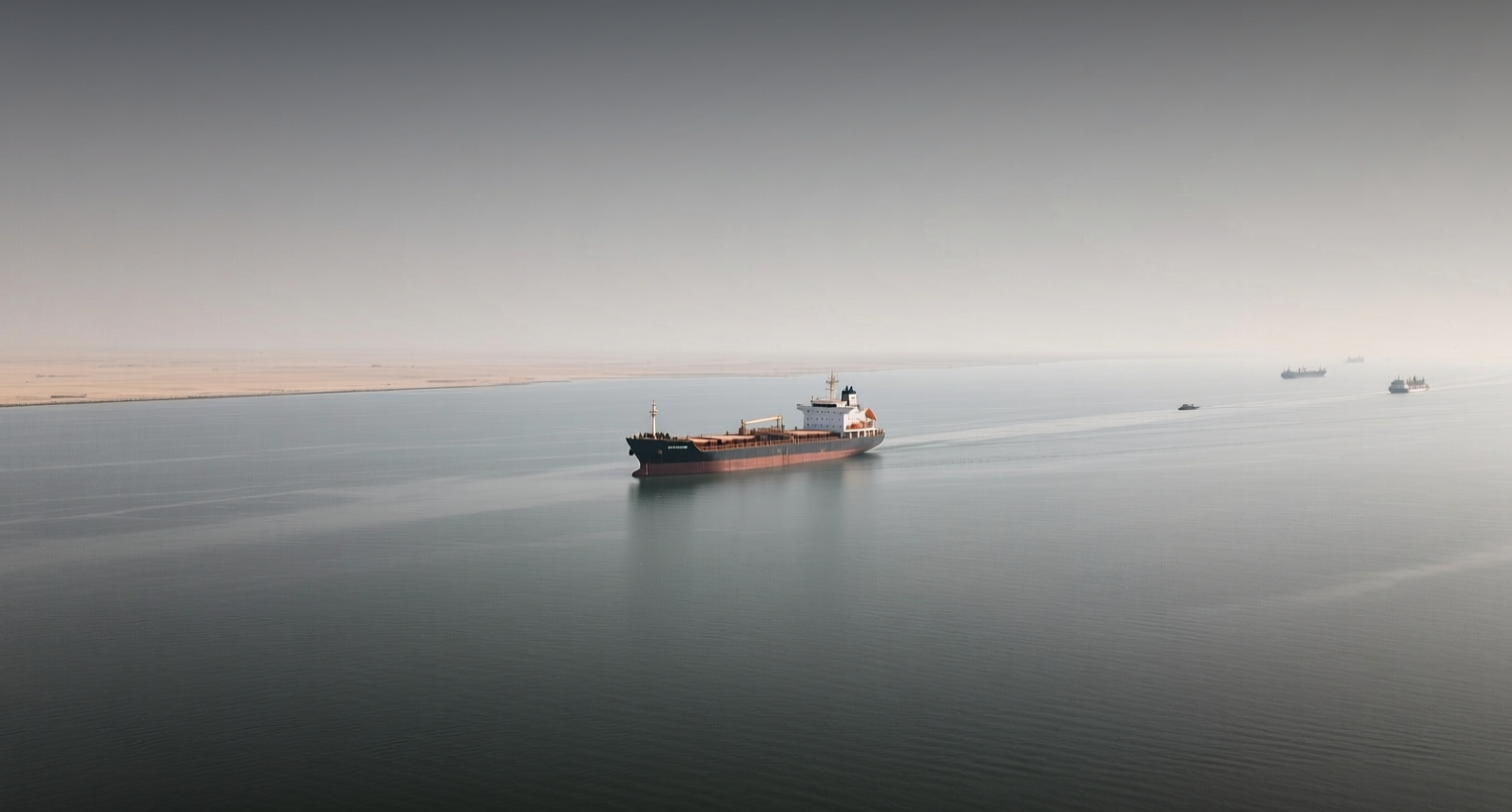
The threat has already curbed shipping through the Strait of Hormuz. Tanker traffic fell to 13 vessels Saturday and four Sunday, roughly 90 percent below pre-conflict baselines, according to Kpler data cited by Reuters. Brent crude traded near $93 a barrel Monday, down about 1.3 percent, while WTI slipped to about $85.64.
China and Gulf states hold the key
The campaign's success hinges on China, which bought 80 percent of Iran's shipped oil in 2025, according to analytics firm Kpler. Beijing has pushed back, with Foreign Ministry spokesman Lin Jian saying "sanctions and pressure do not help resolve the problem." Analysts note China's oil refineries and Russia's commercial links to Tehran have minimal reliance on the US financial system, limiting Washington's leverage.
Gulf states, caught between their US alliance and geographic proximity to Iran, face the sharpest dilemma. The UAE last week imposed an indefinite trade embargo on Iran after accusing Tehran of firing ballistic missiles at the country, a claim Iran denies. But analysts say many Gulf governments fear the chaos of an Iranian collapse. "Gulf countries can't change geography. They have to live and work alongside Iran," said Simon Mabon, a professor of international relations at Lancaster University.
The last time Washington pursued a comparable squeeze, sanctions imposed in 2012 cut Iran's oil exports by more than half within a year, helping push Tehran to the 2015 nuclear deal. Whether the current campaign achieves a similar result is uncertain — Bessent said he does not expect large-scale military action, but Iran retains enough missile and drone capability to strike Gulf neighbors and threaten tankers, keeping the risk of a third US-Iran war on the table.
This article is for informational purposes only and does not constitute investment advice.
