The U.S. war with Iran is pushing the American economy toward a stagflationary cliff, with soaring energy prices now threatening to lock in a third year of high inflation.

The U.S. war with Iran is pushing the American economy toward a stagflationary cliff, with soaring energy prices now threatening to lock in a third year of high inflation.
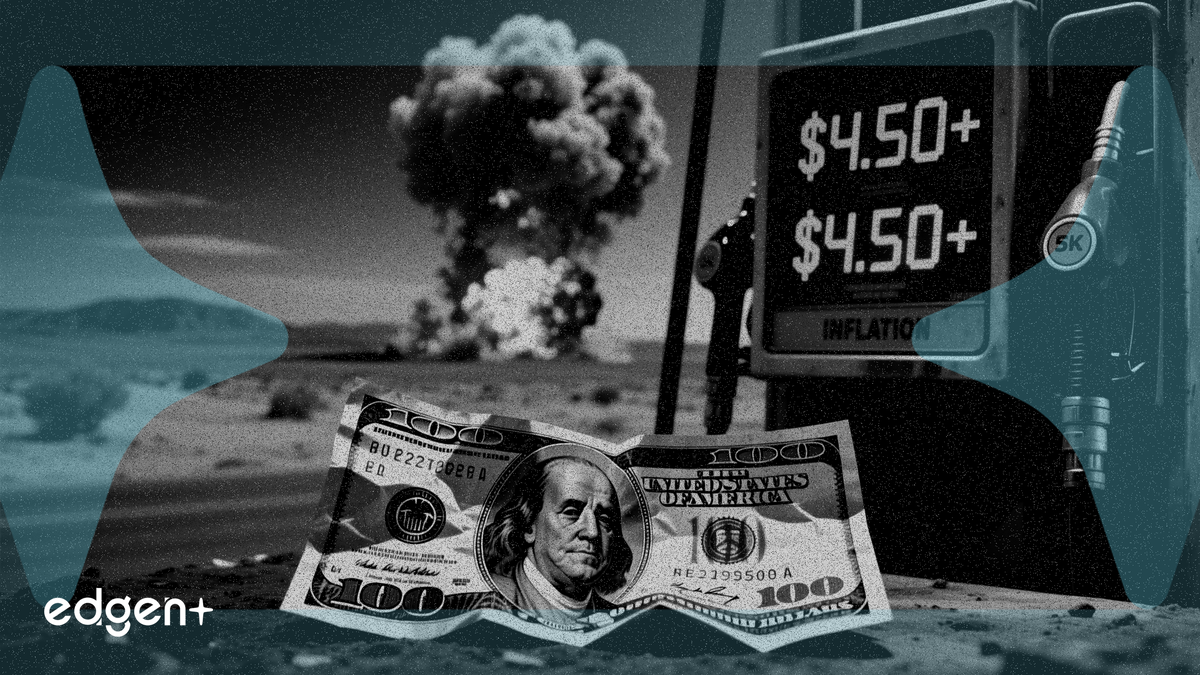
The protracted conflict in Iran, marked by a deepening deadlock over the Strait of Hormuz, is set to drive U.S. inflation to a three-year high, forcing a painful repricing of the Federal Reserve's rate cut ambitions. With gasoline prices surging past $4.50 a gallon, the economic fallout from the 10-week-old war is now rippling through the U.S. economy, hitting consumer wallets and corporate bottom lines.
"The threat [of the Strait's closure] will hang over the global economy for the foreseeable future," Gregory Brew, a senior analyst at research firm Eurasia Group, wrote in a recent analysis. This sentiment is echoed in the energy markets, where oil prices jumped by more than 3.5 percent on Monday after President Donald Trump rejected Iran's latest peace proposal, signaling a prolonged paralysis for a waterway that handles one-fifth of the world's oil.
The impact is being felt across asset classes. U.S. Treasury yields have climbed for three straight weeks on persistent inflation fears, with 364-day T-bills fetching an average yield of 5.719 percent in the latest auction, up from 5.377 percent the week prior. Meanwhile, consumer morale has cratered, with the University of Michigan’s Index of Consumer Sentiment hitting a record low of 48.2 this month.
The core of the issue is the direct pass-through from energy costs to consumer prices, threatening to keep inflation elevated and complicating the Federal Reserve's next move. While Wall Street had previously priced in rate cuts for later this year, the sustained price pressure may force the central bank to keep rates higher for longer, a move that would dampen growth and further squeeze consumers.
The pain at the pump is tangible. One analyst noted it now costs over $100 to fill up a Ford F-150, the most popular vehicle in America. This squeeze is disproportionately affecting lower-income households. "Low-income consumers are literally running out of money at the end of the month," Steve Cahillane, chief executive of Kraft Heinz, told Bloomberg.
This observation is backed by shifting retail behavior. Walmart reports seeing more higher-income customers in its stores, a classic sign of widespread economic anxiety. Other consumer-facing giants, from McDonald’s to Whirlpool, have also warned about weakening consumer finances in recent earnings calls.
While the U.S. has avoided the outright fuel rationing seen in other nations, the economic costs are mounting. The conflict's impact is not contained to the West. In the Philippines, for instance, headline inflation surged to a three-year high of 7.2 percent in April, a direct consequence of the same oil price shock.
"The only military outcome that’s feasible now is that Iran will effectively win," said Paul Collier, an economist at the University of Oxford. "All Iran has to do is stick it out, survive." This grim assessment suggests that the risk premium currently embedded in oil prices is unlikely to fade soon, keeping global inflationary pressures high.
Despite the gloom, the U.S. labor market has remained a surprising bright spot, adding 115,000 jobs last month while the unemployment rate held steady at 4.3 percent. However, this resilience will be tested as the dual pressures of sustained inflation and tightening financial conditions weigh on the broader economy for the remainder of the year.
This article is for informational purposes only and does not constitute investment advice.