
A tense war of attrition between the US and Iran is risking a fresh conflict in West Asia, as a US naval blockade and Tehran's control over the critical Strait of Hormuz choke global trade and leave diplomatic efforts at a dead end.
A tense war of attrition between the US and Iran is risking a fresh conflict in West Asia, as a US naval blockade and Tehran's control over the critical Strait of Hormuz choke global trade and leave diplomatic efforts at a dead end.
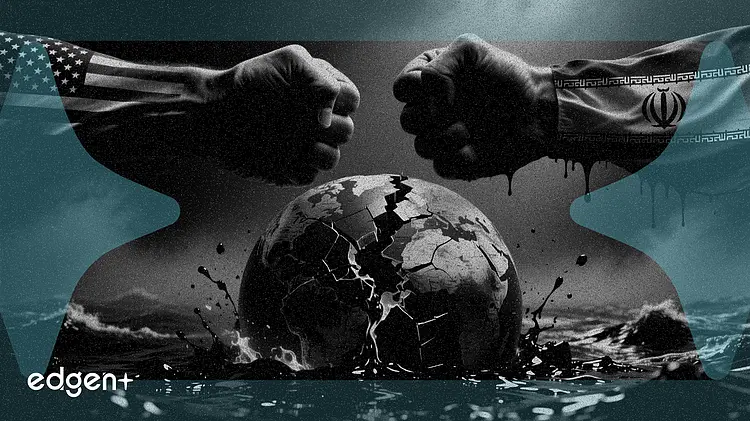
A tense war of attrition between the US and Iran is risking a fresh conflict in West Asia, as a US naval blockade and Tehran's control over the critical Strait of Hormuz choke global trade and leave diplomatic efforts at a dead end.
"We're in a war of attrition with the prospect of a new U.S.-Israeli attack growing by the day," one regional official told Reuters, highlighting the escalating risks of miscalculation.
The standoff has effectively throttled the Strait of Hormuz, a waterway that carries roughly 25 percent of global oil trade, causing significant supply disruptions. In response to the pressure, US President Donald Trump issued a stark warning to Iran, stating the “clock is ticking” for a deal. Meanwhile, France's deputy defense minister Alice Rufo on Monday called for an end to “verbal escalation,” confirming the French aircraft carrier Charles de Gaulle is in the region to provide “autonomous situational assessment capabilities.”
With global commercial oil inventories reportedly dwindling to just weeks of supply, the economic stakes are immense. The core of the dispute remains the vast gap between US demands for a 20-year halt to Iran's uranium enrichment and Tehran's insistence that its nuclear program and control of Hormuz are non-negotiable pillars of its national security, making a diplomatic breakthrough elusive.
Rounds of indirect talks mediated by Pakistan have so far failed to produce any breakthrough. The United States is demanding Iran halt uranium enrichment for two decades and ship its entire stockpile to the US. Tehran, in return, wants an end to military strikes, security guarantees, war reparations, and formal recognition of its sovereignty over the Strait of Hormuz—terms Washington has flatly rejected.
"Both believe time is on their side and they have the upper hand, and that perception is precisely what is making a deal impossible," said Ali Vaez of the International Crisis Group. This dynamic has created a dangerous war of endurance centered on one of the world's most critical maritime chokepoints.
While US officials have hinted at further military action to force concessions, some analysts are skeptical. "There is one major problem with this theory: We have already tested it, repeatedly, and Iran did not capitulate," said Danny Citrinowicz, a former head of the Iran branch in Israeli Defense Intelligence, now at Israel's Institute for National Security Studies. He argues that overestimating pressure and underestimating Tehran’s resilience raises the risk of another confrontation where coercion fails to produce the expected capitulation.
The economic consequences are mounting. The International Energy Agency's chief, Fatih Birol, warned Monday that global commercial oil inventories are being depleted at a rapid pace. To mitigate the impact, the US Treasury announced a 30-day extension of a general license allowing access to Russian oil cargoes stranded at sea, though officials admit the measure has had limited impact on lowering domestic gasoline prices.
The conflict's ripple effects are felt across the region. Israel has continued strikes in southern Lebanon, with the Lebanese health ministry reporting over 3,000 deaths since early March. Meanwhile, Iran has established a new body, the Persian Gulf Strait Authority, to manage the Strait of Hormuz, warning that any unauthorized passage will be considered "illegal." This move, along with proposals from Revolutionary Guard-linked media to impose fees on undersea internet cables in the strait, signals Iran's intent to solidify its control over the strategic waterway.
Despite the defiant posture, sources in Iran suggest Tehran does not want a prolonged “no war, no peace” scenario. The country is grappling with rising inflation and unemployment as strikes on key industries bleed an already battered economy. Iran is reportedly seeking a preliminary deal to reopen Hormuz under its oversight in exchange for the lifting of the US blockade, but Washington insists that ending the war must be deferred to later talks.
This article is for informational purposes only and does not constitute investment advice.
