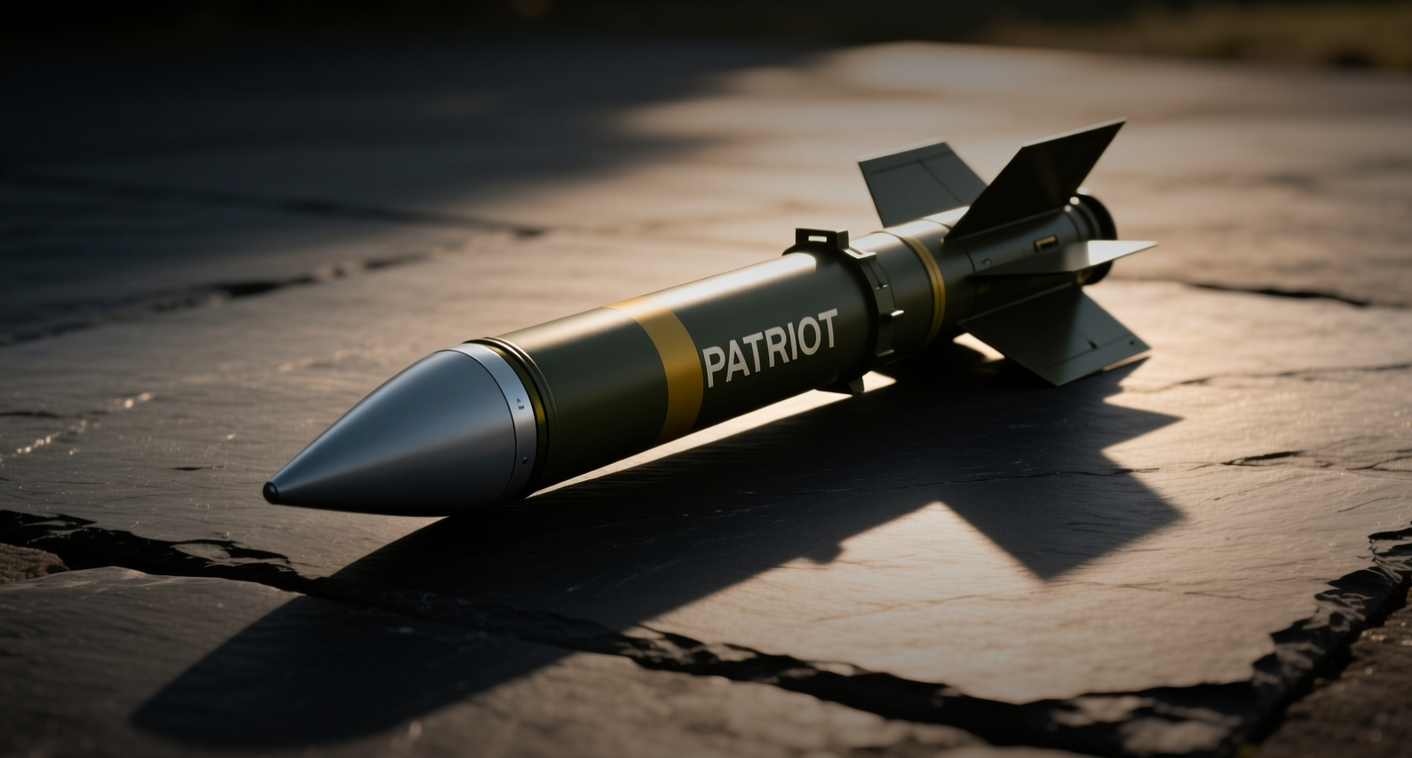
The US military's six-month war with Iran has drained its Patriot interceptor stockpile to below 1,700 units, forcing a global redeployment of air defenses that could reshape deterrence calculations in Moscow and Beijing.
The US war with Iran has consumed more than 1,500 Patriot interceptors, leaving fewer than 1,700 in stockpile and forcing the Pentagon to strip air defenses from Europe and Asia, potentially emboldening Russia and China.
Gen. Dan Caine, chairman of the Joint Chiefs of Staff, warned President Donald Trump before the war against drawing on already depleted stockpiles, according to two officials familiar with the matter. Trump nevertheless chose to attack, believing the conflict would end quickly — an assumption that proved wrong. CNN reported that Caine is now looking for an "exit path" from the war, telling senior members of Trump's team that escalating military options could produce the opposite of the intended result.
Even with accelerated production, replenishing the 1,500-plus interceptors would take more than two years, The New York Times reported. The Pentagon has moved Tomahawk missiles, an aircraft carrier and advanced destroyers from Asia to the Middle East, while hundreds of interceptors have been transferred from South Korea. Severe shortages also extend to ATACMS surface-to-surface missiles, according to the report.
The drawdown comes as Western intelligence assessments suggest Russia could test NATO's collective defense by attacking a member state in the coming years, and as Ukraine's air-defense missile deliveries have fallen to roughly one-third of last year's levels.
The Pentagon has signed framework agreements worth more than $3 billion with Northrop Grumman and Lockheed Martin to triple Patriot Advanced Capability-3 production and quadruple Terminal High Altitude Area Defense component output, part of the administration's "Arsenal of Freedom" initiative. The Army is also opening testing ranges to private companies to cut through what Secretary Dan Driscoll called "months and sometimes years of bureaucracy" that was "strangling defense contractors." Driscoll said the policy changes were partly inspired by Ukraine's ability to develop and manufacture new systems within relatively short periods, and the administration plans to encourage smaller companies to enter the defense industry.
The war's cost to US taxpayers reached roughly $37.5 billion as of late last month, according to Defense Secretary Pete Hegseth, who has requested an additional $87.6 billion for "urgent needs" related to Iran operations. The administration has asked Congress for a $1.5 trillion defense budget.
Ukraine's shrinking shield
President Volodymyr Zelensky said this week that Western air-defense missile deliveries to Ukraine have fallen to roughly one-third of 2025 levels. On Wednesday, Ukraine failed to intercept any of the 28 missiles Russia launched in an attack that killed at least 17 people. "We would also like to receive air defense from Israel," Zelensky said in Belgrade. "We would be ready to buy, but we still do not have that opportunity."
The shortfall comes as Russian officials, including former president Dmitry Medvedev, have repeatedly said that Western countries supplying weapons to Ukraine could be considered legitimate targets for Russian attack. Leaders of Lithuania, Latvia and Estonia have warned that the Baltic region could become a future confrontation zone between Russia and the West.
Asia's exposed flank
The Pentagon's redeployment has left American forces in South Korea more vulnerable in the event of a conflict with North Korea, one US official said. Some US officials fear South Korea and Japan will doubt Washington's ability to protect them, according to The New York Times. The last time the US faced a comparable interceptor shortfall was during the Cold War buildup, when Patriot production lines ran at full capacity for years to meet NATO commitments.
The White House has rejected claims of shortages. Press secretary Karoline Leavitt said the United States has "more than enough firepower to carry out any operation the president orders, anytime, anywhere." Trump posted angrily this week denying the reports, calling the claims "treasonous." For defense contractors including RTX, Lockheed Martin and Northrop Grumman, the stockpile depletion translates into multi-year production visibility, with the $3 billion framework agreements representing just the first tranche of what analysts expect to be a sustained procurement surge.
This article is for informational purposes only and does not constitute investment advice.