

The resumption of direct US-Iran hostilities failed to jolt crude markets, a historically anomalous calm that traders are betting will not last.
The resumption of direct US-Iran hostilities failed to jolt crude markets, a historically anomalous calm that traders are betting will not last.
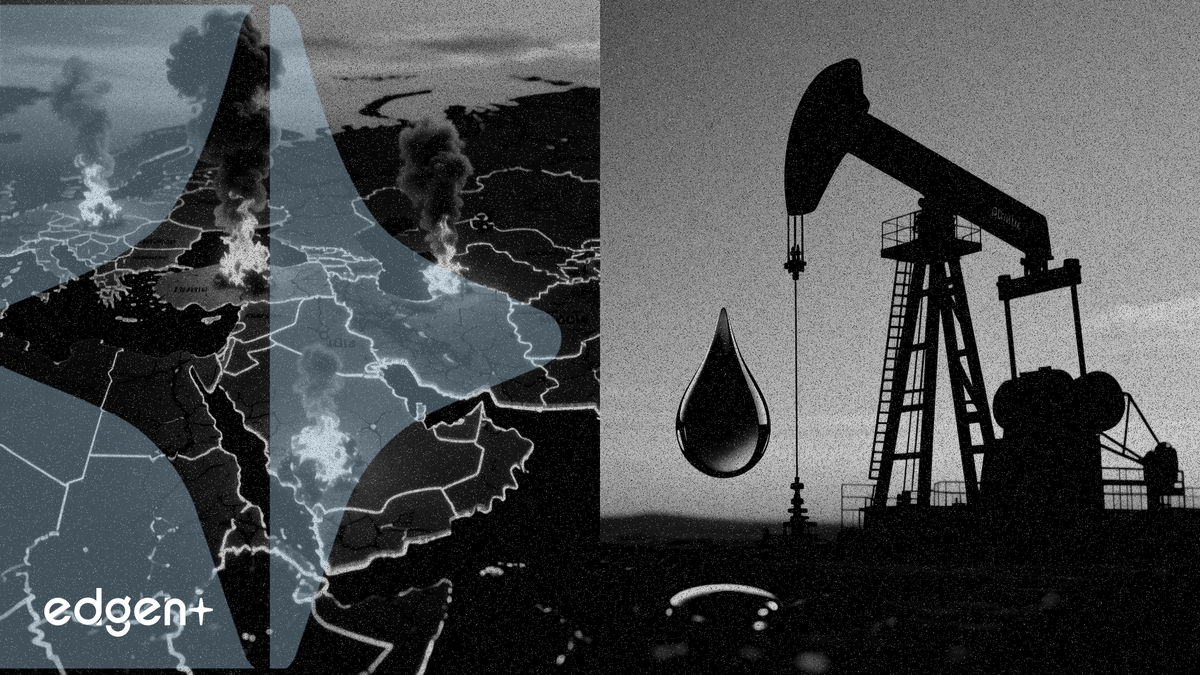
The US military struck five Iranian military sites near the Strait of Hormuz on Tuesday in response to the downing of an American Apache helicopter, yet crude prices barely budged — a muted reaction that defies decades of wartime oil premium history.
"The market is pricing in a very low probability of actual supply disruption, but that feels like a complacent bet given the Strait of Hormuz is the world's most important oil chokepoint," said Helima Croft, head of commodity strategy at RBC Capital Markets.
US Central Command said its jets hit air defense systems, ground control stations and surveillance radar sites in five locations along Iran's southern coast, including Bandar Abbas, Sirik, Jask and Qeshm Island. The strikes were a "proportional response" to Monday's downing of an AH-64 Apache gunship, which US officials said was caused by an Iranian one-way attack drone. Iran's Islamic Revolutionary Guards Corps retaliated by launching drones at the US Fifth Fleet in Bahrain and missiles at the Muwaffaq Salti Air Base in Jordan, though US officials said all 21 claimed attacks were intercepted with no American casualties. Brent crude and West Texas Intermediate were little changed on the day, with traders shrugging off the escalation. Gold edged up 0.4 percent to $2,345 an ounce, while the US dollar index held steady near 104.5.
The Strait of Hormuz handles about 21 percent of global oil trade, or roughly 17 million barrels per day. Any disruption to that flow would send prices sharply higher. The last time the US and Iran traded direct strikes — during the opening days of the war in late February — Brent spiked above $95 before retreating 12 percent over the following two weeks as supply fears eased. The current calm may reflect a market betting the fragile ceasefire framework can contain the escalation, but the risk premium embedded in options suggests otherwise: Brent implied volatility remains elevated relative to its five-year average, according to RBC.
The exchange of fire marks the most serious breach of the two-month ceasefire that halted major combat operations in April. President Donald Trump, who announced the initial major combat operations against Iran on Feb. 28, said Tuesday he believed a deal to end the war could be signed within days — a claim that now appears at odds with the resumption of direct strikes. Initial US-Iran talks in Pakistan in April failed to reach a peace deal, leading to an open-ended extension of the ceasefire and a continued US blockade of Iranian oil exports that has removed an estimated 1.5 million barrels per day from global markets.
Iran's Foreign Minister Abbas Araghchi said the US was testing Iran's determination and warned: "Leave our region if you want to be safe." Iran's state broadcaster reported that US strikes destroyed two desalination plants and a water tank in the Bamani district of Sirik County, though CENTCOM did not immediately comment on the claim. The IRGC said it shot down an American MQ-9 Reaper drone over the Iranian area of Jam, a claim US officials have not confirmed.
For crude traders, the puzzle is why prices are not reacting. The muted response stands in contrast to the Feb. 28 escalation, when Brent surged more than 8 percent in a single session. One explanation is that the market has grown accustomed to tit-for-tat strikes that do not escalate into full supply disruption. Another is that the US blockade of Iranian oil exports has already removed roughly 1.5 million barrels per day of Iranian supply from global markets, leaving limited additional upside risk from supply-side shocks.
Yet the Strait of Hormuz remains the vulnerability. The waterway sees about one-fifth of the world's seaborne oil pass through its narrow channel, and Iran has repeatedly demonstrated the ability to threaten tanker traffic using drones, mines and fast-attack boats. Defense stocks have priced in the risk differently: the SPDR S&P Aerospace & Defense ETF rose 1.8 percent on Tuesday, extending its year-to-date gain. The VIX, Wall Street's fear gauge, edged up 1.2 points to 18.7, suggesting equity investors are more cautious than their commodity counterparts.
The next test for the ceasefire will come in the hours ahead, as both sides assess damage and weigh next steps. Iran's parliament speaker Mohammad Bagher Ghalibaf said Tehran was ready to escalate, posting on X: "Break your commitments, and we will switch to what we speak best." For oil traders, the question is whether Tuesday's exchange proves to be a contained incident or the beginning of a broader escalation that finally forces the risk premium into prices.
This article is for informational purposes only and does not constitute investment advice.
