
The US launched retaliatory strikes against Iran even as President Donald Trump said a peace deal could be finalized within days.
The US launched retaliatory strikes against Iran even as President Donald Trump said a peace deal could be finalized within days.
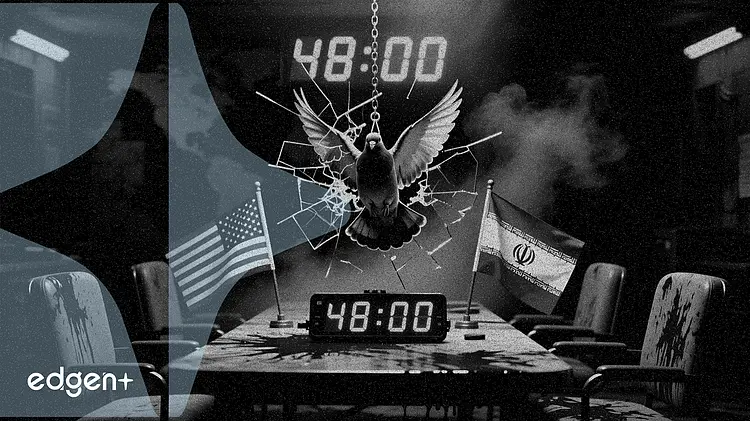
The US military struck Iranian targets Tuesday in a proportional response to the downing of an American Apache helicopter, even as President Donald Trump insisted a nuclear deal with Tehran was within reach in "two or three days."
"The mission is a proportional response to unjustified Iranian aggression," US Central Command said in a statement, adding that strikes began at 5 p.m. Eastern Time. A White House official later told Politico that the status of the agreement remained unchanged despite the military action.
The escalation pushed crude benchmarks higher on fears that the Strait of Hormuz — which handles about 21 percent of global oil trade — could face further disruption. Gold rose as investors sought havens, while equity futures edged lower amid uncertainty over whether the strikes would derail months of Pakistan-mediated negotiations.
The contradiction between military action and diplomatic optimism creates a volatile setup for markets. If the strikes remain limited and talks resume, oil could retrace gains. But any sign of broader escalation risks reopening a conflict that has already driven up energy prices and shaken the global economy since fighting erupted on Feb. 28.
The helicopter went down early Tuesday off the coast of Oman during a patrol mission. Both pilots were rescued by an unmanned Corsair drone vessel operated by the Navy's Task Force 59 — the first known drone rescue at sea by the US military, according to Capt. Tim Hawkins, a Central Command spokesman.
Trump blamed Iran for the incident in a social media post, saying the Iranians "shot down one of our highly sophisticated Apache Helicopters." Iran's Foreign Minister Seyed Abbas Araghchi pushed back, writing that the Strait of Hormuz is "thousands of miles away from US shores" and that foreign forces near Iranian territory are "at constant risk on account of their own human errors, plain accidents, or potentially being caught in crossfire."
The Strait of Hormuz has been a flashpoint throughout the conflict. The US has enforced a blockade on Iranian crude shipments using Apache helicopters and naval assets, seeking to pressure Tehran into a deal. Iran has effectively closed the waterway at times during the war, which began when the US and Israel struck Iranian targets on Feb. 28.
Brent crude has remained elevated since the conflict began, with the risk premium fluctuating alongside ceasefire headlines. The last time a similar military incident threatened the strait — during the 2019 attacks on Saudi Aramco facilities — oil prices spiked 15 percent in a single session before retreating as supply proved resilient.
Trump's insistence that a deal is near contrasts sharply with the military posture. On Monday, before the helicopter incident, he told journalists at John F. Kennedy International Airport that "we're very close to having a very, very good, strong, powerful deal." He warned that continued bombing would leave Iran with "nothing left whatsoever" but would delay the reopening of the strait by months.
Iran's top negotiator, Mohammad Baqer Qalibaf, struck a defiant tone on social media: "We prefer the language of diplomacy, but we speak other languages far more fluently. Break your commitments, and we'll switch to what we speak best."
The US is demanding Iran give up its stockpile of highly enriched uranium, believed to be entombed after American airstrikes during the 12-day war in 2025. Iran refuses and wants sanctions relief and the release of frozen assets before any final agreement — terms Trump has rejected.
Meanwhile, the conflict's second front remains active. Israel issued an evacuation warning for Lebanon's southern port city of Tyre, including the Christian quarter, and Hezbollah thanked Iran for attacking Israel "in defense of our Lebanese people."
This article is for informational purposes only and does not constitute investment advice.
