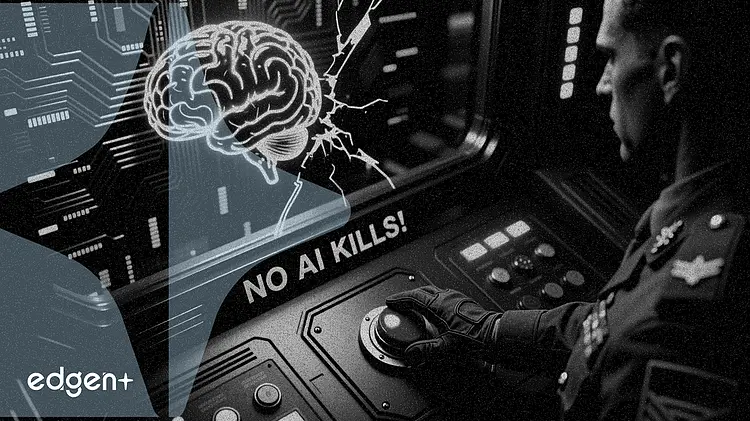
Le vice-président JD Vance a déclaré aux cadets de l'Air Force sortants que l'intelligence artificielle ne doit jamais être autorisée à prendre des décisions de vie ou de mort sur le champ de bataille, s'immisçant dans un débat qui divise l'administration Trump alors que le Pentagone accélère son utilisation de l'IA dans la guerre.
« Les décisions de vie ou de mort doivent être prises par des humains et non par des machines », a déclaré Vance jeudi à l'Académie de l'Air Force américaine à Colorado Springs, s'adressant à environ 900 cadets. « Utilisez la technologie pour vous améliorer, mais ne vous y soumettez jamais. Vous êtes les maîtres de la guerre, et à la fois votre esprit mais aussi votre cœur sont le contraire de l'artificiel. »
Ce discours marque un changement de ton notable pour Vance, ancien capital-risqueur qui a longtemps défendu la déréglementation de l'IA et qui, l'année dernière, a reproché à ses alliés européens leur approche « trop rigide » lors du Sommet pour l'action sur l'IA à Paris. Ses remarques ont fait écho à l'encyclique du pape Léon XIV sur l'IA publiée cette semaine, qui mettait en garde contre la délégation des décisions morales à la technologie numérique — un document que Vance a salué dans un entretien avec NBC News plus tôt cette semaine.
Ces commentaires interviennent alors que l'utilisation de l'IA par le Pentagone dans les combats fait l'objet d'un examen de plus en plus minutieux. Le système Maven Smart, alimenté par l'outil d'IA Claude d'Anthropic, a été déployé pendant les premières heures de la guerre en Iran, suggérant des centaines de cibles et fournissant des coordonnées de localisation. Une enquête est en cours concernant une frappe sur une école en Iran qui a tué au moins 175 personnes, dont de nombreuses écolières, après que le système aurait signalé le site — adjacent à une installation militaire iranienne — comme une cible légitime.
Cet incident a attisé les divisions internes à la Maison-Blanche sur la politique en matière d'IA. Le secrétaire au Trésor Scott Bessent a plaidé pour un contrôle plus strict des systèmes d'IA puissants, tandis que l'ancien tsar de l'IA David Sacks préconisait une approche plus légère. Le secrétaire à la Défense Pete Hegseth, qui a qualifié le développement de l'IA de « course » et soutenu que « la vitesse l'emporte », a ordonné le mois dernier un déploiement généralisé de l'IA dans l'armée.
Le président Donald Trump a abandonné la semaine dernière un projet de décret exécutif qui aurait créé un mécanisme volontaire de test gouvernemental pour les derniers modèles d'IA, après un lobbying de dernière minute de la part de dirigeants technologiques inquiets des restrictions. L'administration élabore encore son cadre politique en matière d'IA au milieu de factions concurrentes.
Vance, un vétéran du Corps des Marines qui a servi en Irak, a reconnu le malaise des Américains face à l'impact de l'IA sur les emplois et les interactions sociales, mais a déclaré que sa plus grande préoccupation était son effet sur la guerre. « Si la guerre du futur doit être à la hauteur des valeurs morales de nos ancêtres », a-t-il déclaré, « les décisions de vie ou de mort doivent être prises par des humains et non par des machines. »
Ces remarques pourraient profiter aux entrepreneurs de la défense-technologie tels que Palantir Technologies Inc., Lockheed Martin Corp. et RTX Corp., qui sont bien placés pour bénéficier de l'attention accrue du gouvernement sur les systèmes militaires dotés d'IA. Le budget IA du Pentagone a augmenté alors que les États-Unis s'efforcent de maintenir leur supériorité technologique sur la Chine dans les capacités de guerre autonome.
Cet article est fourni à titre d'information uniquement et ne constitue pas un conseil en investissement.