
Rystad Energy says Venezuela's vast reserves won't ease the crude shortage from the Strait of Hormuz blockade for years.
Rystad Energy says Venezuela's vast reserves won't ease the crude shortage from the Strait of Hormuz blockade for years.
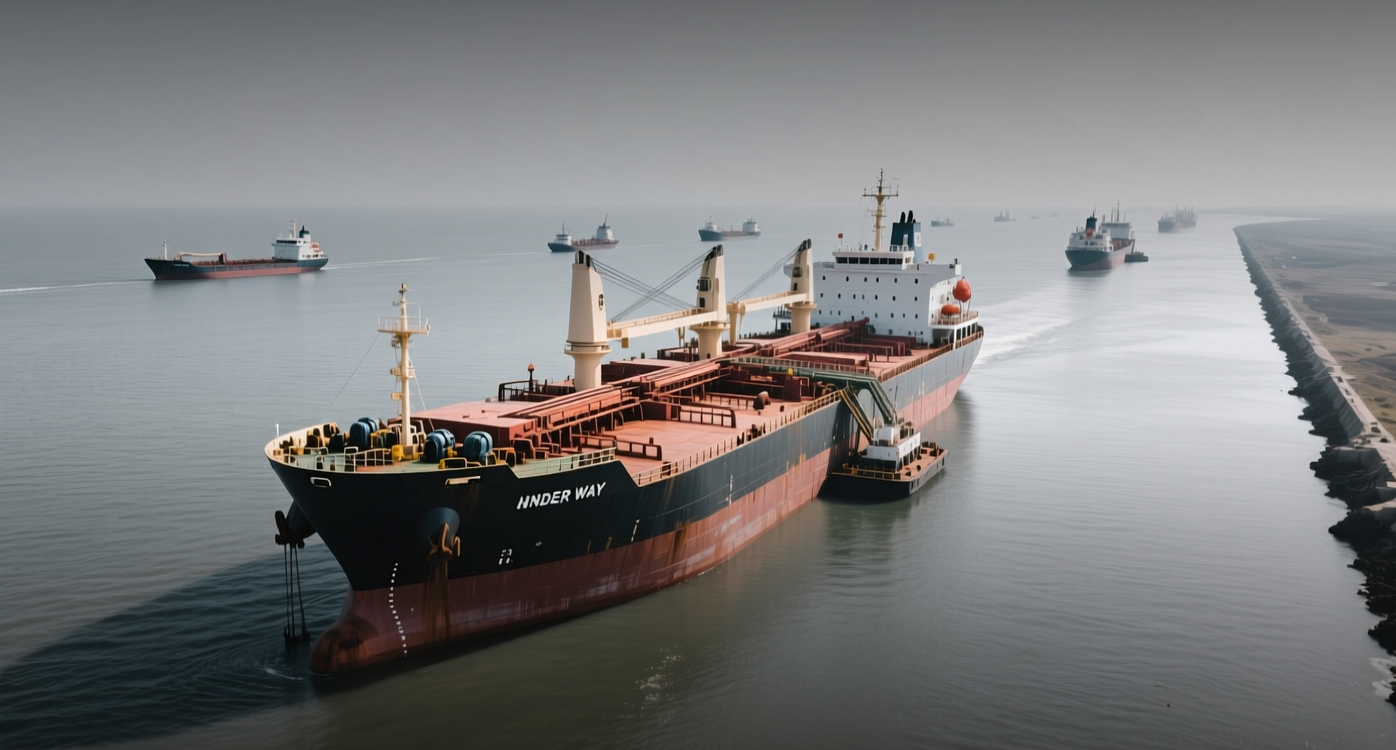
The U.S.-Venezuela deal hands Washington control over 65 billion barrels of reserves, yet Rystad Energy says it will take years to lift output — leaving markets exposed to the Strait of Hormuz disruption.
"It will take a few years for Venezuela to significantly increase its crude oil production," Claudio Galimberti, chief economist at Rystad Energy, said. "Therefore, it is a deal whose benefits will be seen mostly in the medium-long term."
Venezuela holds the world's largest proven crude reserves at about 303 billion barrels, per the U.S. Energy Information Administration, but produced only about 1.1 million barrels a day in July, according to OPEC secondary-source estimates. Output fell an average 8.2 percent annually between 2011 and 2021, the EIA found, as sanctions, mismanagement and a lack of investment eroded infrastructure. The deal covers 17 strategic fields with 65 billion barrels of proven potential, more than $100 billion in investment and $209 billion in tax revenue, acting President Delcy Rodríguez said.
The gap matters because the Hormuz blockade, through which one-fifth of world oil previously flowed, has pushed the U.S. national average gasoline price to $4.08 a gallon, up from $3.20 a year ago, AAA data show. With Venezuela unable to backfill supply quickly, the imbalance could persist, sustaining upward pressure on energy prices, transportation costs and inflation expectations.
The deal's structure is unusual on its face. Unlike Saudi Arabia's Saudi Aramco or Mexico's Pemex, the U.S. has no national oil company, raising questions about who will operate on the ground. The U.S. government would take 55 percent of the new company's effective output, split between equity ownership and guaranteed at-cost off-take, a State Department official said. Rodríguez granted a private company — described as a joint project of the U.S. government and an experienced operator — 100-year rights to develop the fields.
But the fields hold proven reserves, not already-produced crude, and Venezuela lacks the infrastructure to pump at a rate that would quickly affect pump prices. ExxonMobil Chairman and CEO Darren Woods called the country "uninvestable" in January, citing the "legal and commercial constructs" in place. Patrick De Haan, head of petroleum analysis at GasBuddy, said the deal "still will take billions of investment to get that oil," and questioned whether a 100-year contract could face legal challenges. The "at-cost" structure also strips operators of the excess profits they capture when prices spike, a feature that may deter the private capital the project needs.
Questions also hang over the deal's counterparty. Rodríguez took office after the U.S. seized and arrested former President Nicolás Maduro in January, and she was not elected. Gerald Kepes, president of Competitive Energy Strategies, said oil companies will weigh whether a contract signed with her government holds up in three to five years. How the project is financed also remains unclear, including whether the private operator provides the funding and how it proceeds "at no cost to the American Taxpayer," as Trump said.
Galimberti said the most effective way to lower gasoline and diesel prices in the short term is to increase flows from the Middle East, pointing to pipelines and ports being developed across the Gulf to bypass Hormuz. "You will need to factor in several quarters and, in quite a few cases, years," he said of the Venezuela path.
The last time a major Gulf chokepoint was disrupted, in 2019 attacks on Saudi facilities, Brent spiked more than 14 percent in a single session before retreating as spare capacity was deployed. This time, with OPEC spare capacity thinner and the blockade open-ended, the market has fewer buffers — leaving the Venezuela deal as a medium-term hedge rather than an immediate fix.
For consumers, the relief Trump promised is unlikely to arrive before the next election cycle. For oil markets, the deal's value rests on execution — financing, legal certainty and infrastructure rebuilds that analysts say could take several quarters to years. Until then, the price of crude, and the inflation it feeds, hinges on the Strait of Hormuz.
This article is for informational purposes only and does not constitute investment advice.
