
Kevin Warsh has taken the helm of the Federal Reserve, but the market has already taken his easiest policy options off the table.
Kevin Warsh has taken the helm of the Federal Reserve, but the market has already taken his easiest policy options off the table.
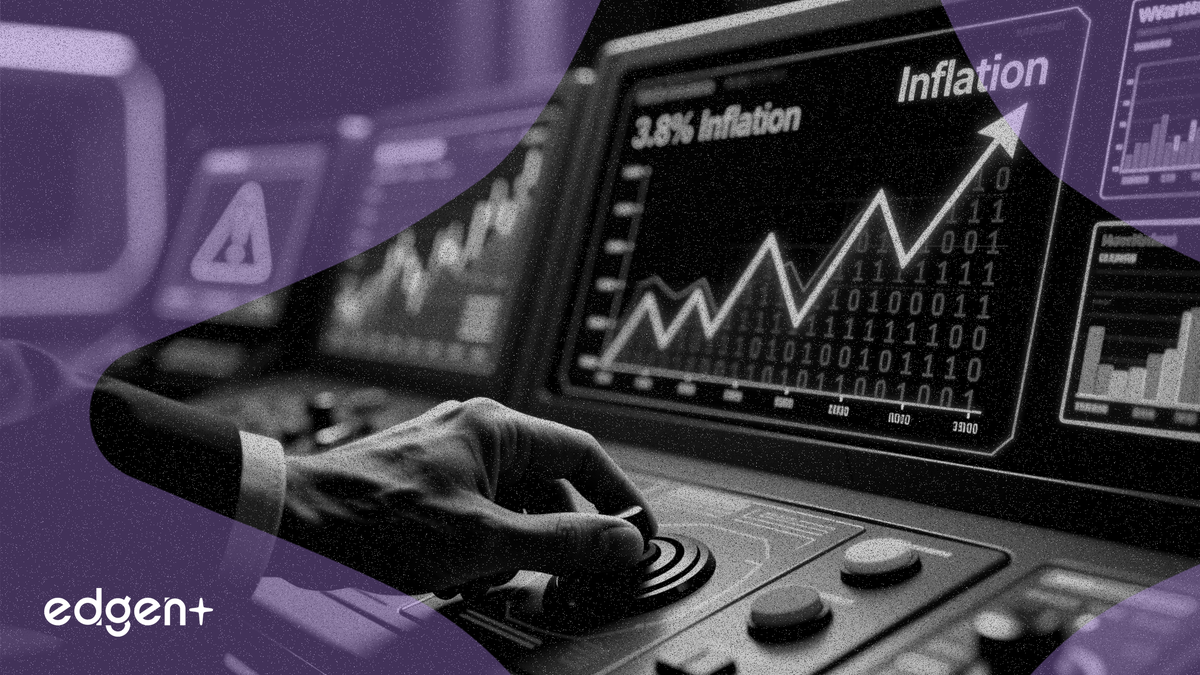
Kevin Warsh’s tenure as Federal Reserve chairman begins not with a menu of policy options, but with a stress test, as stubbornly high inflation and surging bond-market volatility remove any immediate prospect of an interest-rate cut. The new chairman inherits a central bank facing renewed price pressures, with April’s Consumer Price Index hitting a three-year high of 3.8 percent and producer prices showing the clearest signs yet of supply-chain shocks feeding into the economy.
"Warsh originally hoped to have the option of cutting interest rates on his first day in office, but the bond market has already taken that option off the table," said Vincent Ahn, a fixed-income portfolio manager at WisdomTree.
The bond market’s reaction has been swift and decisive. The 10-year Treasury yield surged past 4.5 percent to a recent high of 4.685 percent, while the MOVE Index, a measure of Treasury market volatility, jumped from 69.6 to 86.1 in just two trading days. Money markets, according to a Jefferies report, have now fully priced out any rate cuts for 2026, with a growing minority of investors even anticipating a potential hike.
Warsh’s core challenge is a conflict between his appointment and the economic reality. Nominated by a president eager for lower rates, he takes charge as inflation is re-accelerating, driven by a 6 percent year-over-year jump in the April Producer Price Index. This backdrop forces Warsh to immediately confront the question of the Fed’s independence and credibility, a test that will define the opening chapter of his leadership.
Just as Warsh takes office, the economic data has removed any ambiguity about the persistence of inflation. While rising energy costs contribute, with gasoline up 28.4 percent year-over-year, the more concerning signal comes from core services. April’s services inflation rose 0.5 percent from the previous month, with housing up 0.6 percent, pushing the core CPI to its fastest monthly gain since late 2025.
This pattern, where price pressures broaden from goods to sticky services, is a painful reminder of the Fed’s “transitory” miscalculation in 2022. For Warsh to pivot toward a rate cut now would suggest the central bank has not learned from its most recent, and significant, policy error. The 4.56 percent yield on the 10-year note and a 2-year yield above 4 percent show that bond investors are enforcing that lesson.
Warsh does not just inherit a difficult economy; he also takes leadership of a visibly fractured Federal Open Market Committee. The last FOMC meeting saw dissents in opposite directions—some members found the policy statement too dovish, while another voted for an immediate cut. This is the most divided the committee has been since 1992, complicating any attempt by the new chairman to build a consensus.
Further complicating the internal dynamics, former Chair Jerome Powell will remain on the Board of Governors with a term extending to 2028. His continued presence represents a permanent, unavoidable vote and a constant reminder of the previous regime as Warsh attempts to steer the committee. The first true test of his leadership will not be cutting rates, but proving he can navigate this divided committee while defending the institution's credibility against political pressure and unfavorable economic data.
This article is for informational purposes only and does not constitute investment advice.
