
Warsh's first Jackson Hole keynote arrives with core PCE at 3.3 percent and markets pricing a 45 percent chance of a rate hike by December.
Warsh's first Jackson Hole keynote arrives with core PCE at 3.3 percent and markets pricing a 45 percent chance of a rate hike by December.
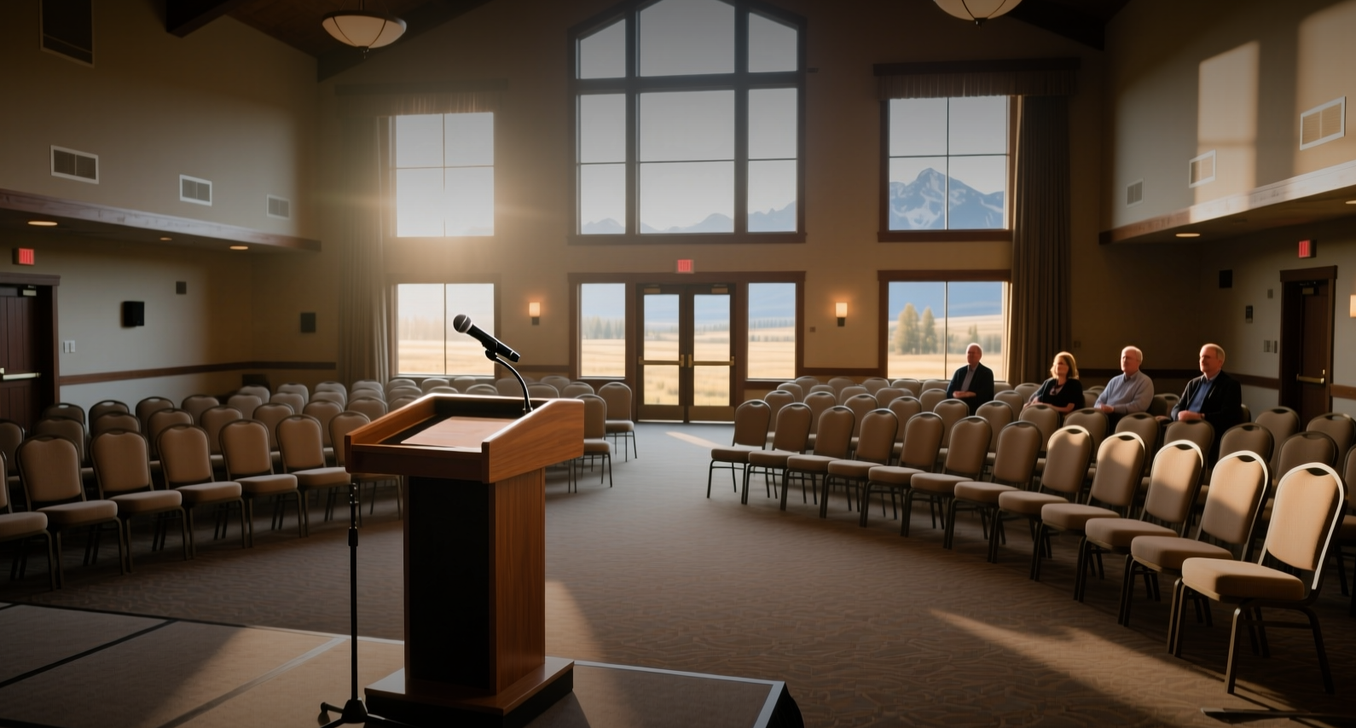
Federal Reserve Chair Kevin Warsh delivers his first Jackson Hole keynote Friday with core inflation at 3.3 percent and markets pricing a 45 percent chance of a rate hike by December.
"There is tremendous appetite for him to clarify some of his views, come back down to earth when it comes to his communication around economic data, around inflation, around employment and around policy," said Gregory Daco, chief economist at EY-Parthenon.
The Fed held its benchmark federal funds rate at 3.5 percent to 3.75 percent at the July FOMC meeting on a 9-3 vote, with three dissenters favoring a 25-basis-point hike. The Fed's preferred inflation gauge, the personal consumption expenditures index, held at 3.7 percent year over year for the headline figure in July, while core PCE, which excludes food and energy, was flat at 3.3 percent — both well above the Fed's 2 percent target.
The stakes extend beyond Warsh's remarks. Treasury Secretary Scott Bessent last week announced the department will at least double its weekly buybacks of long-dated off-the-run securities to $4 billion starting Sept. 9, a move most analysts read as an attempt to tamp down yields. Bank of America's Mark Cabana warned that if Warsh focuses solely on structural themes rather than the inflation path, long-dated Treasury yields could push the 30-year above 5.5 percent. Global bond markets are already on edge, with the 10-year German Bund yield hitting a 15-year high ahead of the speech.
Warsh, confirmed as Fed chair in May, has led two FOMC meetings and taken steps to dismantle the Fed's forward-guidance apparatus, removing forward-looking language from post-meeting statements and convening a panel to review Fed communications. He has said he wants a cleaner view of market pricing unfiltered by Fed guidance.
That approach has drawn criticism. A special Jackson Hole edition of the CNBC Fed Survey found 80 percent of 31 respondents — economists, strategists and investors — say Warsh should provide more insight into his economic views. Respondents were split 48 percent to 48 percent on whether he should offer his views on the rate outlook.
"Chairman Warsh's address is extremely key given the jump in long-term interest rates and high uncertainty over the path of inflation and the Fed's reaction function going forward," said Kathy Bostjancic, chief U.S. economist at Nationwide.
The survey showed a plurality of 45 percent expect Warsh to continue his practice of withholding rate guidance, while 32 percent expect him to be somewhat hawkish and 19 percent neutral.
"In eschewing forward guidance, Mr. Warsh has thrown the baby out with the bathwater," said Constance Hunter, chief economist at Economist Enterprise. "He has abdicated his role in communicating about the reaction function."
The survey also cast doubt on Bessent's intervention. Seventy-seven percent of respondents said the Treasury's expanded buyback program will not successfully tamp down yields. The 10-year yield is forecast to remain between 4.60 percent and 4.70 percent through the end of next year.
"By further front-loading T-bill issuance, I believe the U.S. Treasury is complicating the Fed's job," said Peter Boockvar, chief investment officer at One Point BFG Wealth Partners.
Mark Zandi, chief economist at Moody's Analytics, wrote that the administration's efforts to bring down long-term rates are "spitting into the wind" created by the Iran War, massive budget deficits and confusion over how the Fed will manage monetary policy.
On the rate path, survey respondents are more divided than usual: 53 percent look for rate hikes over the next year, 30 percent see cuts and 16 percent forecast no change. Fed funds futures show a 40 percent probability of a September hike, rising to 70 percent by December. Inflation is forecast to decline to 2.6 percent year over year next year from 3.4 percent this year, with unemployment stable around 4.3 percent through 2027.
The last time a new Fed chair delivered a debut Jackson Hole speech was 2018, when Jerome Powell's brief remarks that the Fed was "a long way" from neutral were read as hawkish, contributing to a 2.3 percent drop in the S&P 500 over the following week. Warsh's aversion to forward guidance makes a similar market reaction less likely, but the uncertainty itself has pushed yields higher.
"Part of the recent rise in yields has been tied to this lack of credibility around policymaking at the Fed, and in particular, a lack of transparency from the Fed chair," Daco said. He added that Warsh is unlikely to box himself into a September decision, saying, "I doubt he's going to want to confirm in any way, shape or form any future action."
This article is for informational purposes only and does not constitute investment advice.
